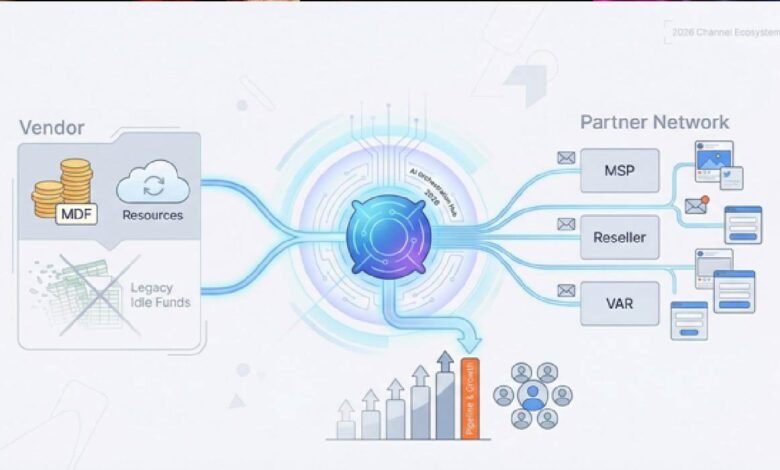
Sixty percent of market-development funds never reach partners—they sit in spreadsheets, unclaimed, while resellers search for demand-gen help, according to a recent Fifty-Five and Five analysis.
That waste defines the 2026 channel challenge: vendors need smarter tools to scale marketing across thousands of resellers, and partners can’t afford to leave budget idle.
A new wave of platforms and Marketing-as-a-Service (MaaS) offerings is closing the gap. We narrowed the field to five stand-out options, each dominating a specific “best-for” use case. Here’s what they do, where they shine, and how to choose the one your program will actually use.
How we picked the five standout solutions
We reviewed a long list of portals, PRMs, TCMA tools, affiliate networks, and agency services, then trimmed the fat. To stay on the short list, each platform had to prove three things: it supports a true reseller or MSP motion, it lets partners launch demand-gen campaigns with minimal friction, and it is moving the market forward through AI features, fresh analyst recognition, or meaningful product releases in the past 24 months.
Next, we scored each contender across seven weighted factors. Feature depth and integration breadth carried the most weight because, without end-to-end campaigns and clean CRM data flow, channel marketing drops back into the black-hole spreadsheet trap we all want to avoid.
AI capability ranked second. Partners need help writing copy, segmenting prospects, and prioritizing leads, not another static menu of PDFs. We rewarded working AI assistants, predictive analytics, and auto-generated content instead of vague roadmap promises.
Usability mattered just as much. If a portal takes a week of webinars to navigate, your partners will leave. We asked, Can a first-time user launch a co-branded email in under an hour? The platforms that answered yes rose in the rankings.
Finally, we checked scalability, pricing transparency, and real-world sentiment. High G2 scores, Forrester Wave placements, and visible customer wins boosted scores, while hidden fees or stalled product roadmaps dragged them down.
Our process surfaced five distinct, compelling options. Each one excels in a specific best-for lane, which is how we’ll break them down in the next sections.
TD SYNNEX Marketing-as-a-Service (MaaS): Overview
Think of TD SYNNEX MaaS as a rented marketing department that understands channel quirks. Instead of giving partners another portal to ignore, the distributor assigns a cross-functional squad (strategists, content writers, campaign ops, and data analysts) to run demand-gen on the partner’s behalf.
TD SYNNEX Marketing-as-a-Service Partner Portal and Concierge Team Screenshot.
The service builds on TD SYNNEX’s vendor catalogue and data cloud, layering in data analytics, content-automation portals, and e-commerce tactics, all detailed within its MAAS solutions for technology partners, so campaigns launch with accurate product details, fresh incentives, and benchmark insights an average MSP could not gather alone. Partners choose objectives such as new-logo leads, cross-sell, up-sell, or event buzz, and MaaS designs the funnel from audience targeting to lead handoff.
This is not software you open each morning; it is a concierge model where people plus automation create assets, execute workflows, and track metrics. That difference matters for resource-strapped resellers who need outcomes, not another dashboard to learn. TD SYNNEX describes MaaS on its website as “the external-facing marketing arm of TD SYNNEX, designed to accelerate demand and close the gap between partners, resellers, and end users.”
If you are drowning in MDF yet lack the headcount to spend it wisely, this service is the lifeboat.
Impartner PRM: Overview
Impartner is the heavyweight in this lineup, the platform Fortune 500 vendors choose when they need one cockpit for everything a partner does, from onboarding and deal registration to the full “to, with, through” marketing cycle. It began as a pure PRM, so data hygiene, role-based permissions, and global scalability are built in. Over the past few years the company added a comprehensive through-channel marketing hub on that foundation, giving partners a place to grab co-brandable assets, send nurtures, and syndicate web content without leaving the portal.
Impartner PRM Enterprise Partner Management Portal Screenshot.
Because sales operations and marketing share the same database, every campaign touchpoint flows straight into pipeline dashboards. Channel managers see which assets convert and which partners follow up on leads. Executives welcome the closed loop; partners appreciate that they register a deal once and watch attribution appear automatically. It is the Cadillac experience: feature-packed, enterprise-ready, and designed for programs that count partners in the hundreds or thousands, not the dozens.
That scope shapes everything that follows. The upside is huge if you run a complex channel, but the learning curve is steeper if you do not.
Standout features and real-world strengths
Impartner’s through-channel marketing hub lives where partners already register deals and check training credits. That tight coupling means the moment a contact clicks a co-branded email, the engagement ties back to that partner’s pipeline record in real time. No CSV exports, no mysterious attribution gaps, only closed-loop insight that channel leaders can bring straight into the next QBR.
Campaign variety is another win. Out of the box, partners can clone ready-to-send email drips, auto-syndicate blog posts to their own sites, and embed a vendor-curated product catalog on landing pages, each element branded with the partner’s logo in a few clicks. Because assets pull corporate imagery and disclaimers dynamically, brands stay consistent while partners still look local and authentic.
Global programs lean on Impartner’s deep Salesforce integration. Field teams see partner-sourced leads, MDF balances, and marketing influence without leaving their CRM tabs. That single source of truth is why analyst roundups from WiFiTalents routinely place Impartner at the top of the partner-management heap.
For enterprises juggling dozens of regions, languages, and incentive structures, these pieces click together into a scalable engine: brand-safe content out, actionable data back in.
Where Impartner wins and where it stumbles
If your channel spans continents, few platforms match Impartner’s horsepower. Administrators can spin up region-specific portals, apply tiered access rules, and localize assets without cloning databases. Partners feel at home because everything, from training modules to marketing kits, appears in their language and currency the moment they log in.
That depth introduces complexity. Standing up the full suite usually takes a dedicated program manager plus help from Impartner’s professional-services team. Smaller vendors often describe the first month as overwhelming, not because the UI is confusing, but because there are many toggles to set before partners launch their first campaign.
Cost follows suit. Industry chatter places typical enterprise deals north of $50,000 a year, especially once you add advanced TCMA and Salesforce connectors. The price makes sense if you are replacing multiple point tools, less so if you only need lightweight campaign syndication.
In short, Impartner is a strong fit for global programs chasing rigorous governance and complete visibility. If you are a seed-stage SaaS with twenty partners, you may spend more time and budget configuring features you will never use.
Unifyr (Unifyr One): Overview
If Impartner is the Cadillac, Unifyr One is the sports coupe, built for one job: helping vendors push ready-made, co-branded campaigns through their partners at speed. The platform’s roots are pure through-channel marketing automation, and it shows. You will find drag-and-drop email builders, social-post schedulers, web-content syndication, and MDF workflows living side by side in a single, partner-friendly dashboard.
Unifyr One AI-Native Through-Channel Marketing Dashboard Screenshot.
Unifyr raised the bar when it rolled out the Unifyr AI suite at Channel Futures’ MSP Summit. The update tucked an AI writing assistant, predictive campaign recommendations, and a multi-vendor management layer into the same portal, putting next-step guidance a click away for even the smallest reseller. The result is less blank-screen anxiety for partners and more consistent brand execution for vendors.
Because Unifyr One can run standalone or snap into an existing PRM, teams often deploy it as the “marketing engine” bolted onto Salesforce, HubSpot, or a home-grown partner portal. That flexibility, paired with relentless focus on partner adoption, keeps the platform on analyst shortlists whenever TCMA is the topic.
Standout features and real-world strengths
Turnkey syndication is Unifyr’s signature move. A vendor builds one master campaign, complete with emails, LinkedIn updates, banner ads, and a gated-content asset, then pushes it to hundreds of partner portals with a single publish action. The moment a partner logs in, Unifyr’s wizard swaps in that partner’s logo, domain, and contact details. No Photoshop. No HTML. Launch, done.
An embedded AI assistant reduces friction even further. Partners ask plain-English questions such as “Write a follow-up email for cybersecurity leads,” and the model drafts context-aware copy aligned to tone and compliance rules. Those drafts move straight into the send queue, so the partner never leaves the workflow. Channel Futures called the rollout “an industry-first AI suite that puts concierge guidance inside the partner portal.”
On the vendor side, granular analytics show which partners activated which assets, how many leads converted, and the revenue attributed to each tactic. Because the data pipes into Salesforce and HubSpot automatically, marketing ops can defend MDF spend without exporting spreadsheets or chasing partners for proof of execution.
This blend of painless launch, AI-assisted customization, and airtight attribution explains why Unifyr often becomes the heartbeat of a channel’s demand-gen engine, even when another PRM owns broader relationship tasks.
Where Unifyr wins and where it stumbles
Partner adoption is the standout win. The portal feels like Mailchimp meets Canva, with familiar drag-and-drop tools, clear progress bars, and zero jargon. That UX encourages partners to log in and launch campaigns instead of hoarding PDFs. Vendors report 28 percent higher campaign engagement and 75 percent more executions after moving from “download and pray” portals to Unifyr’s guided workflows.
AI features are functional, not decorative. The assistant suggests subject lines based on historical open rates and flags stale lists, nudging partners to refresh contacts before sending. Those micro-nudges lift deliverability and improve attribution.
Pricing sits in the middle of the pack. You will need a custom quote, but most mid-market vendors say Unifyr costs less than Impartner’s enterprise tier while still covering the full TCMA playbook. The modular approach helps; you can add PRM or learning modules later instead of buying the whole suite on day one.
There are trade-offs. Initial template setup requires some marketing muscle. Vendors must load brand guidelines, legal footers, and master content before partners see the easy button. Also, because Unifyr focuses on marketing, you will still need a separate PRM if you require advanced deal registration, incentive automation, or certification tracking.
Choose Unifyr when partner demand gen is your burning platform and you want a tool partners will genuinely use. Just budget time up front to seed the content library they will harvest.
ZINFI Unified Partner Management (UPM): Overview
ZINFI approaches partner marketing with one core idea: every touchpoint—training, incentives, campaigns, even support tickets—feeds the same data spine. That philosophy shows up in its six-module suite: Onboard, Enable, Market, Sell, Incentivize, and Accelerate. Vendors can turn modules on or off, but the pieces still talk to each other, so you avoid juggling separate logins or reconciling spreadsheets later.
The marketing module sits at the heart of that stack. Partners browse a storefront of ready-made emails, social posts, events-in-a-box, and microsite templates. Because the portal already knows which certifications a partner holds and which incentives they qualify for, it surfaces the most relevant assets first, saving them from scrolling through pages of irrelevant content.
ZINFI Unified Partner Management Six-Module Platform Screenshot.
ZINFI expanded its intelligence when Forrester named it a Leader in partner marketing automation, praising its “AI-first, multimodal platform” and high customer-satisfaction scores, according to a PR Newswire release. That AI shows up as predictive partner scoring, auto-tagged assets, and chat-style guidance that walks a novice marketer through campaign launch without a playbook.
Because learning, incentives, and campaigns live under one roof, ZINFI triggers a congratulatory email the moment a partner passes a certification exam, instantly granting access to a related MDF-funded campaign kit. The automated flow keeps momentum high and admin overhead low, exactly what lean channel teams need.
Standout features and real-world strengths
ZINFI’s integrated design solves a classic channel headache: siloed data. When a partner downloads a campaign, completes a training badge, or claims MDF, every action pings the same analytics engine. That visibility lets channel teams spot patterns—partners who finish the “Cloud Migration” course convert 22 percent more leads—and double down on what works.
The AI layer handles much of the heavy lifting. It tags new assets with industry, persona, and funnel stage, so partners who search “manufacturing CMO” see only the pieces that fit. Predictive scoring ranks partners by revenue potential and suggests next-best activities, nudging long-tail partners into the spotlight before competitors step in.
Usability earns high marks as well. Guided wizards walk partners through loading a contact list, customizing subject lines, and scheduling sends. Each step shows real-time compliance checks such as logo size, disclaimer wording, and data-privacy flags, so partners launch faster and legal teams can relax.
Finally, ZINFI’s modular pricing appeals to mid-market vendors who feel priced out of enterprise suites. Start with the marketing module for a low-tens-of-thousands annual fee, then add onboarding or incentives as the program scales. Users call it “enterprise capability without the enterprise tax,” a claim supported by some of the highest user-satisfaction scores on G2.
Channelscaler (formerly Allbound + Channel Mechanics): Overview
When Allbound’s partner-friendly portal merged with Channel Mechanics’ incentive engine, the result was Channelscaler. It targets programs in the middle ground: too big for spreadsheets but not yet ready for six-figure enterprise suites. The value proposition is simple: give partners an easy, modern workspace for content and deal registration, then layer automated promotions and rebates on top so good behavior is rewarded immediately.
Partners land on a clean dashboard that highlights active incentives, such as “extra 5 percent margin if you run this co-branded webinar,” alongside the assets needed to claim them. Because the incentive rules live in the same codebase, the system validates activity and triggers payouts without manual proof of performance. This closed loop keeps finance happy while sparing partners another claim form.
Channelscaler Incentive-Driven Partner Dashboard Screenshot.
The portal keeps Allbound’s drag-and-drop page builder, letting channel marketers spin up playbooks, microsites, or quick-start campaign kits in minutes. Channel Mechanics’ analytics reveal which incentives move pipeline, allowing vendors to adjust rules in real time instead of waiting for quarter-end reports. For growing programs that rely on motivation to drive marketing uptake, the blend of user-first design and automated incentives is persuasive.
Standout features and real-world strengths
Channelscaler’s signature feature is incentive-triggered marketing. Suppose a vendor launches a “Q3 New Logos” rebate. The rule appears in every partner’s dashboard with a bright callout button that links to a prebuilt campaign kit (webinar deck, nurture emails, and a landing-page template). After the partner completes the webinar and logs the attendee list, the system validates activity and releases the rebate credit automatically. No screenshots, no back-and-forth approvals, just immediate payout.
That closed loop changes behavior. Vendors report customer acquisition increases of 55 percent and cost savings of 65 percent through automation of partner-sourced business. For lean channel teams, those gains arrive without adding headcount because the rules engine handles compliance checks in the background.
On the usability front, the portal inherits Allbound’s mobile-responsive, clutter-free interface. Channel marketers drag widgets to build a campaign hub or upload a new playbook, and partners drop their logo into the header, press publish, and they are live. Because the codebase is fresh from the 2024 merger, performance feels fast, and the roadmap lists AI-powered partner scoring slated for later this year.
Pricing stays realistic for mid-market budgets. Entry tiers sit well below enterprise giants, and you can run the core portal without the full incentive engine if you are watching spend. That flexibility makes Channelscaler a smart choice for programs graduating from spreadsheets but not yet ready for the Cadillac.
Conclusion
Each of these five solutions serves a distinct “best-for” use case, giving channel leaders clear options whether they need concierge-style execution, enterprise visibility, or a partner-friendly marketing engine that scales. Match your program’s size, objectives, and resource reality to the right platform, and those idle MDF dollars can finally turn into measurable pipeline growth.