For a long time, creating digital characters meant choosing between two bad options: either learn complex design tools like Photoshop and Blender, or pay designers every time you needed a new avatar.
Neither option works well in today’s content environment, where creators need dozens of characters, fast iterations, and visuals that can move across platforms like YouTube, TikTok, landing pages, and online courses.
This is exactly why the AI Character Generator category has exploded.
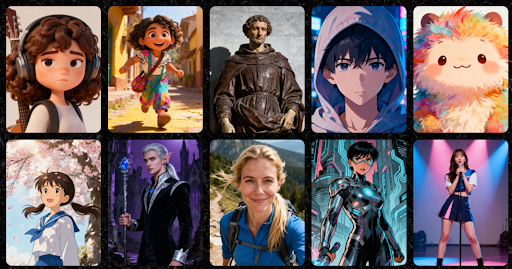
Instead of drawing from scratch, users now describe what they want — or upload an image — and generate realistic characters, portraits, or stylized avatars in seconds. More importantly, those characters can now be reused across multiple formats, including talking videos and digital presenters.
This article looks at how real people are using AI Character Generators in practice, what problems they actually solve, and why they’ve become a core tool for modern content creation.
AI Character Generator Solves a Production Bottleneck
The main problem isn’t creativity.
It’s visual production speed.
Most creators face the same challenges:
- They need original characters.
- They don’t want stock photos.
- They need variations for different scenes.
- They can’t afford endless design revisions.
An AI Character Generator removes that bottleneck by allowing users to:
- Generate characters from text prompts.
- Modify existing photos.
- Create consistent avatars across styles.
- Instantly test multiple visual directions.
Instead of waiting days for a designer, users get results in seconds — and can iterate endlessly without extra cost.
AI Character Generator in Real Use Cases
1. YouTube Creators Building Virtual Hosts
One of the fastest-growing use cases is virtual presenters.
Many YouTube creators don’t want to appear on camera but still want a recognizable “face” for their channel. With an AI Character Generator, they create:
- A digital host.
- Several facial expressions.
- Different outfits and styles.
That same character is reused in:
- Tutorials
- Explainers
- Storytelling videos
Some creators report higher retention compared to voice-only videos because viewers respond better to a visible character, even if it’s virtual.
2. Online Courses and E-Learning
Course creators use AI-generated characters as:
- Virtual teachers
- Demo avatars
- Instructional guides
Instead of recording themselves for every lesson, they generate a consistent digital instructor that:
- Appears across all modules.
- Explains concepts visually.
- Feels more human than slides.
This is especially effective for:
- Language learning
- Technical tutorials
- Corporate training
Learners engage more when there is a “person” guiding them, even if that person is AI-generated.
3. Marketing Teams and Brand Identity
Brands increasingly use AI characters as:
- Mascots
- Campaign faces
- Product explainers
Instead of hiring models for each campaign, marketers generate:
- A consistent brand character.
- Seasonal variations.
- Multilingual versions.
One SaaS company shared that switching from stock photos to AI-generated characters increased landing page conversion by 22%, simply because the visuals felt more unique and brand-specific.
H2: Why AI Character Generator Is More Than Just Image Creation
The real power of an AI Character Generator is not just image output — it’s reusability across media.
Modern tools allow users to:
- Generate a character image.
- Then convert it into a talking avatar.
- Or use it in animated videos.
For example, platforms like
LipSync Video offer an integrated AI Character Generator that creates characters and directly turns them into talking or singing videos using lip-sync technology.
This means one generated character can become:
- A YouTube presenter
- A TikTok narrator
- A digital tutor
- A marketing avatar
All from the same visual source.
Real Workflow With AI Character Generator
Here’s how most creators actually use these tools:
Step 1: Character concept
Users define:
- Gender, age, style
- Realistic or cartoon
- Facial expression and mood
Step 2: Generate variations
Instead of one image, they generate:
- 5–10 versions
- Different poses
- Different emotions
Step 3: Select and reuse
The best version becomes the main character, reused across:
- Videos
- Thumbnails
- Websites
- Social profiles
The key advantage is consistency without manual effort.
From Static Image to Talking Avatar
One of the biggest shifts is combining character generation with lip-sync animation.
Users now:
- Generate a character.
- Add text or voice.
- Turn it into a talking video.
This transforms static visuals into:
- Virtual instructors
- Storytelling characters
- Marketing spokespeople
Platforms like
LipSync Video enable this full pipeline, where character images become dynamic digital avatars. This removes the need for:
- Video recording
- Motion capture
- Professional animation
And makes scalable video production possible even for solo creators.
Why AI Character Generator Is Becoming Infrastructure
This category is no longer experimental.
It’s becoming core infrastructure for:
- Faceless creators
- E-learning platforms
- SaaS onboarding
- Marketing automation
- Digital storytelling
As video becomes the dominant content format, AI-generated characters act as the bridge between text and visual communication.
Not as a gimmick, but as a practical production layer.
Final Thoughts: It’s Not About Replacing Humans
An AI Character Generator doesn’t replace designers, actors, or presenters.
It replaces friction.
It removes:
- Long production cycles.
- High entry costs.
- Technical barriers.
And gives creators something far more valuable:
The ability to turn ideas into visible, reusable characters instantly.
In a world where attention is limited and content is endless, speed and consistency matter more than perfection. And that’s exactly where AI Character Generators fit — not as futuristic tech, but as everyday tools for modern creators.