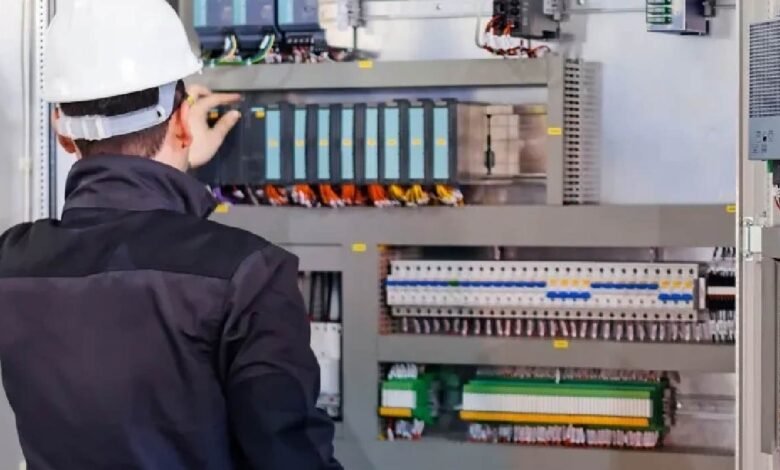
Industrial control panels are the command centers for modern manufacturing and automation. When they fail, it can lead to expensive downtime or serious accidents. Therefore, designing a reliable panel involves more than just assembling components.
Start With the Right Standards
Every reliable control panel design begins with a clear understanding of the applicable safety and performance standards. In the United States, the primary references are NFPA 79 (Electrical Standard for Industrial Machinery) and UL 508A (Standard for Industrial Control Panels). Internationally, IEC 60204-1 governs the electrical equipment of machines.
These standards define requirements for enclosure ratings, fault protection, grounding, and component spacing. Designing to these benchmarks doesn’t just protect end users—it reduces liability, simplifies third-party inspections, and often accelerates time-to-installation on the plant floor.
Before a single component is specified, the design team should document the operating environment: ambient temperature range, humidity levels, exposure to dust or corrosive agents, and vibration levels. These environmental parameters directly inform every downstream decision.
Choosing Components Built for the Long Haul
Component selection is where reliability is won or lost. Industrial environments punish substandard hardware quickly. Contactors, relays, circuit breakers, and PLCs should be sourced from manufacturers with proven track records in heavy-duty applications, and rated beyond the expected operating conditions—not just at them.
Key considerations include:
- IP and NEMA ratings: Match enclosure and component ratings to the installation environment. A panel in a food processing facility faces very different challenges than one in a dry assembly line.
- Temperature derating: Components operating near their maximum ratings will degrade faster. Select hardware with thermal headroom to spare.
- Mean Time Between Failures (MTBF): Review published MTBF data when comparing similar components from different manufacturers.
- Spare parts availability: Specifying components from vendors with long product lifecycles and reliable distribution networks reduces future maintenance headaches significantly.
Sourcing from a single trusted supplier for core components—where possible—also simplifies documentation and reduces compatibility risks.
Layout and Thermal Management
A well-organized panel layout does two things: it keeps heat under control, and it makes maintenance faster. Both directly affect uptime.
Heat is the most common cause of premature component failure in control panels. Power devices like drives and transformers generate significant thermal loads. Best practices include:
- Mounting heat-generating components near the top of the enclosure, or near dedicated ventilation openings, to take advantage of natural convective airflow.
- Maintaining adequate clearance between components to prevent heat buildup in concentrated areas.
- Using thermal simulation tools during the design phase to identify hot spots before fabrication begins.
- Incorporating active cooling (fans, heat exchangers, or air conditioners) when passive ventilation is insufficient for the heat load.
From a maintenance perspective, the layout should allow technicians to reach, test, and replace any component without disturbing adjacent hardware. Clear access to terminal blocks, fuse holders, and HMI interfaces reduces repair time dramatically—and reduces the chance of accidental damage during servicing.
The Role of Precision-Engineered Housing
The enclosure that houses a control panel is far more than a protective shell. It must maintain structural integrity under mechanical stress, protect internal components from environmental ingress, and support safe thermal management over years of continuous operation.
For demanding industrial applications, precision-engineered enclosures—often sourced from a reliable forging company—offer measurable advantages over standard fabricated alternatives. Forged housings provide superior material density and strength, reducing the risk of warping, cracking, or seal failure in high-vibration or high-temperature environments. They also machine to tighter tolerances, which matters when mounting plates, door hinges, and gasketed seals need to align precisely to maintain IP ratings over the long term.
When specifying an enclosure, evaluate wall thickness, hinge and latch strength, coating quality, and the reputation of the manufacturer’s quality control processes. A panel designed to last 20 years deserves an enclosure engineered to match.
Wiring Management and Labeling
Clean, logical wiring is a hallmark of a well-built control panel—and it has real operational value. A panel that’s easy to trace and troubleshoot minimizes downtime when issues arise.
Structured wiring management starts with:
- Cable trays and wire ducts routed to separate power and control circuits, reducing electromagnetic interference.
- A properly assembled wire harness for grouped conductors that run between sub-assemblies, keeping the interior organized and reducing the risk of chafing or cross-connection.
- Consistent color coding aligned with applicable standards (e.g., black for line-side AC, white for neutral, green/green-yellow for ground in North American installations).
- Durable, machine-printed labels on every conductor, terminal, and device—matched to a comprehensive set of as-built drawings.
Documentation is as important as the wiring itself. Up-to-date schematics, terminal schedules, and panel layout drawings should be stored with the panel and maintained whenever modifications are made. A panel without accurate documentation is an unnecessary liability.
Testing Before Commissioning
No panel should leave the shop floor—or be energized in the field—without a structured testing and validation process. Testing protocols should include:
- Point-to-point continuity checks to verify wiring against the schematic.
- Insulation resistance testing to detect any breakdown in conductor or component insulation.
- Functional testing of all control circuits, interlocks, and safety functions under simulated load conditions.
- Hi-pot (high potential) testing where required by standards to verify dielectric integrity.
Factory Acceptance Testing (FAT), conducted with the end customer present, is standard practice for larger systems. It gives all parties confidence in the panel’s performance before it ships to site, reducing the risk of costly rework during installation.
Future-Proofing With Scalable Technology
The expectations placed on industrial control panels are changing. Plant operators increasingly want real-time data visibility, remote diagnostics, and the ability to integrate new equipment without rewiring an entire system.
Designing for scalability means building in capability from the start:
- Reserving physical space in the enclosure for additional components and I/O modules.
- Selecting PLCs and drives with open communication protocols (such as EtherNet/IP, PROFINET, or Modbus TCP) that support integration with SCADA systems and industrial IoT platforms.
- Incorporating network switches and structured cabling for data communications alongside traditional power and control wiring.
- Using modular terminal block systems that allow circuits to be added or reconfigured without disturbing existing wiring.
IoT-enabled panels can now monitor their own health—tracking enclosure temperature, door open/close events, and component operating hours—and alert maintenance teams to potential issues before they become failures. For facilities focused on predictive maintenance, this capability is increasingly a standard expectation, not a luxury add-on.
Build It Right the First Time
Reliable industrial control panels don’t happen by accident. They result from disciplined engineering decisions made at every stage—from standards selection and component sourcing to thermal management, wiring practices, and testing protocols. Cutting corners at any step creates compounding risk that typically surfaces at the worst possible time.
For engineering teams and procurement professionals evaluating panel builders, the key question isn’t just “does this meet spec today?” It’s “will this perform reliably for the next 15 to 20 years?” The answer lies in the quality of every decision made before the panel door closes.
Investing in rigorous design and quality components upfront is almost always less expensive than the downtime, repairs, and reengineering that come from getting it wrong.
Conclusion
Now that you have a better understanding of the importance of quality in panel building, it’s clear that cutting corners or settling for lower quality components is not worth the risk. By investing in rigorous design and high-quality components upfront, you can ensure reliable performance for years to come and avoid costly downtimes and repairs.