
Ever wondered why two traders with similar strategies can achieve drastically different results? Often, the answer lies not in their market analysis, but in their platform choice. Derivatives trading volume has surged past $3 trillion monthly across all crypto exchanges, making platform selection as crucial as picking winning positions.
This 6-step evaluation process helps you match your specific trading approach with the platform features that matter most. By the end, you’ll have a clear framework to evaluate derivatives platforms before committing real capital.
Step 1: Assess Your Trading Style and Requirements
Determine Your Leverage Needs
Your leverage preference should drive platform selection more than flashy marketing promises. Conservative swing traders often stick to 2-5x leverage, while active scalpers might need 20-50x options. Individual risk tolerance varies significantly.
| Trading Style | Typical Leverage Range | Key Platform Requirements |
| Conservative Position Trading | 2-5x | Strong risk management tools, isolated margin |
| Swing Trading | 5-20x | Advanced order types, cross margin options |
| Active Scalping | 20-100x+ | Ultra-low latency, high liquidity pairs |
Identify Your Preferred Trading Frequency
High-frequency traders need different infrastructure than position holders. Scalpers require sub-millisecond execution speeds and deep order books, while swing traders benefit more from comprehensive charting tools and automated position management.
Beginners should prioritize platforms offering substantial demo trading allocations and educational resources. Experienced traders typically focus on advanced order types, API access, and institutional-grade execution tools.
Step 2: Evaluate Essential Platform Features
Trading Pairs Availability
A robust derivatives platform should offer at least 300-500 trading pairs across major cryptocurrencies. This ensures you can trade emerging opportunities without switching platforms mid-strategy.
Look for comprehensive coverage: major perpetual futures (BTC, ETH, BNB), altcoin derivatives with sufficient liquidity, and traditional asset integration for portfolio diversification.
Leverage Options and Margin Modes
Professional platforms provide both Cross and Isolated margin modes, allowing you to adapt risk management to specific strategies.
| Margin Mode | Best For | Risk Level | Capital Efficiency |
| Cross Margin | Portfolio-based strategies | Higher (shared liquidation) | Maximum |
| Isolated Margin | Single-position focus | Lower (limited exposure) | Moderate |
Order Types and Execution Requirements
Basic market and limit orders are a starting point, but you also need Stop Loss and Take Profit combinations, trailing stops for trend-following strategies, and OCO (One-Cancels-Other) orders for building large positions efficiently.
Step 3: Test Platform Accessibility and User Experience
The fastest way to test a platform’s user experience is to actually use it. Some platforms require extensive KYC verification before allowing any trading, while others enable immediate access with just email registration. This difference matters most during volatile market conditions when quick position adjustments are critical.
Test the mobile app alongside the web interface. Order execution speed can vary significantly between mobile and desktop versions. The interface should load quickly even during high-volatility periods when server demand peaks.
Step 4: Research Security Standards
Platform security directly impacts your trading capital. Look for specific protection mechanisms rather than vague security promises.
| Security Feature | What to Look For | Example Standards |
| Insurance Fund | Specific BTC/USD amount | 800+ BTC protection pools |
| Cold Storage | Percentage kept offline | 95%+ in cold wallets |
| Proof of Reserves | Public audit frequency | Monthly transparency reports |
Established platforms maintain transparent operations with regular security audits and clear fund segregation policies. Always verify proof of reserves and independent security certifications before depositing funds.
Step 5: Analyze Advanced Tools for Your Strategy
Demo Trading Capabilities
Many traders prefer to test a platform’s interface and execution quality with demo accounts before using real funds. Look for demo accounts with substantial virtual capital — ideally 50,000 USDT or more — allowing realistic strategy testing across various market conditions.
Demo trading reveals crucial platform behaviors: order execution delays during volatility, slippage patterns on different pairs, and how the interface holds up under pressure.
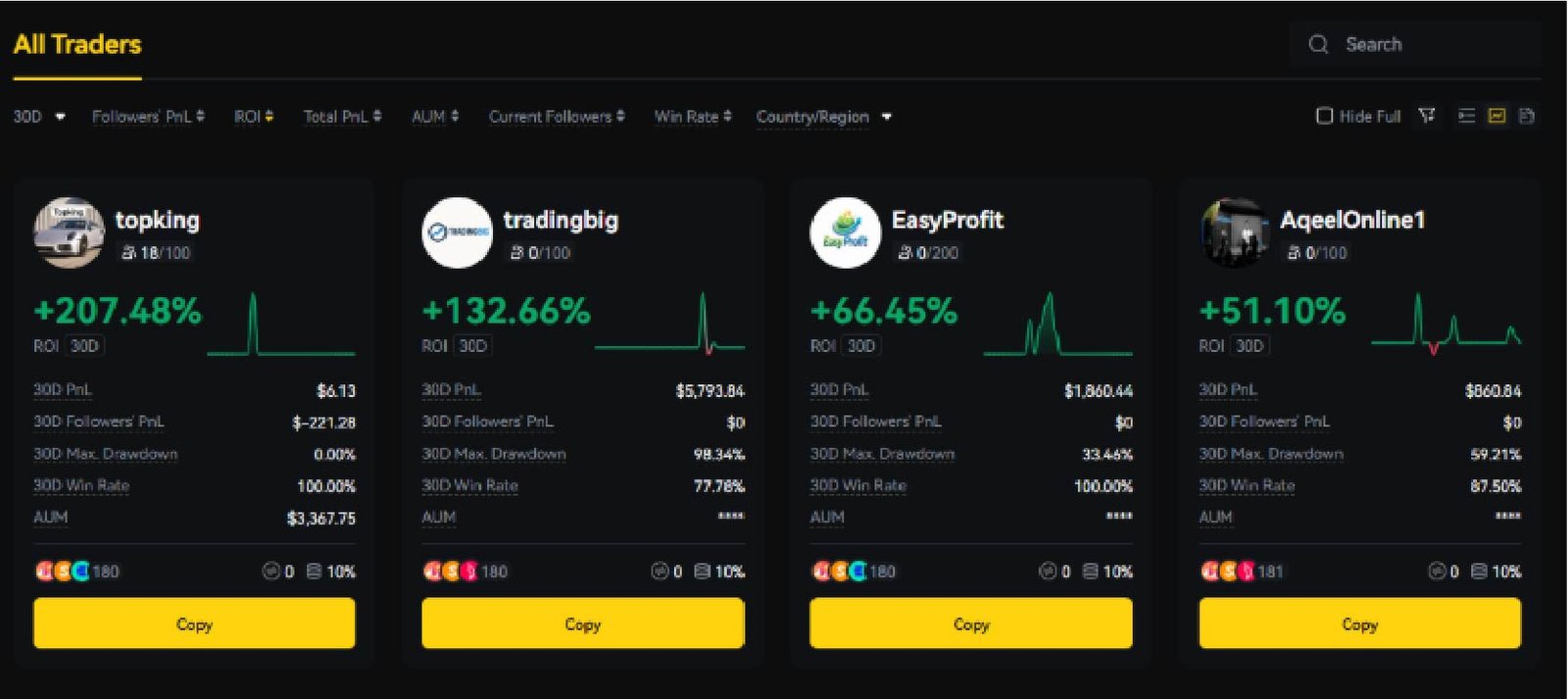
Copy Trading and Automation Features
For newer traders or those looking to diversify their strategies, copy trading offers valuable learning insights. Founded in 2020, BYDFi crypto exchange marks its sixth anniversary this year as a trusted global derivatives platform. Its copy trading feature supports proportional position sizing, allowing users to mirror the trades of successful investors while keeping risk at appropriate levels. Six years of continuous operation serves as a strong testament to its stability in an industry where many platforms have come and gone.
| Automation Tool | Best Use Case | Typical Starting Amounts* |
| Copy Trading | Learning from experts | $10-50 |
| Grid Trading Bots | Range-bound markets | $100-500 |
| DCA Bots | Long-term accumulation | $50-200 |
*Amounts shown for informational purposes only.
Modern derivatives platforms increasingly offer traditional finance assets including stocks, forex, and commodities — enabling sophisticated portfolio management without maintaining multiple accounts across different brokers.
Step 6: Validate Platform Performance and Support
Test customer support responsiveness before committing significant funds. Send a technical question at different times of day to evaluate actual response quality and speed — not just whether you get a reply, but whether the answer is genuinely useful.
Quality platforms maintain 24/7 multilingual support with specialized derivatives trading expertise. High trading volumes typically correlate with better order execution and tighter spreads, but verify these metrics through independent sources rather than platform-reported statistics alone.
Common Mistakes to Avoid
Choosing Based Solely on Maximum Leverage
Exchanges advertising 200x+ leverage often attract attention, but successful derivatives trading depends more on risk management tools, execution quality, and platform stability than maximum leverage numbers.
Ignoring Demo Trading Opportunities
Jumping directly into live trading without extensive platform testing frequently leads to execution errors during critical market moments. Most leading platforms offer demo environments — use them.
Overlooking Withdrawal Policies
Review withdrawal processes, fees, and processing times before depositing funds. Some platforms impose restrictions during high volatility periods, potentially trapping capital when you need it most.
Fund protection mechanisms separate professional platforms from amateur operations. Don’t settle for vague marketing claims when you can verify insurance fund sizes and cold storage percentages through independent audits.
Your Next Steps
Choosing the right derivatives platform requires systematic evaluation rather than impulsive decisions based on promotional offers. Here’s a practical timeline: Week 1 — Research demo accounts on 2-3 platforms matching your leverage requirements. Week 2 — Evaluate security standards and regulatory compliance. Week 3 — Start with small live positions to test execution quality. Week 4 — Scale up to full position sizes after confirming platform performance.
The derivatives trading landscape continues evolving rapidly, but platforms prioritizing user security, comprehensive features, and transparent operations consistently provide the foundation for successful trading. Take time to make this decision carefully — your trading results will reflect the platform infrastructure supporting your market analysis and execution.