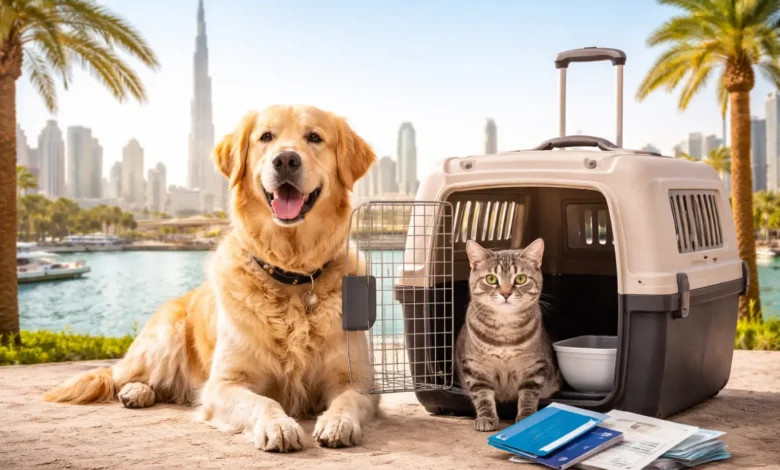
Moving houses is one thing but moving to another country is even huge. This also involves lots of paperwork and significant logistical planning. If you have pets, it is even more involved. Many residents find themselves looking at pet relocation from Dubai services after their time in the desert. It is most often the most complicated part for them. Each pet relocation to the Middle East is administratively complex, considering the rapidly changing laws and more than a dozen requirements. The UAE is super concerned with rabies, and the MOCCAE has one of the most rigid biosecurity policies to make sure it stays that way.
The Ultimate Pet Relocation Checklist
Pets may be detained at the border, and in the worst case, the pet may be re-routed to the point of origin. This checklist is the most straightforward guide you will find. Each task mentioned here is a prerequisite to the next, and if you make one mistake, it can lead to months of wasted effort.
- ISO-Compliant Microchip Identification: Your pet will require a microchip. Yes, you heard that right. And that microchip needs to be 15 digits long and comply with the ISO Standard 11784 or 11785. This microchip is the ”anchor” to all the documents your pet has. A microchip is a policy requirement for all pets, and it is a strict policy that microchips be implanted before pets receive any vaccines. The UAE authorities use microchips, and each microchip is treated as a unique ID for each blood test and health certificate. If your pet’s health certificate has vaccination dates that are before the microchip was implanted, the Ministry of Health will disregard that vaccine.
- Rabies Vaccination and Certification: Every dog and cat that is coming to the UAE has to be rabies vaccinated when they are over 12 weeks old. There is a requirement that there be at least a 21-day wait period after the rabies vaccination, and then the pet can travel. The UAE has specific rabies vaccine regulations, and while some countries have 3-year rabies vaccines, the UAE only allows entry under 12-month rabies vaccine circumstances. Your vaccine certificate is required to state the name of the vaccine, as well as the manufacturer, lot/batch number, and expiry date, and if any of that is absent or incorrect, it will also result in you being turned away.
- Core Vaccination Protocols: Besides rabies, other core vaccines are required. For dogs, vaccines for Distemper, Hepatitis, Leptospirosis, and Parvovirus (DHLPP) are required. For cats, Feline Viral Rhinotracheitis, Calicivirus, and Panleukopenia (FVRCP) are required. These vaccines must be administered at least 21 days prior to travel and must be documented too.
- Rabies Antibody Titer Test (RNATT): Pets that are coming from the unlisted or high risk countries must do a titer test to show that the rabies vaccine gives antibodies (rabies vaccine proof of immunity). The rabies vaccine must be done 21 days before the blood is drawn, and the blood must be sent to an OIE test which is a rabies vaccine approved lab. The result must be greater than $0.5$ IU/ml. This is one of the most valuable documents and is valid for 12 months.
- MOCCAE Import Permit: An import permit must be obtained from the UAE Ministry before boarding the plane. The MOCCAE Import Permit is valid for 30 to 90 days with a 200 AED cost for each animal and 2026 clearance type. It is required that you upload your pet’s vaccination report along with your residency to get the import permit.
- IATA-Approved Travel Crate: The crate requirements by IATA state that an IATA-approved travel crate is a container that is built with metal bolts and has ventilation on the four sides and should be large enough for the pet to stand completely straight without their ears touching the roof, turn all the way around, and lie down in a natural position.
- Official International Health Certificate: Official health certificates do not have any exceptions. Additionally, certificates from Russian vets are not qualified regardless of whether they are endorsed. This is because for each member of the National Guard traveling, we need to show that the pet’s health is not a threat to the other passengers. Therefore, the certificate must be issued within 10 days prior to the flight.
- Mandatory Parasite Treatments: Your pet must have an internal parasite treatment (Praziquantel) and an external parasite treatment (Fipronil or Permethrin) done two weeks before the departure. The health certificate must contain a statement by the veterinarian (with a seal/signature) indicating treatment was done, along with the treatment’s brand name and the date of treatment.
The Logistical Reality: Transporting Your Animal
The “Manifest Cargo” requirement is possibly the greatest challenge for traders. You can transport animals in the cabin on trips to Europe. However, the UAE requires all pets traveling to the country to fly as manifest cargo. When traveling as manifest cargo, pets have their own air waybill, separate from the owners, and their pets are handled as freight by the airline. This process ensures that they will not be stuck on the plane in a hot cargo hold. Their cargo will be transported directly to a temperature-controlled inspection area in the Dubai Cargo Village and will bypass the normal baggage carousel that is subject to extreme temperature on the tarmac.
In addition to a temperature-controlled environment, cargo allows for specialized care. In 2026, pets will not be left unattended during layovers, as specialized personnel will be supervising. These personnel are responsible for the hydration of the pets as well as the maintenance of clean crates. While the peace of mind is priceless that a pet is in a safe and regulated environment, it will also cost a significant amount more during the hot months of the Gulf.
Final Steps for Your Arrival in the Emirates
When your pet arrives in the UAE, then the last step, or third phase, begins. This phase consists of the inspection of your documents and the physical inspection of your pet by a veterinarian of the Ministry of Veterinary Affairs. After passing the inspection, you will be required to pay the inspection fee of between 250 AED and 500 AED, depending on the pet species. After payment, the pet is legally yours to pick up and take home.
In the first few weeks of pet relocation to Dubai, you will need to focus on acclimatization. The UAE’s humidity and heat will be a big change for pets from cooler climate zones. You should exercise them outdoors only at the very start or very end of the day and be sure to prepare a cool resting area for them inside. Also, don’t forget to bring your pet to UAE-vet. In the first 30 days, you’ll want to get your pet registered with the Dubai Municipality to get compliant with the local pet laws and receive your pet’s Dubai ID tag. Pet relocation to Dubai can feel overwhelming, but soon you’ll be enjoying the sunset walks on the Palm with your furry friend.