For many students completing their higher secondary education, the dream of becoming a pilot begins to feel achievable. Understanding how to become a pilot after 12th and gaining clarity about pilot course fees are crucial first steps in planning an aviation career. Since aviation is a regulated and structured field, having a roadmap helps aspiring pilots organise their journey from academics to flight training and eventually to professional airline operations.
Meeting the Initial Requirements
The journey of learning how to become a pilot after 12th begins by meeting the eligibility criteria. Students must have completed Class 12 with Physics and Mathematics. This academic foundation is essential for understanding aircraft performance, navigation principles, and meteorological influences. Alongside academic requirements, candidates must obtain a DGCA medical certificate to confirm their fitness for flying duties. These preliminary steps ensure that students are prepared for both the physical and intellectual demands of aviation training.
Introduction to Pilot Course Structure
Once eligibility is confirmed, students explore the training pathway. Pilot courses in India are divided into two major components: ground school and practical flying. Ground classes introduce aspiring pilots to theoretical subjects such as Air Navigation, Meteorology, Air Regulations, and Aircraft Technical Knowledge. Each of these subjects lays the foundation for DGCA examinations, which must be cleared to progress toward licensing.
Practical flight training begins with familiarisation flights and gradually moves into advanced stages. Students learn aircraft handling, radio communication, solo flying techniques, cross-country navigation, night training, and instrument flying. Understanding how these phases unfold helps students see the complete trajectory of how to become a pilot after 12th.
Understanding Pilot Course Fees
A major consideration for students and parents is the cost of training. When researching pilot course fees, it becomes clear that the largest portion of the investment goes into flying hours. Approximately 200 hours of flight training are required for a Commercial Pilot Licence, and each hour involves aircraft rental, fuel, maintenance, and instructor supervision.
Ground school fees, simulator training, DGCA exam registration, medical tests, and documentation costs also contribute to the overall expense. While fees vary between training organisations, understanding the general cost structure helps students plan their finances effectively and maintain continuity throughout the training process.
The Impact of Fees on Training Timelines
Financial preparation plays an important role in aviation training. Students who have clarity on pilot course fees are better positioned to complete their training without interruptions. Consistency is essential for developing flying skills, and any prolonged break in training can shift timelines or require additional hours to regain proficiency.
Similarly, steady academic preparation ensures that DGCA exams are passed on time. When students understand both the training schedule and the financial planning required for how to become a pilot after 12th, they are more likely to progress efficiently and avoid delays.
Building a Strong Theoretical Foundation
A pilot’s decisions in the cockpit rely heavily on their understanding of theory. Concepts taught in ground school directly influence how pilots interpret weather charts, plan flight paths, manage fuel, and respond to operational conditions. Students preparing for DGCA exams must approach these subjects with focus and discipline.
Platforms such as ThePilot.in help students break down complex concepts, interpret the DGCA syllabus, and develop study routines that improve comprehension. Strong theoretical performance not only supports exam success but also enhances the quality of practical flying.
The Practical Learning Experience
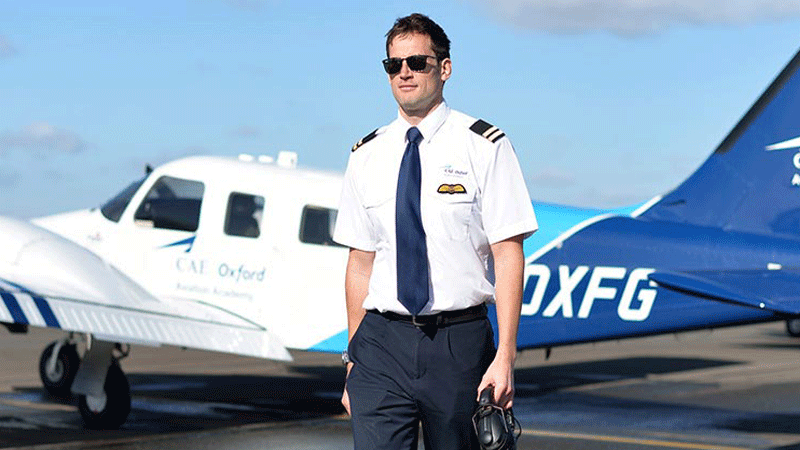
Flight training offers one of the most transformative experiences for aspiring pilots. Students begin inside the cockpit learning basic manoeuvres before progressing to solo flights, extended navigation exercises, and advanced operations. The transition from ground knowledge to real flying is exciting, but it also requires determination and discipline.
Through steady practice and instructor guidance, trainees build the confidence and decision-making skills necessary for professional flying. Each milestone achieved, whether a first solo or a long cross-country flight, reinforces the motivation behind pursuing how to become a pilot after 12th.
Balancing Academic and Practical Requirements
Students sometimes underestimate the challenge of balancing flight hours with academic preparation. Aviation demands parallel growth in both areas. While flying regularly sharpens operational skills, consistent study is essential to perform well in DGCA examinations. Candidates who manage both effectively tend to progress faster and gain a deeper appreciation of the training process.
Pilot course fees become more manageable when training is steady, exams are cleared on schedule, and unnecessary delays are avoided. A disciplined approach helps students maintain momentum from enrolment to licensing.
Selecting the Right Training Environment
Choosing where to train is one of the most important decisions students make when researching how to become a pilot after 12th. A supportive training environment offers reliable aircraft availability, experienced instructors, structured ground classes, and clear communication regarding timelines. These factors contribute significantly to training quality and cost efficiency.
With guidance from ThePilot.in, students can evaluate their options more precisely, considering factors such as training structure, operational efficiency, and overall support for exam preparation.
Preparing for a Professional Aviation Career
Once students complete their training and hold a Commercial Pilot Licence, they begin preparing for airline selection processes. These assessments often involve simulator checks, technical interviews, and aptitude evaluations. The habits built during training influence performance during these assessments.
India’s aviation industry continues to grow, providing opportunities for newly licensed pilots. A well-planned training journey, supported by clear financial understanding and strong academic preparation, helps students take their first steps into professional aviation with confidence.
Conclusion
Understanding how to become a pilot after 12th and gaining clarity on pilot course fees are essential steps in beginning an aviation career. With a well-structured training plan, strong theoretical preparation, consistent flying practice, and expert guidance from ThePilot.in, aspiring pilots can navigate the training journey smoothly. The pathway requires dedication and planning, but with the right approach, students can transform their into a professional career in the aviation industry.