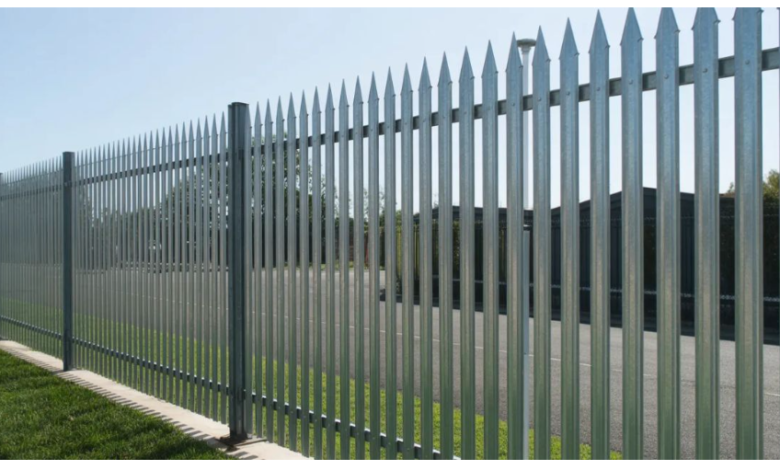
One of the most effective steel security fencing systems is the palisade fence that is highly recognised in the United Kingdom. Palisade fencing features vertical steel pales and heavy-duty horizontal rails to provide excellent perimeter security against unauthorised access and intrusion into commercial, industrial, or public spaces. This introduction discusses why it is trusted in applications requiring high security and how the site’s design enhances protection.
The palisade fence systems are made of cold-rolled galvanised steel, which is highly resistant to weathering and corrosion. The robust construction and anti-tamper fixings are a durable design that helps provide a long lifespan and strength; thus, palisade fencing is one of the best solutions for organisations and businesses that value security and reliability.
What is a Palisade Fence?
A palisade fence is a fixed steel fence designed to provide high security and boundary protection. Its vertical steel pales, usually in W or D profiles, are connected to horizontal rails and heavy posts to form a strong barrier that is hard to climb, cut,/breached.
In contrast to domestic garden fencing, palisade fencing is designed to meet industry standards such as galvanisation to satisfy the BS EN ISO 1461: 2009 rust protection requirements, therefore guaranteeing the long life of the palisade and minimal maintenance.
Key Uses and Applications
The palisade fencing is very flexible and suitable for all applications in public and private areas. Common uses are:
- Warehouses and industrial estates.
- Schools and other educational institutions.
- Utility and power stations
- Bus terminals and rail yards
- Commercial property demarcations.
- Stock and asset protection
Its high level of security makes it especially efficient in an area where 24/7 perimeter monitoring is required.
How Palisade Fence Enhances Security
Palisade fencing is designed to make it work:
- Anti-Tamper Fixings– Special nuts cut in case of tightening, and therefore cannot be easily removed.
- W Section Pales– Thinner centre and thicker curved edges enhance rigidity and discourage climbing.
- Cold Rolled Steel Construction – It provides high strength without weight reduction.
- Galvanised Coating – This prevents rust and corrosion and meets the requirements of BS EN ISO 1461:2009.
All these afford palisade fencing one of the safest steel perimeter solutions in the UK.
Materials and Quality Standards
The general palisade fence is made up of:
- Cold‑rolled galvanised steel for posts, rails, and pales
- Zinc protective coating against rusting.
- Polyester powder coats in different RAL colours are used to enhance aesthetics and protection.
- BS EN ISO 1461: 2009 compliance galvanised finish.
These materials help ensure durability, performance, and conformity with UK construction best practices.
Palisade Fence Designs & Variations
No one way of palisade fencing. Common variations include:
- Standard Security Palisade – Conventional vertical pales with a concrete finish.
- Combi Security Palisade – An improved grade of fencing that is certified to LPS1175 values of protection.
- Self-Raking Bay Systems – Built to be used on sloping ground.
Both styles have particular benefits, depending on the site’s situation and security needs.
Step‑by‑Step Installation Guide
Palisade fencing needs accuracy and design. An approximate process is given below:
Step 1: Mark Out Posts
The spacing between the posts is normally 2.75m centres with the bay widths.
Step 2: Choose Post Method
- Dig In Posts: Holes dug (at least 60cm deep).
- Bolt Down Posts: In case of ground conditions where digging is forbidden.
Step 3: Fix Horizontal Rails
Fishplates pass over posts with M12 bolts attached to make the palings ready.
Step 4: Attach Pales
Pales are arranged parallel to the ground and fixed to the rails with M8 fixings.
Step 5: Secure Fasteners
Fixing the torque of the hexagon nuts to prohibit tampering.
Professional installation will ensure it meets the safety and warranty requirements.
Installation Considerations for Sloping Ground
Self-raking fencing bays can be used to install Palisade fencing on sloping surfaces at up to 30 °. These change naturally without undue ground alterations, which saves on cost and avoids aesthetic incongruity.
The fence can be combined withGRP pedestrian and vehicle gates to ensure the gates remain under control.
Palisade Fence Cost Factors
Costs vary depending on:
- Fence height and thickness
- Finish of materials (galvanised or powder coated)
- Other accessories (gates, fixings)
- On-site and ground conditions.
A favourable quote from a good fencing supplier must include materials, delivery, installation labour, and any statutory safety inspections.
Maintenance and Longevity
It does not take a lot of care due to:
- Rust-resistant galvanised finish.
- Fading-resistant powder coat.
- Impact-resistant steel strength.
Regular checks are used to determine loose fixings or damage early enough so that the fence can serve optimally for decades.
Conclusion: Why Palisade Fence
To conclude, a palisade fence is one of the best, most trusted, and most durable alternatives for high-security perimeter control in the UK. With proper equipment, professional installation, and maintenance, it could protect resources, prevent trespass, and even bring peace of mind over the coming decades.
When you are undertaking a security fencing project, make sure that your palisade fencing meets the required industry standard and fits your site in its environment.
FAQs – Palisade Fence
Q1: What is a palisade fence?
A palisade fence is a high-security steel fencing system with vertical pales and horizontal rails, designed to secure commercial, industrial, and public premises.
Q2: What is the durability of a palisade fence?
A palisade fence can last 25-30 years when built from galvanised steel and properly maintained.
Q3: Is the palisade fencing available on slopes?
Yes, self-raking palisade fencing can be installed on slopes up to 30 degrees without compromising security or alignment.
Q4: Does a palisade fence make it hard to climb?
The anti-tamper fixings, coupled with vertical pales such as the “W” or the “D” profile, render it extremely challenging to climb or break.
Q5: What is the material of the palisade fence?
This is standard cold-rolled galvanised steel, typically powder-coated to prevent corrosion and offer a pleasant finish.