In 2026, the landscape of business intelligence has transformed dramatically. Organizations that leverage AI-powered analytics tools gain a significant competitive advantage, making smarter decisions faster than ever before. The evolution from traditional business intelligence to intelligent analytics has opened new possibilities for companies of all sizes. This comprehensive guide explores the best AI analytics tools available today that are reshaping how businesses extract insights from their data.
The Rise of AI-Powered Analytics in 2026
The shift toward AI analytics represents one of the most significant changes in the data industry. Unlike conventional analytics tools that require skilled data scientists to create reports and dashboards, modern AI analytics platforms democratize data access. They enable business users, managers, and executives to ask natural language questions about their data and receive instant, actionable insights.
The global AI analytics market has exploded with innovation. Businesses recognize that data-driven decision-making is no longer optional—it’s essential for survival. Companies that implemented AI analytics solutions in 2024 and 2025 have already seen remarkable returns on investment, improved operational efficiency, and enhanced customer satisfaction.
Key Features of Modern AI Analytics Platforms
The best AI analytics tools in 2026 share several critical characteristics. First, they incorporate advanced machine learning algorithms that identify patterns humans might miss. Second, they offer intuitive interfaces that don’t require deep technical knowledge. Third, they provide real-time insights that enable quick decision-making. Finally, they seamlessly integrate with existing business systems and data sources.
Natural language processing has become a game-changer. Users can now ask questions like “What was our revenue growth last quarter compared to the same period last year?” and receive visualized answers instantly. This accessibility has transformed analytics from a specialized function into a company-wide capability.
Top AI Analytics Tools for 2026
Microsoft Power BI with AI Capabilities
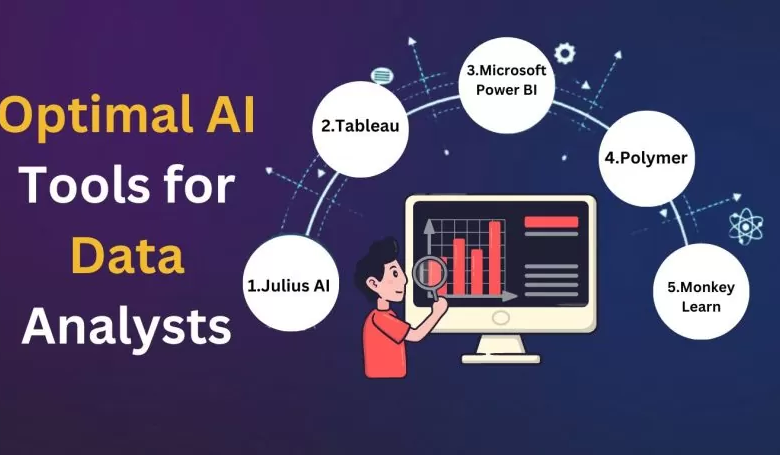
Microsoft Power BI has evolved significantly, integrating advanced AI features that automatically detect anomalies and suggest insights. The platform’s machine learning capabilities help organizations identify trends before they become obvious. Its deep integration with Microsoft’s ecosystem makes it ideal for enterprises already invested in Windows, Azure, and Office 365. The AI-powered Q&A feature allows natural language queries, while automated analytics discover hidden patterns in datasets.
Tableau with Einstein AI
Tableau’s integration with Salesforce’s Einstein AI has created a powerful combination. The platform now recommends visualizations automatically, identifies statistical outliers, and predicts future trends. Its ability to handle massive datasets while maintaining responsive performance makes it suitable for enterprises. The tool excels at creating stunning visualizations that tell compelling data stories.
Google Analytics 4 and Looker Studio
Google’s analytics solutions have integrated sophisticated AI capabilities. Google Analytics 4 uses machine learning to identify important events and provide automated insights. Looker Studio takes this further with AI-powered reporting that suggests the most relevant metrics for your business. The platform’s integration with Google Cloud services provides unmatched scalability.
IBM Watson Analytics
IBM Watson brings enterprise-grade AI analytics to organizations with complex data environments. Its ability to process structured and unstructured data simultaneously sets it apart. Watson Analytics excels at predictive analytics, helping businesses forecast customer behavior, market trends, and operational needs with remarkable accuracy.
Alteryx Intelligence Suite
Alteryx combines data preparation with advanced analytics in a unified platform. Its automated machine learning capabilities enable users to build predictive models without coding expertise. The platform is particularly valuable for organizations that struggle with data quality issues, as it includes powerful data cleansing capabilities alongside predictive analytics.
Databricks Lakehouse Platform
Databricks represents the future of analytics infrastructure. Built on Apache Spark, it handles massive-scale analytics workloads while integrating AI and machine learning natively. The platform is ideal for organizations that need to process petabytes of data while maintaining real-time analytics capabilities.
SAS Viya Analytics
SAS Viya represents decades of analytics expertise enhanced with modern AI capabilities. The platform excels in advanced statistical analysis, forecasting, and optimization. Organizations in finance, healthcare, and pharmaceuticals particularly value SAS’s robust capabilities and regulatory compliance features.
How AI Analytics Drive Better Decisions
AI analytics tools transform decision-making in several critical ways. Predictive analytics help organizations anticipate customer behavior, market changes, and potential risks before they materialize. Prescriptive analytics go beyond predictions, recommending specific actions to optimize outcomes. Anomaly detection identifies unusual patterns that might indicate fraud, equipment failure, or emerging opportunities.
Real-time dashboards powered by AI enable executives to monitor business health continuously. Rather than waiting for monthly reports, decision-makers can access insights as events unfold. This responsiveness is particularly crucial in fast-moving industries where delays cost money and competitive advantage.
Implementation Considerations
Choosing the right AI analytics tool requires careful evaluation. Organizations should consider their existing technology stack, team expertise, budget, and specific use cases. Cloud-based solutions offer flexibility and scalability, while on-premises options provide enhanced security and control. Most leading platforms offer both deployment options.
Data governance becomes increasingly important as analytics sophistication increases. Implementing proper data quality standards, access controls, and audit trails ensures that insights are trustworthy and compliant with regulations like GDPR and CCPA.
Training and change management are often overlooked but critical for success. The best analytics tool fails if users don’t know how to leverage its capabilities. Organizations should invest in comprehensive training programs and designate analytics champions who can guide their colleagues.
The Future of Analytics
By 2026, AI analytics has become essential infrastructure for competitive businesses. The democratization of analytics means that insights are no longer bottlenecked by data science teams. Instead, business users throughout organizations can ask questions and get answers.
The convergence of AI, real-time data processing, and user-friendly interfaces represents a fundamental shift in how organizations operate. Companies that embrace this transition gain dramatic advantages in speed, efficiency, and decision quality.
Conclusion
The best AI analytics tools for smart and data-driven decisions in 2026 share common characteristics: they’re accessible to non-technical users, provide real-time insights, leverage machine learning effectively, and integrate seamlessly with existing systems. Whether you choose Microsoft Power BI, Tableau, Google Analytics, IBM Watson, or another platform, the key is to start your AI analytics journey now.
The competitive advantage goes not to organizations with the most sophisticated tools, but to those that effectively implement analytics and create a data-driven culture. Invest in the right platform, train your team thoroughly, and empower your organization to make smarter, faster decisions. In 2026, data-driven excellence is not a luxury—it’s a requirement for success.