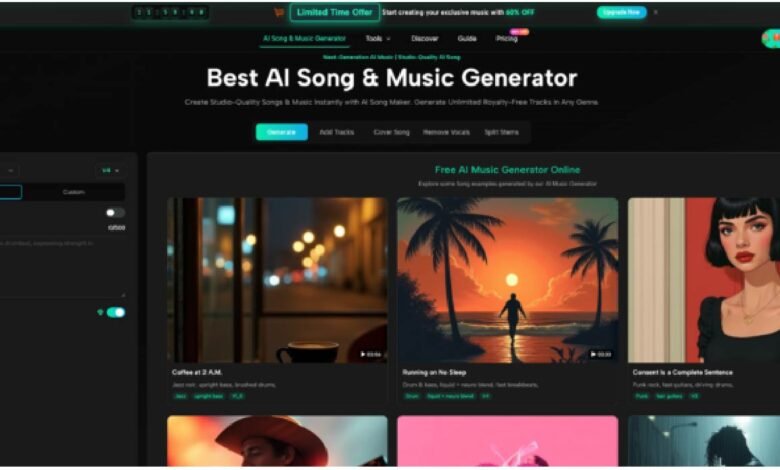
A handwritten letter means something. A personalized song built from those same words can stop a room. For decades, commissioning a custom track required connections to a songwriter, a studio, and a budget that put it out of reach for ordinary people celebrating ordinary moments. That barrier is dissolving. Tools that turn text into music now let anyone take a birthday message, a love note, or a graduation speech and hear it transformed into a professionally produced song—complete with instrumentation, vocals, and the emotional arc of the original words. The AI Song Generator approaches this not as a novelty, but as a structured creative process where words lead and music follows.
The Emotional Weight of a Song Made Specifically for Someone
Gifts that involve personal effort carry disproportionate emotional value. A store-bought playlist shows thought, but a song that uses someone’s name, references shared memories, and captures the inside language of a relationship sits in a different category entirely. The gap between “I wish I could write a song for you” and actually delivering one used to be unbridgeable for anyone without musical training. Text-to-music technology narrows that gap to the space of an afternoon and a few well-chosen sentences.
From Sentiment to Sound: A Three-Step Creative Journey
The platform guides users through a logical progression that respects the emotional intent: capture the words, find the musical voice, and shape the final gift.
Step 1: Put the Heart into Words or Let AI Help Draft
The process starts with text. A user can write original lyrics, paste a poem, or describe the message they want to convey. For those who freeze at the blank page, the built-in AI Lyrics Generator offers a starting point by producing structured verses, choruses, and bridges around a given theme.
How the Lyrics Generator Bridges the Writing Gap
A user typing “a song for my daughter’s fifth birthday, celebrating her curiosity and love for dinosaurs” receives a full lyrical structure with rhyming lines and a recurring chorus. The output is not Pulitzer-level poetry—it leans on familiar imagery and conventional rhyme schemes—but it provides a functional scaffold. From there, the user can personalize it further by editing lines to include the child’s name, favorite toys, or family phrases. This collaborative dynamic, where AI drafts and the human refines, mirrors the way thoughtful gifts are actually made: with personal oversight at every step.
Step 2: Transform the Text into a Melody That Matches the Emotion
The user then feeds the completed text into the music generator, selecting a genre and mood that fits the recipient. A lullaby for a newborn demands different instrumentation than a pump-up track for a graduating senior, and the platform’s support for over 30 genres allows that calibration.
How the System Interprets Emotional Keywords
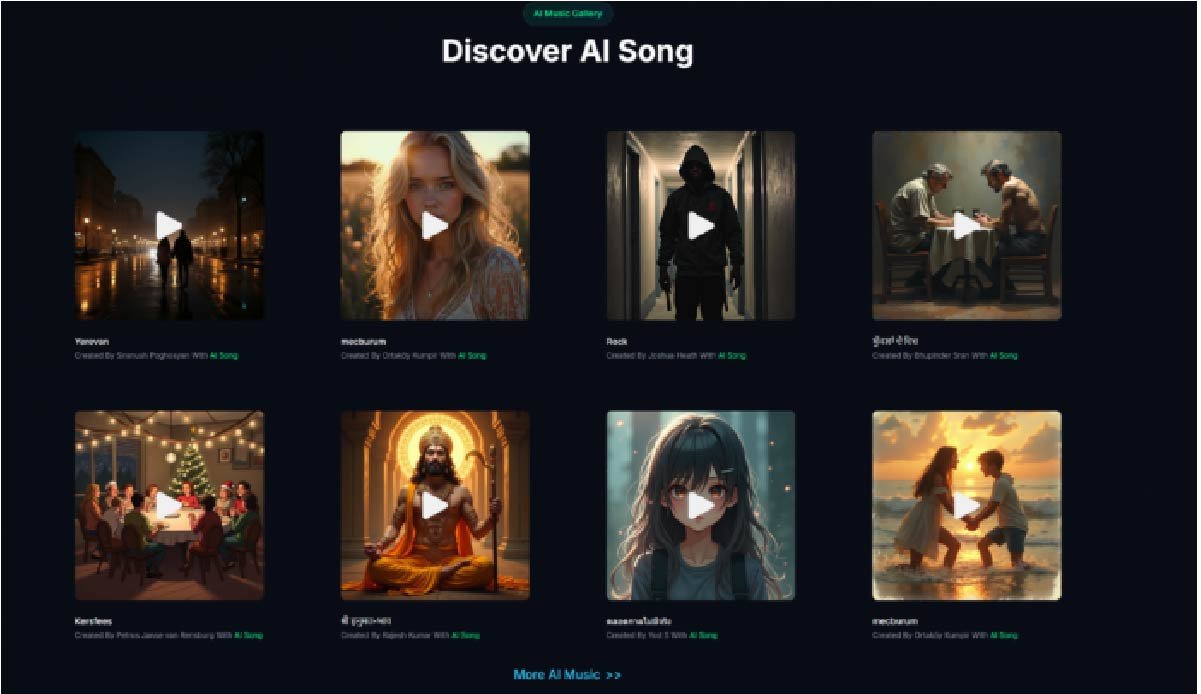
In testing, the AI Song Maker responded distinctively to emotional modifiers. A prompt pairing “tender acoustic folk” with lyrics about a mother’s lullaby produced a sparse arrangement with fingerpicked guitar and soft, breathy vocals. The same lyrics paired with “energetic pop rock” transformed into a driving, celebratory anthem. This sensitivity to stylistic framing means the same heartfelt words can serve entirely different emotional purposes—a quiet moment of reflection or a loud declaration of love—depending on the genre choice. The vocal synthesis sat naturally in the mix, and the auto-mastering ensured the track sounded complete and gift-ready without additional audio processing.
Step 3: Extend and Polish the Track for the Perfect Length
Many generated songs arrive at a concise length that may feel too short for a standalone gift. The Song Extension feature addresses this by adding verses, bridges, and instrumental passages while maintaining the original key, tempo, and production style.
Stretching a Moment into a Keepsake
I tested extension on a two-minute ballad generated for a hypothetical anniversary. The resulting track gained an additional verse and a key-change bridge that raised the emotional intensity before resolving. The transition at the extension point was nearly seamless, though careful headphone listening revealed a subtle shift in reverb character where the new section began. For a gift played on living room speakers or shared as a digital file, this level of consistency is more than sufficient. The WAV converter provides a lossless export for those who want to preserve the file in the highest available quality for printing onto physical media or archiving.
The Emotional Economy of Personalized Songs Versus Traditional Gifts
| Gift Type | Personalization Depth | Time Investment | Cost | Emotional Impact Longevity |
| Store-Bought Playlist | Low (curation only) | 1–2 hours | Free–subscription | Moderate, fades |
| Commissioned Portrait | High (custom art) | 2–4 weeks | $50–$500+ | High, permanent object |
| Handwritten Letter | Very High | 1–3 hours | Free | High, tangible but static |
| AI-Generated Personal Song | Very High (custom lyrics + music) | Under 1 hour | Free (with public visibility) | Very High, repeatable listening experience |
Occasions Where a Song Outperforms Any Card
The use cases extend well beyond birthdays and anniversaries. A group of friends can collaborate on lyrics for a farewell song for a colleague moving abroad, with each contributor adding a verse about a shared memory. Parents can document their child’s current interests and catchphrases in a time-capsule song that will sound wonderfully dated in a decade. A recovery community can generate an anthem of resilience for a member completing a treatment program, using the text-to-music feature to set a collectively written poem to a style that reflects their shared identity. In each scenario, the song functions as participatory gift-making rather than a passive purchase.
What the Technology Cannot Yet Replicate
The emotional resonance of an AI-generated song has limits worth acknowledging. The vocal delivery, while tonally accurate, lacks the micro-expressions of a human singer who knows the subject personally—the catch in the voice on a significant word, the improvised run that conveys overwhelming feeling. The lyrics generator tends toward generic positivity and standard rhyme patterns; deeply specific personal references still require the human to edit and inject vernacular. The public visibility requirement on the free tier means a surprise gift may not remain a surprise if the recipient or mutual friends discover the track during generation. And like all generative AI, the output is not deterministic: running the same text with the same settings may produce a different take, which means the creator should generate a few versions and select the one that feels most emotionally true.
A Gift That Sounds Like Listening
The AI Song Generator will not compose the next great love song of a generation. But it will let a father send his daughter off to college with a track that mentions her childhood dog, her obsession with constellations, and his quiet hope that she calls home now and then. That kind of specificity, rendered into music at the cost of an afternoon and zero dollars, belongs to a new category of gift—one that is neither mass-produced nor professionally commissioned, but algorithmically assembled and humanly curated. For the people in our lives who already have everything, a song that only they will fully understand might be the one thing they did not know they wanted.