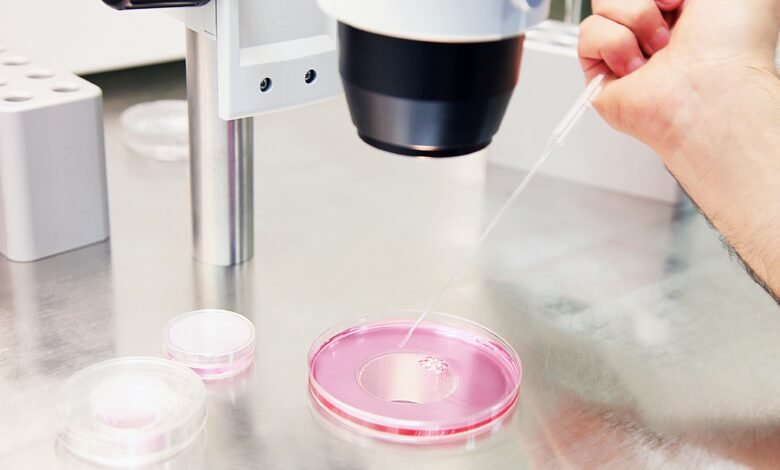
The choice of sterilization method for Petri dishes affects product safety, the quality control process, and the preparation of regulatory documentation. For products intended for in vitro diagnostics, the decision between EO and gamma should be based on the material properties, intended use, and the ability to confirm compliance with IVDR requirements.
Differences between EO and gamma sterilization for Petri dishes
EO sterilization uses ethylene oxide and is carried out at low temperatures. As a result, this method is well suited to products made of plastics that may be sensitive to high temperatures. In the case of disposable Petri dishes, it helps reduce the risk of material damage, but it requires control of residuals left after the process.
Gamma sterilization is based on ionizing radiation, which penetrates the packaging and the entire product. The process does not require the use of gas, so it does not leave the typical chemical residues associated with EO. At the same time, radiation may affect the structure of certain polymers, so it is necessary to verify the compatibility of a specific material with this method.
When selecting a sterilization method, the type of plastic, the design of the dish, and its intended use should all be taken into account. Polystyrene and polypropylene may respond differently to radiation sterilization, especially when the product contains additional components, coatings, or elements sensitive to changes in physical properties.
The impact of the sterilization method on the quality and safety of dishes
The EO process requires an aeration stage. Its purpose is to reduce the level of ethylene oxide residues and the by-products generated during sterilization. A manufacturer of sterile Petri dishes must demonstrate that the procedure used ensures an appropriate level of biological and chemical safety.
In the case of gamma sterilization, material testing requires particular attention. The analysis covers, among other things, polymer stability, surface properties, product cleanliness, and the retention of parameters after storage. This also applies to packaging and labels, which may react to radiation.
IVDR requirements for the sterilization of laboratory products
IVDR requirements apply to the entire process of ensuring product safety, and sterilization is one of the elements that must be controlled in accordance with them. If Petri dishes are placed on the market as sterile Class A IVDR devices, the manufacturer must meet additional requirements related to ensuring and maintaining sterility.
The documentation should confirm that the selected method has been validated and provides the intended level of safety. This applies to both EO and gamma, because the sterilization technology itself does not determine compliance with the regulation.
How should documentation be prepared for an IVDR audit when selecting a sterilization method?
During an audit, it is important to present consistent data regarding the product and the process. The documentation should include:
- a description of the product, its intended use, and its classification under IVDR,
- justification for selecting a specific sterilization method,
- process parameters and critical control points,
- process validation reports,
- results of material and biological testing,
- data on post-market monitoring of the product.
For EO, information on gas residue control and aeration effectiveness is of particular importance. For gamma, the auditor may require confirmation that the radiation dose does not adversely affect the product’s properties.
Criteria for choosing a sterilization method for Petri dishes used in testing and production
The decision between EO and gamma sterilization should take several areas into account. The first is material compatibility. If the plastic or additional components of the product are susceptible to radiation-induced changes, EO may require fewer additional material tests.
The second aspect is process organization. Gamma often allows sterilization to be carried out more quickly and does not require a stage for removing gaseous residues. EO, on the other hand, requires careful cycle management and chemical safety control.
Customer requirements and the specific application of the dishes are also important. In microbiological, diagnostic, and laboratory testing, the choice of method should result from a risk analysis and confirmed data relating to the specific product.
A company involved in the production of Petri dishes, such as Noex Labware, should treat sterilization as part of the overall quality system. Properly prepared validation, process control, and documentation make it easier to pass an IVDR audit and maintain product compliance throughout the entire lifecycle.
EO vs. gamma sterilization for Petri dishes
- EO and gamma can both be used to sterilize Petri dishes if the process is validated and documented.
- EO requires control of chemical residues, while gamma requires assessment of radiation’s impact on the material.
- When choosing a method, the product’s intended use, the plastic material, and IVDR requirements should all be analyzed.
- Validation documentation and quality control data are crucial during an audit.
FAQ
Which sterilization method for Petri dishes is compliant with IVDR?
Both EO and gamma can be compliant with IVDR if they meet the requirements for process validation and documentation. The choice depends on the specifics of the product, the material used, and the results of process validation.
What are the main differences between EO and gamma sterilization?
EO provides deep penetration but requires a longer aeration time. Gamma is faster and leaves no gaseous residues, but it may affect material properties.
Must sterilization documentation be presented during an audit?
Yes, sterilization process documentation, including validations and records confirming control measures, is an important part of an IVDR audit. The absence of appropriate records may make it difficult to demonstrate product compliance.
What criteria should be taken into account when choosing a sterilization method?
The type of material, the intended use of the dishes, regulatory requirements, and the results of the risk analysis should all be considered. It is also important to confirm product stability after the process has been completed.
Meta title: Sterilization of Petri dishes in compliance with IVDR – EO or gamma?
Meta description: Find out how EO and gamma sterilization of Petri dishes differ and what documentation requirements must be met during an IVDR audit.