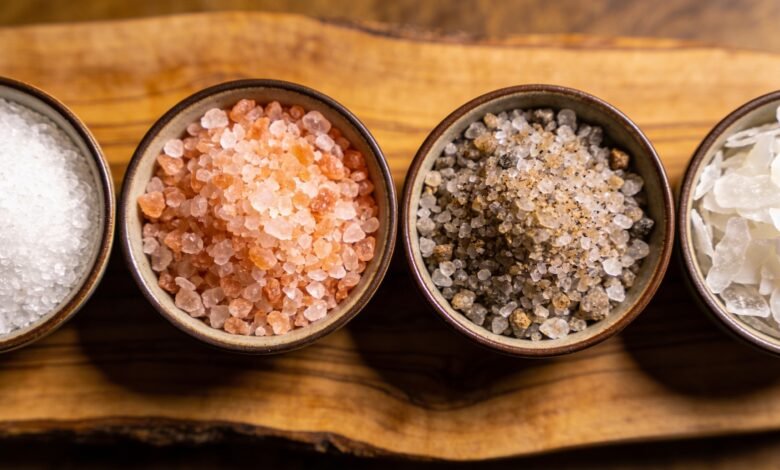
Salt is one of the most essential ingredients in the world and is used to improve the flavor of food. Salt plays an important role in maintaining fluid balance and proper body function.
Although different types of salt vary in origin, processing methods, texture, and mineral composition, all edible salts primarily contain sodium chloride.
In this blog, we will discuss the types of salts commonly used, as well as popular specialty salts, their key features, and applications.
How Many Types of Salt Are Available in the Market?
There is a wide variety of salts available on the market. That’s why understanding the different types of salt, their benefits, and their uses helps you make an informed choice.
- Origin of source (sea, rock, or mineral deposits)
- Refined or unrefined
- Texture and grain size
- Intended use (cooking, finishing, preservation, or wellness).
What Is Table Salt?
Table salt is the most common and cost-effective type of salt that is used in homes globally. It is normally extracted from underground salt deposits, refined and purified, and appears as fine white crystals.
Table salt is enriched with iodine to assist in meeting the dietary needs of iodine. The anti-caking agents are also added to prevent clumping. It is particularly appropriate for precise cooking and baking as it has a consistent grain size.
Common uses of table salt include:
- Cooking and everyday seasoning
- Baking and dough preparation
- Food preservation and pickling
- Processed and packaged foods
Table salt is fine in texture; it dissolves easily and provides a balanced saltiness.
What Is Himalayan Pink Salt?
Himalayan pink salt is a natural rock salt that has been extracted from the ancient salt deposits that were formed millions of years ago. These deposits have been formed by evaporation of the old oceans and have been preserved under the rocks, which means that they are protected from contamination by the environment.
This salt is minimally processed and has generally been washed to strip away impurities but never refined chemically. Himalayan pink salt contains trace amounts of naturally occurring minerals, which give it its unique pink color.
Common uses of Himalayan pink salt include:
- Cooking and seasoning
- Finishing dishes
- Gourmet and decorative applications
Himalayan pink salt is believed to have some health benefits, yet it contains the same amount of sodium as any other salt. It is generally associated with purity, mineral content, and attractive appearance.
If you would like to learn more about mineral-rich salt and how it fits into everyday wellness, you can explore Ittefaq Salt Company.
What Is Sea Salt?
Sea salt is produced from evaporating seawater and is usually minimally processed. It might contain trace minerals, including magnesium, calcium, and potassium, depending on the source and its mode of harvesting, and this can have a subtle flavor profile.
Sea salt comes in coarse and fine grains and gives it a pure and natural flavor.
Common uses of sea salt include:
- Vegetable, meat, and seafood seasoning.
- Cooking and baking
- Coarse grain is used as a finishing salt.
What is Smoked Salt?
Smoked salt is a specialty salt that is produced by smoking sea salt or Himalayan salt over time over natural wood, e.g., oak, hickory, or applewood. The salt absorbs the smoke in the process and acquires a rich aroma and flavor.
It is generally not chemically refined, and it maintains its natural texture. The color can also be different, either light golden or even dark brown, and this can be attributed to the kind of wood used and the duration of smoking.
Common uses of smoked salt include:
- Grilled or roasted meat seasoning
- Adding smoky flavor to vegetables and eggs
- Improving the flavor of seafood dishes
What is Celtic Sea Salt?
Celtic sea salt is a natural sea salt that is unrefined and harvested naturally in the coastal areas, mostly in France. It is collected through the process that enables the seawater to evaporate naturally in the sun.
Because of the little processing done, it retains its natural moisture content, and therefore, it has its trace minerals. It often comes in light grey.
Common uses of Celtic Sea salt include:
- For finishing purposes, used in grilled meat, roasted vegetables, and salads.
- Perfect for baking, curing, and seasoning food.
- It is sometimes used in a hydration drink due to its mineral content
What is Pyramid Salt?
Pyramid salt is a good finishing salt with pyramid-shaped crystals. These are the crystals that are caused by a controlled evaporation, which makes light hollow flakes. The salt is white and gives a crunchy texture that is aesthetically pleasing.
Pyramid salt is commonly used in:
- Finishing steaks and grilled fish
- Sprinkle over roasted vegetables.
- Garnishing chocolate or caramel-based desserts
What is Flake Salt?
Flake salt consists of light, crisp, and thin salt crystals. It is typically picked manually and dried gradually to make the flakes soft.
It is ideal to be served as a finishing salt to add crunch, texture, and a burst of clean, briny flavor to food before serving.
Flake salt is commonly used in:
- Sprinkled on top of steaks, roasted vegetables, or fresh salads
- Adds a savory touch to cookies, brownies, and desserts
- Improves the flavor of breakfast items: eggs, oatmeal, and waffles
Frequently Asked Questions (FAQs):
1. What is cooking salt used for?
Ans: Cooking salt is commonly used during food preparation to add flavor, balance the acidity and sweetness, and ensure proper seasoning throughout the cooking process.
2. Can Himalayan pink salt be used for everyday cooking?
Ans: Yes, Himalayan pink salt can be used in daily cooking, seasoning, and finishing of meals.
3. What are the main types of salt used in cooking?
Ans: Table salt, sea salt, kosher salt, and Himalayan pink salt are cooking salts, and specialty salts such as Celtic Sea salt, smoked salt, pyramid salt, and flake salts can be used for finishing touch.
Concluding Remarks:
Salt is a very important ingredient that is utilized in cooking, food preservation, and daily consumption. Ultimately, the best salt is one that is based on usage. Refined salts like table salt and natural salts such as sea salt or Himalayan pink salt are commonly used during cooking to enhance flavor. Similarly, the salts that are used for finishing purposes, like the pyramid flakes or the smoked salt, are used to add texture and flavor.