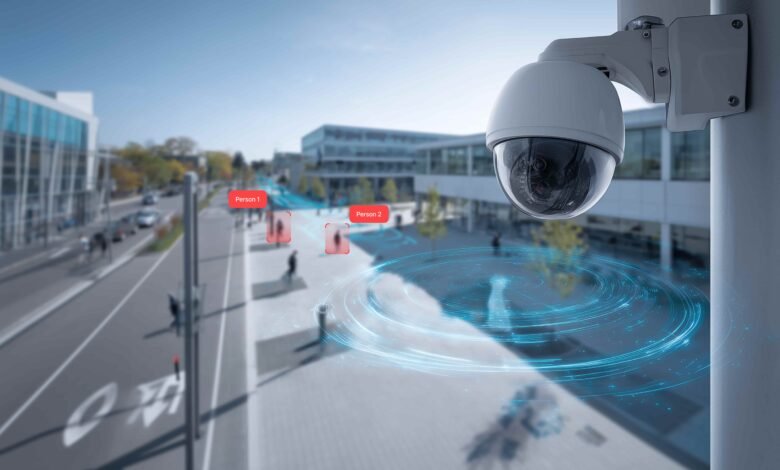
A nurse is threatened at a triage desk in the emergency department. A patient with a history of elopement walks unescorted toward an exit. A visitor enters a restricted pharmacy corridor without authorisation. In each of these scenarios, a traditional CCTV system does the same thing: it records.
AI video surveillance does something different. It responds.
Hospitals have long been among the most complex security environments in the world. They operate around the clock, serve populations that include vulnerable patients, and employ thousands of staff across facilities that can span multiple buildings. Legacy surveillance infrastructure was never built to handle that complexity at scale. AI-powered systems are changing that, and the shift is happening faster than most hospital administrators anticipated.
By 2026, AI video surveillance has moved from trial deployment to standard consideration in hospital capital planning across North America, Europe, the United Kingdom, and the Asia-Pacific region. The reasons are operational, financial, and in several cases, regulatory. This article examines how the technology is being applied in clinical environments, what outcomes have been documented, and what health systems should understand before committing to deployment.
1. Preventing Workplace Violence Against Clinical Staff
Workplace violence in healthcare settings is a documented and persistent problem. According to the International Labour Organization, healthcare workers are four times more likely to experience workplace violence than workers in other industries. Emergency departments, psychiatric units, and waiting areas carry the highest risk.
AI video surveillance addresses this through behavioural analysis. Systems trained on aggression indicators, including raised arms, rapid movement, and crowd formation, can alert security teams before a confrontation escalates. At Vanderbilt University Medical Center in the United States, an AI-assisted surveillance pilot in the emergency department contributed to a reported reduction in staff assault incidents within the first year of deployment.
The system does not replace security personnel. It gives them a faster, more accurate picture of where they need to be.
2. Managing Patient Elopement and Wandering
For hospitals treating patients with dementia, acquired brain injury, or psychiatric conditions, patient elopement is a serious safety and liability concern. Traditional monitoring relies on staff observation and door alarms, both of which have gaps.
AI surveillance platforms can be configured to track patient movement patterns, flag individuals who enter restricted zones or approach exits without staff accompaniment, and send real-time alerts to nursing stations. The Royal Melbourne Hospital in Australia trialled an AI patient monitoring system in its dementia ward that reduced elopement incidents by tracking movement anomalies against each patient’s established baseline behaviour.
The distinction here is between a system that records that a patient left the ward and one that alerts staff while the patient is still in the corridor.
3. Strengthening Access Control Across Large Campuses
Major hospitals are not single buildings. They are campuses, often with dozens of entry points, staff-only zones, medication storage areas, and critical infrastructure that require controlled access. Managing that access manually across a 24-hour operation is resource-intensive and prone to failure.
AI surveillance integrates with access control systems to create layered verification. If a badge scan does not match the camera feed at the same door, the system flags the discrepancy. If an individual tailgates through a secure entry, the system logs it and alerts security. At Great Ormond Street Hospital in London, integration of AI camera analytics with existing access control reduced unauthorized entry events in restricted clinical areas by a measurable margin within six months of deployment.
4. Reducing Drug Diversion in Pharmacy and Medication Areas
Drug diversion, the theft or misuse of controlled substances by healthcare workers, is a problem health systems globally are actively working to address. It carries consequences for patient safety, staff welfare, and institutional liability.
AI surveillance in pharmacy and medication dispensing areas can detect unusual behaviour patterns, including repeated access outside scheduled shifts, extended dwell time near controlled substance storage, and access by individuals not rostered to that area. When combined with electronic dispensing records, these systems create an audit layer that significantly raises the detection rate of diversion events before they become patterns.
The US Drug Enforcement Administration has noted that AI-assisted monitoring is increasingly being referenced in compliance frameworks for healthcare facilities handling Schedule II and III substances.
5. Supporting Clinical Compliance and Infection Control
During the COVID-19 pandemic, hospitals needed to monitor PPE compliance, patient isolation protocols, and restricted zone access at a scale that human observation could not sustain. AI surveillance stepped into that gap, and the capability has remained relevant beyond the pandemic context.
Systems can now monitor hand hygiene compliance at entry and exit points, flag staff who bypass PPE requirements in isolation areas, and track patient movement during outbreak management. A hospital network in Singapore deployed AI compliance monitoring across its infectious disease wards and reported that hand hygiene adherence rates improved by 18 percentage points over a six-month period, attributed in part to real-time feedback loops enabled by the surveillance system.
6. Improving Emergency Response Coordination
When a code blue, fire, or security incident is called, the speed and accuracy of the response depends on staff knowing exactly where the event is occurring and what is happening in real time. AI surveillance systems feed live situational data to emergency coordinators, reducing the time between an incident being detected and the appropriate response being dispatched.
At University Hospital Birmingham in the United Kingdom, integration of AI surveillance with the hospital’s emergency operations centre allowed coordinators to view live feeds tagged by incident type during a simulated mass casualty drill. The time to full staff deployment was reduced by 22% compared to the previous protocol. The technology is now part of the hospital’s standard emergency preparedness framework.
7. Protecting Neonatal and Paediatric Units
Infant abduction from hospital neonatal units is rare but carries a severe impact on families and institutions. Paediatric wards also face risks from unauthorised visitor access and custody disputes that can escalate into security incidents.
AI surveillance systems in these environments are configured with perimeter rules: any individual carrying an infant-sized object toward an exit triggers an immediate alert. Facial recognition at ward entry points can flag individuals who have been flagged by court order or previous incident. Several major children’s hospitals in the United States and Canada have reported zero infant abduction incidents since deploying AI-assisted monitoring, compared to documented incidents in the five years prior.
8. Managing Visitor and Contractor Flow
Hospitals receive thousands of visitors and contractors each day. Tracking who is on site, whether they have the relevant clearances, and where they are at any given time is an operational challenge that traditional visitor management systems handle poorly at scale.
AI surveillance adds a real-time layer to visitor management. Systems can verify that a visitor’s badge matches the face of the person wearing it, flag badges that have been shared or transferred, and alert security when an individual’s movement does not match their stated purpose. This is particularly relevant in facilities that host research laboratories, data centres, or executive offices within the hospital campus.
9. Supporting Post-Incident Investigation
When incidents occur, the quality of the investigation depends heavily on what was captured and how quickly it can be reviewed. Traditional CCTV requires manual review of hours of footage across multiple cameras. AI surveillance systems tag footage with metadata: timestamps, object classifications, individual tracking identifiers, and anomaly flags.
This means that when a medication error, patient fall, or security incident is investigated, the relevant footage can be located in minutes rather than hours. At a major teaching hospital in the Netherlands, AI-tagged surveillance data reduced post-incident investigation time by an average of 67% across a 12-month review period. The reduction in administrative burden allowed the clinical governance team to process a higher volume of incidents and identify systemic issues faster.
10. Building a Foundation for Predictive Safety Management
The long-term value proposition of AI video surveillance in hospitals goes beyond individual incident response. Over time, these systems accumulate data that can identify patterns: which areas generate the most security alerts, which shift periods carry the highest risk, and which environmental factors correlate with increased aggression incidents.
Health systems that have been running AI surveillance for three or more years are beginning to use that data to inform staffing decisions, capital planning, and facility design. A hospital group in Canada reviewed two years of AI surveillance data and used the findings to redesign the waiting area layout in its two busiest emergency departments, resulting in a documented reduction in patient-staff conflict incidents in the 12 months following the redesign.
This shift from reactive security to data-informed safety management represents the most significant long-term opportunity that AI video surveillance offers the healthcare sector.
FAQs
Is AI video surveillance compliant with patient privacy laws?
Compliance depends on jurisdiction and implementation. Health systems must ensure that AI surveillance deployments conform to applicable frameworks, including HIPAA in the United States, GDPR in Europe, and equivalent national frameworks elsewhere. In most cases, surveillance in clinical areas is permissible where it is disclosed, purposefully limited, and does not capture identifiable health information. Legal review prior to deployment is essential.
Can AI surveillance systems be integrated with existing hospital infrastructure?
Most enterprise-grade AI surveillance platforms are designed for integration with existing camera networks, access control systems, and hospital information management systems. Integration complexity varies depending on the age and architecture of the existing infrastructure. Hospitals with legacy analogue camera systems may require hardware upgrades before AI analytics can be applied.
What is the typical cost of deploying AI video surveillance in a hospital?
Costs vary significantly based on facility size, camera count, and the scope of AI analytics required. Indicative figures for a mid-size hospital range from USD $500,000 to $2 million for initial deployment, with ongoing software licensing and maintenance costs on top. Cloud-based deployment models have reduced upfront capital requirements considerably and are increasingly the preferred approach for health systems working within constrained capital budgets.
How long does implementation take?
A phased implementation in a mid-size hospital typically runs between six and eighteen months, depending on the scope of integration and the number of camera endpoints involved. Vendors experienced in healthcare deployments generally recommend a phased approach, beginning with high-risk areas such as emergency departments and pharmacy, before expanding across the broader campus.
How are AI surveillance systems monitored and maintained?
Most systems are monitored through a centralised security operations platform, either managed in-house or through a managed security service provider. AI models require periodic retraining as hospital environments change, and hardware requires standard maintenance schedules. Hospitals should negotiate clear SLAs covering system uptime, model accuracy benchmarks, and incident response times as part of any vendor contract.
What are the risks of false positives in a clinical environment?
False positives are a documented limitation of AI surveillance systems. In a healthcare context, an unnecessary security alert can disrupt clinical care and erode staff trust in the system. Leading vendors report false positive rates below 5% in mature deployments, but hospitals should insist on pilot data from comparable clinical environments before committing to full deployment. Human review steps for high-stakes alerts remain standard practice.
Final Verdict
AI video surveillance is becoming a standard component of hospital security infrastructure. The technology has moved well past the proof-of-concept stage. Documented outcomes across emergency departments, paediatric units, pharmacy environments, and large hospital campuses demonstrate that these systems deliver measurable improvements in response times, incident prevention, and post-incident investigation quality.
The operational case is strong. The financial case is improving as deployment costs fall. The regulatory environment is still developing, and health systems that treat compliance as an afterthought will face avoidable exposure.
Hospitals considering AI video surveillance should approach deployment with a clear scope, a defined set of use cases, legal review specific to their jurisdiction, and a governance framework for how surveillance data is stored, accessed, and retained. The technology works best when it is built into a broader safety strategy, not bolted on as an independent security layer.
For health systems that do this well, the result is not just a more secure facility. It is a more observable one, with the data infrastructure to improve safety outcomes over time.