Underpinning London:
Underpinning and piling are two essential structural solutions often required in construction and renovation projects. Underpinning strengthens existing foundations, while piling provides deep support for new structures, particularly on weak or unstable soil. While both are critical in their own right, combining Underpinning London and piling for efficiency can be tempting, but it requires careful planning to avoid complications and ensure structural integrity.
Understanding Underpinning and Piling
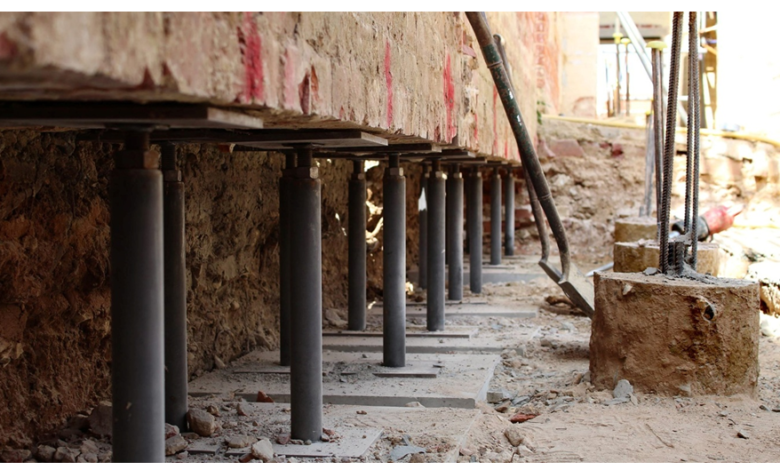
Before combining the two, it’s important to understand each process. Underpinning involves reinforcing or extending the foundation of an existing structure, usually to support additional load or address subsidence. Piling, on the other hand, involves driving deep columns, often made of concrete, steel, or timber, into the ground to transfer building loads to stable soil layers.
While underpinning focuses on stabilizing an existing foundation, piling is proactive, creating a robust support system for new construction. Starting both simultaneously may seem efficient, but without proper coordination, it can lead to structural risks and budget overruns.
Key Considerations Before Starting
Soil Testing and Survey:
Comprehensive geotechnical surveys are crucial. They determine soil bearing capacity, moisture content, and potential hazards. Both underpinning and piling rely on accurate soil data to ensure proper load distribution.
Engineering Consultation:
Engage a structural engineer to develop a combined plan. This ensures that the underpinning does not conflict with piling locations and that the loads from both systems are properly calculated.
Project Sequencing:
Careful sequencing is essential. Often, underpinning may need to be partially completed before piling begins to avoid destabilizing existing structures. Conversely, if piles are installed first, they may obstruct certain underpinning methods.
Potential Challenges
Starting underpinning and piling together introduces several risks:
Structural Interference:
Pile locations may conflict with underpinning sections, risking damage to the existing foundation.
Load Imbalance:
Without proper engineering, simultaneous projects may result in uneven load distribution, leading to settlement or cracking.
Safety Hazards:
Working with heavy machinery near an existing building increases the risk of accidents for workers.
Cost Overruns:
Misaligned planning or unforeseen technical challenges can quickly escalate costs.
Best Practices for Combined Projects
Integrated Design Plan:
Develop a single, unified plan for both underpinning and piling. This should include detailed schematics, load calculations, and a sequence of works.
Staggered Execution:
Consider partial underpinning before piling begins, or vice versa. This prevents interference and ensures stability throughout construction.
Expert Contractors:
Hire contractors experienced in both underpinning and piling. Professionals familiar with combined projects can anticipate potential issues and provide efficient solutions.
Monitoring and Inspection:
Regular structural monitoring during the project ensures that movements, vibrations, or stresses are detected early. Engineers can adjust techniques to mitigate any risks.
Communication and Coordination:
Maintain close communication between engineers, contractors, and project managers. Miscommunication is a common cause of delays and errors in combined projects.
When to Avoid Starting Both Together?
In some cases, it may be safer to complete underpinning fully before beginning piling, especially for older or fragile structures. Projects involving complex underground services, uneven soil conditions, or historic buildings may require sequential rather than simultaneous execution. Prioritizing safety and structural integrity over speed is always recommended.
Combined Underpinning and Piling Packages in Stoke-on-Trent:
When planning both underpinning and piling for a property in Stoke-on-Trent, specialized packages can help streamline the process while managing costs and timelines.
Basic Package
This package is ideal for smaller residential projects. It includes soil assessment, structural survey, partial underpinning of critical areas, and shallow piling for added support. It’s a cost-effective solution for homes that need minor foundation reinforcement while preparing for extensions or extra loads.
Standard Package
Designed for medium-scale projects, the standard package offers full underpinning of the building’s foundation, deep piling in key zones, and continuous structural monitoring. Engineers coordinate both processes to prevent interference and ensure proper load distribution. Ideal for older properties or houses planning significant vertical expansion.
Premium Package
For large-scale or commercial properties, the premium package provides comprehensive underpinning and piling solutions. It includes advanced soil testing, custom pile design, complete foundation reinforcement, vibration monitoring, and project management oversight. This package ensures maximum structural integrity and long-term stability for complex projects.
Each package is customizable depending on the property type, soil conditions, and project requirements, ensuring safe and efficient foundation work.
Conclusion:
Starting underpinning and piling Stoke-on-Trent can save time if carefully managed, but it requires thorough planning, expert consultation, and precise execution. From understanding soil conditions to sequencing works and monitoring structural health, every step plays a crucial role in preventing costly mistakes and ensuring long-lasting results.
By following best practices and engaging skilled professionals, property owners and developers can enjoy the benefits of combined foundation work without compromising safety, quality, or budget. For projects where both underpinning and piling are necessary, careful preparation is the key to success.