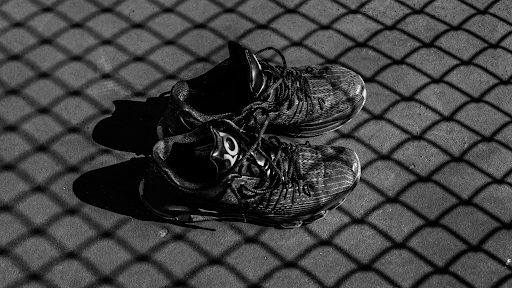
The footwear industry is undergoing a quiet revolution. As average heights increase and brands expand their size ranges, men who wear size 15 and above are finally finding options that don’t sacrifice style for fit. What was once a frustrating hunt through specialty catalogs has evolved into a legitimate market segment, with major athletic and fashion brands now treating larger sizes as standard inventory rather than special orders.
This shift reflects broader changes in how the industry approaches inclusivity and manufacturing. For men with larger feet, the implications extend beyond aesthetics—proper fit affects everything from athletic performance to long-term joint health. Understanding what makes a quality size 15 shoe, and where to find one, has become essential knowledge in an era when footwear choices finally match the diversity of actual foot sizes.
The Market Reality for Larger Shoe Sizes
Size 15 men’s shoes occupy a unique position in footwear retail. They represent roughly 2-3% of the male population, yet historically received a fraction of design attention. The economics were straightforward: smaller production runs meant higher per-unit costs, which retailers passed along or avoided entirely.
That calculus has shifted. Direct-to-consumer brands and improved manufacturing flexibility have made extended sizing more viable. Nike, Adidas, and New Balance now produce size 15 versions of most flagship models, while specialized retailers have built entire businesses around the segment. The result is a market where larger sizes are increasingly treated as standard rather than exceptional.
The challenges haven’t disappeared entirely. Brick-and-mortar stores still rarely stock size 15 on shelves, making online ordering the primary channel. Return rates run higher when customers can’t try shoes on first. And certain style categories—dress shoes, boots, minimalist sneakers—remain underserved compared to athletic footwear. But the trajectory is clear: what was once a niche is becoming normalized.
Athletic Footwear: Where Function Meets Size
Running shoes in size 15 present specific engineering challenges. Larger feet generate more impact force, require additional structural support, and need proportionally more cushioning to prevent injury. The biomechanics of running don’t scale linearly—a size 15 runner needs more than just a scaled-up version of a size 10 shoe.
Quality running shoes in this size range share several characteristics:
- Reinforced midsoles: EVA foam or proprietary cushioning systems engineered to handle higher loads without bottoming out
- Extended heel counters: Rigid structures that prevent excessive pronation, which becomes more pronounced in larger sizes
- Wider toe boxes: Proportional space that prevents cramping during toe-off phases of the gait cycle
- Durable outsoles: High-wear rubber compounds that last despite increased ground contact forces
Brands like Brooks, ASICS, and Hoka have developed reputations for taking larger sizes seriously. Their extended-size models aren’t afterthoughts but receive the same performance testing as standard sizes. For serious runners, this attention to detail translates directly into injury prevention and performance gains.
Casual Sneakers: Balancing Proportion and Style
Size 15 sneakers present a different challenge: visual proportion. Larger shoes can overwhelm an outfit if not styled thoughtfully, yet the goal isn’t to hide foot size but to integrate it naturally into overall appearance.
Effective styling strategies include:
- Monochromatic palettes: Single-color shoes in black, white, or grey create visual continuity rather than drawing attention to size
- Low-profile silhouettes: Court-style sneakers and minimalist designs avoid the bulk of high-tops or chunky runners
- Proportional pants: Straight-leg or slightly tapered trousers balance shoe size better than skinny jeans or wide-leg styles
- Strategic color blocking: Shoes with darker toes and lighter heels create visual shortening effects
The sneaker market has matured to the point where size 15 versions of popular models—Air Force 1s, Stan Smiths, Chuck Taylors—are readily available. This wasn’t true even a decade ago, when larger sizes meant choosing from whatever was available rather than what actually fit your style.
The Health Imperative of Proper Fit
Footwear that doesn’t fit correctly creates cascading problems throughout the kinetic chain. For men who need size 15 shoes, wearing smaller sizes isn’t just uncomfortable—it’s orthopedically damaging.
The consequences of improper fit include:
- Bunions and hammertoes: Chronic pressure on toe joints causes permanent deformities that often require surgical correction
- Plantar fasciitis: Inadequate arch support leads to inflammation of the connective tissue running along the foot’s bottom
- Knee and hip pain: Altered gait patterns from poorly fitting shoes transfer stress to joints higher in the body
- Reduced athletic performance: Compromised stability and power transfer directly impact running economy and agility
For larger sizes, where the temptation to “make do” with available options is stronger, understanding these risks becomes crucial.
Proper measurement is the foundation. Feet should be measured while standing, as weight-bearing spreads the foot and increases length. Both feet should be measured, as asymmetry is common. And measurements should be retaken periodically—feet change shape with age, weight fluctuation, and activity level.
Retailers specializing in properly fitted size 15 shoes with comprehensive sizing guidance include Big Shoes, Zappos, and options at Oddball. Confirming that retailers offer detailed measurement guides and accommodate the foot asymmetry, the article describes—rather than assuming standard sizing applies—helps avoid the orthopedic consequences of improper fit.
The Evolution of Shoe Sizing Systems
Modern shoe sizing traces back to 13th-century England, where King Edward II declared that three barleycorns laid end-to-end equaled one inch. This became the basis for the sizing system still used in the UK and US, where each full size represents one-third of an inch (one barleycorn).
The system was never designed for precision. It emerged from a pre-industrial context where shoes were still largely custom-made, and “sizes” were rough guidelines rather than exact specifications. As manufacturing industrialized in the 19th century, standardization became necessary, but the underlying measurement system remained unchanged.
This creates peculiar problems at the extremes. Size 15 in the US system theoretically represents a foot 13 inches long (size 1 starts at 8.25 inches, with each size adding one-third inch). But actual foot dimensions vary by width, arch height, and volume—none of which the single-number system captures. European sizing, based on centimeters, offers slightly more precision but faces similar limitations.
The result is that “size 15” functions more as a rough category than an exact measurement. Different brands’ size 15 shoes can vary by up to half an inch in actual length, and width variations are even more pronounced. This is why trying shoes on—or ordering from retailers with generous return policies—remains essential despite nominal size matching.
To learn more about where shoe sizes came from, check out this in-depth YouTube video.
Practical Considerations for Buyers
Purchasing size 15 shoes requires slightly different strategies than buying standard sizes. The reduced availability and higher stakes of getting fit right demand more careful approaches:
- Measure both feet professionally: Many sporting goods stores and shoe retailers offer free measurement services using Brannock devices, which capture length, width, and arch length simultaneously.
- Order multiple sizes: When buying online, order your measured size plus a half-size up and down. Return the ones that don’t fit. The cost of return shipping is less than the cost of keeping ill-fitting shoes.
- Read reviews from other large-size buyers: Standard product reviews often don’t address fit issues specific to extended sizes. Look for reviews specifically mentioning size 14-16 experiences.
- Consider width as carefully as length: A size 15 that’s too narrow will feel like a size 13. If standard widths feel tight, seek out brands offering 2E or 4E widths.
- Budget for quality: Cheap shoes in size 15 are almost always false economy. The structural demands of larger sizes require better materials and construction, which costs more but lasts longer.
Price premiums for larger sizes have decreased as the market has matured, but they haven’t disappeared entirely. Expect to pay 10-20% more than standard sizes for comparable quality, reflecting the genuine additional material and specialized production runs involved.