Back, Side, or Stomach Sleeper? How Your Sleep Position Impacts Comfort, Support, and Spinal Health

Most people don’t think much about their sleep position — but it plays a major role in how well you rest and how your body feels each morning. Whether you’re a back sleeper, side sleeper, or stomach sleeper, your preferred position directly affects spinal alignment, pressure points, breathing, and overall comfort.
Understanding the differences can help you choose the right mattress and sleep setup for your body.
Back Sleepers: Balanced Support and Spinal Alignment
Back sleeping is often considered one of the most neutral positions for spinal alignment. When properly supported, the head, neck, and spine can rest in a relatively straight line.
Benefits of Back Sleeping:
- Promotes even weight distribution
- Reduces pressure on hips and shoulders
- May reduce facial wrinkles (less pillow contact)
- Can ease acid reflux when slightly elevated
Back sleepers typically require a medium to medium-firm mattress that prevents the hips from sinking too deeply while still supporting the natural curve of the lower back. If the mattress is too soft, the pelvis may dip, creating strain in the lumbar region. If too firm, it may cause pressure in the upper back.
Side Sleepers: Pressure Relief Is Key
Side sleeping is the most common sleep position. It can reduce snoring and improve breathing, but it also places more pressure on the shoulders and hips.
Benefits of Side Sleeping:
- May reduce snoring
- Often recommended during pregnancy
- Can help with certain digestive issues
Side sleepers usually benefit from a medium to medium-soft mattress that cushions pressure points while maintaining spinal alignment. The mattress should allow the shoulder and hip to sink slightly while keeping the spine straight.
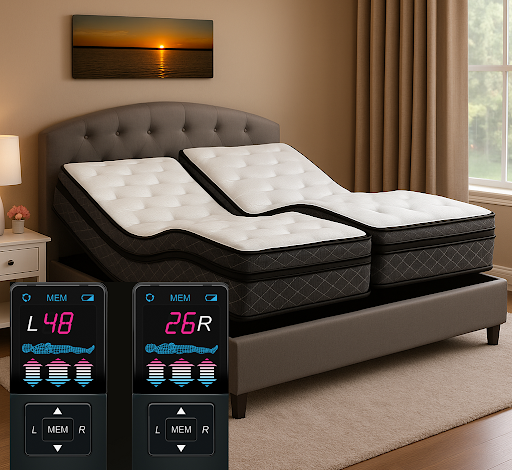
Choosing the right mattress firmness based on sleep position is essential for proper alignment and long-term comfort. Many sleepers explore options like adjustable air mattresses that allow customized firmness on each side to better match their body’s needs.
If a mattress is too firm, side sleepers may experience shoulder pain, hip discomfort, or numbness in the arms. If it’s too soft, the spine may curve unnaturally and lead to stiffness.
Stomach Sleepers: Firm Support to Prevent Arching
Stomach sleeping is generally considered the most challenging position for proper alignment. It can place strain on the neck and lower back if the mattress does not provide adequate support.
Risks of Stomach Sleeping:
- Increased lower back arching
- Neck strain from turning the head
- Greater spinal stress
Stomach sleepers typically require a firmer mattress to prevent the hips from sinking too deeply. Excessive sinkage can exaggerate the natural curve of the lower back, leading to discomfort or stiffness. Using a thinner pillow — or sometimes no pillow — can also help reduce neck strain.
Can Your Sleep Position Change?
Many people shift positions throughout the night. However, most individuals tend to have a dominant position that influences the type of support they need most. Body weight, existing back conditions, and personal comfort preferences all play a role in determining the ideal sleep surface.
Final Thoughts
Back, side, and stomach sleepers all have different support needs. Understanding how your body rests at night allows you to select a mattress and foundation that promote proper alignment and long-term comfort.
Rather than focusing on trends or brand names, focus on what your body requires. The right sleep system should support your natural posture, relieve pressure where needed, and help you wake up feeling rested — regardless of the position you prefer.