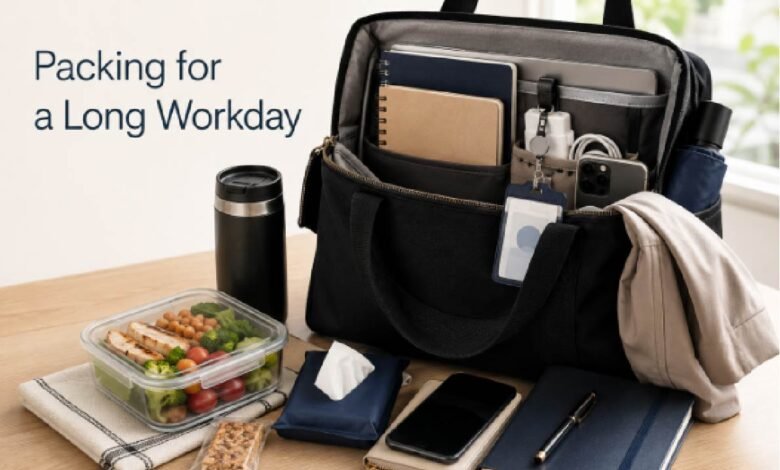
A long workday outside the home requires more planning than a normal office day. Someone may leave early, attend meetings, work from different locations, visit clients, travel between buildings, or stay out through the evening. Without the right items, small inconveniences can build up quickly.
Packing well does not mean carrying a heavy bag. It means choosing items that support energy, comfort, focus, and basic daily needs. A smart workday kit should be practical, organized, and easy to maintain.
Start with the Essentials
Phone, wallet, keys, ID, and work-specific access cards should be placed in the same pocket or pouch every day. Consistency reduces the chance of forgetting something important when leaving early or moving between locations.
Power supplies are also important. A portable charger, charging cable, and adapter can prevent work from being interrupted by a low battery, especially when phones are used for maps, calls, email, payments, or meeting notes throughout the day.
A notebook or planner can also be useful, even when most tasks are digital. Writing something down during a meeting, site visit, or quick conversation can be faster than opening a device. A pen should always be stored in the same place so it is easy to find.
These basics may seem obvious, but they are the items that cause the most inconvenience when forgotten. A simple packing routine can prevent many small problems.
Food and Drink for Longer Days
Food and drink matter more during long days. A small snack can help during delays, and a reusable drink container can keep water, coffee, or tea nearby. For teams, companies, or professionals who want drinkware that feels polished enough for work settings, custom stainless steel tumblers can fit business travel, meetings, employee kits, or daily office use.
Choosing the right drink container depends on the day’s routine. Some people need a large water bottle, while others prefer a smaller tumbler for coffee. Comparing common types of water bottles can help match the container to the situation instead of choosing only by size or color.
Food should also be planned realistically. A small snack is often enough for a meeting-heavy day, while a full lunch container may be better for fieldwork or travel. The container should seal well and be easy to clean afterward.
Pack for Comfort and Organization
Personal care items such as hand sanitizer, tissues, lip balm, breath mints, pain reliever, and a few adhesive bandages can solve common problems without taking much space. If the day includes walking between locations, weather items such as a small umbrella or light jacket may also be useful.
A clean bag layout is important. Heavy items should sit close to the back or center. Frequently used items should be placed near the top. Liquids should be sealed and separated from electronics. If the bag is hard to navigate, the contents become less useful.
At the end of the day, unpacking and resetting the bag can make the next long day easier. Remove trash, wash drinkware, recharge power banks, replace snacks, and return important items to their usual places.
Final Thoughts
A long workday is easier when basic needs are covered. With the right mix of power, hydration, organization, personal care, and weather readiness, people can move through the day with fewer distractions and more confidence.
The best packed bag is not the fullest one. It is the one that matches the actual schedule and supports the person through the day without adding unnecessary weight.