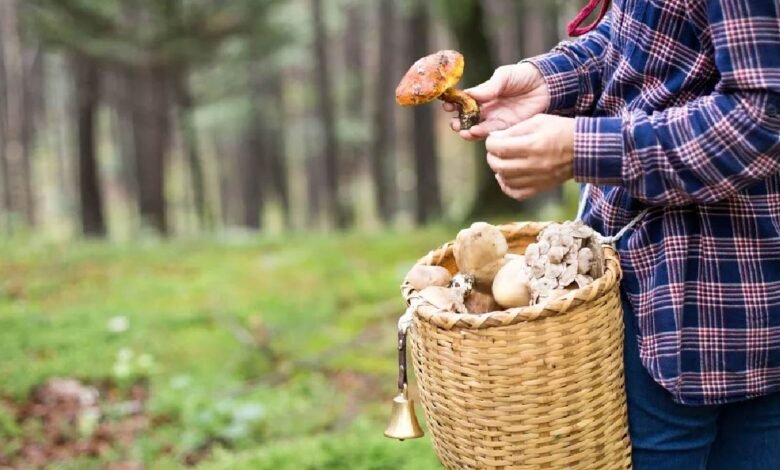
Mushroom picking in the EU is not just a countryside hobby. It is a seasonal rhythm, a food tradition, and a reason to walk slowly through forests that many travellers usually pass too quickly. In Finland, people head into damp woodland with baskets after late-summer rain. In Poland and Czechia, families often treat mushroom picking as part of autumn life. In Italy, France, Spain, Croatia, and Slovenia, forest mushrooms connect directly to village cooking, mountain markets, truffle fairs, and regional pride.
The best places for picking mushrooms in Europe are not always the most famous forests. A good mushroom trip depends on rain, soil, tree type, altitude, local rules, and the skill of the person holding the basket. A spruce forest in Austria can be rich after warm rain and almost empty during a dry spell. A pine forest in Catalonia may produce saffron milk caps in autumn, while a beech and oak slope in Tuscany may be better for porcini. A Finnish birch and spruce forest can hold chanterelles in July, then funnel chanterelles later in autumn.
Mushroom picking also needs caution. Some poisonous mushrooms look close enough to edible species to fool beginners. Mobile apps can help with learning, but they should not decide what goes into a pan. A local guide, mycological society, visitor centre, or official mushroom inspection service is far safer. This matters even more in a foreign country, where names, rules, and common species may differ from home.
1. Finland, Sweden, Estonia, and the Baltic Forests
Northern Europe gives mushroom pickers space, silence, and long forest seasons. Finland is one of the best starting points because public access to nature is broad, and mushroom picking is part of everyday outdoor culture. Visit Finland notes that Finland’s most plentiful mushroom season usually falls between August and October, and that Everyman’s Rights allow people to forage freely, while still requiring care because poisonous species exist.
Nuuksio National Park, near Helsinki, is a practical choice for travellers who want forest without a long journey. It has lakes, mossy paths, spruce, birch, and mixed woodland. Visitors may find chanterelles, funnel chanterelles, boletes, and milk caps when the weather has been wet enough. The park is popular, so the easiest paths can be picked over quickly. A better approach is to go with a local guide or join a nature walk, then learn the habitats rather than only chase names.
Finland’s Lakeland region offers a deeper mushroom trip. Areas around Tampere, Kuopio, Jyväskylä, and Saimaa mix water, forest, and small towns. Chanterelles often appear in summer, especially in warm and wet years. Porcini, known in Finland as herkkutatti, are more common later in the season. Milk caps are also important in Finnish food culture, often salted or pickled after proper preparation. A traveller who wants a simple base can stay near a lakeside cottage and use local paths, but identification remains the hard part.
Sweden has similar appeal, especially in Småland, Värmland, Dalarna, and the forests around Stockholm. Chanterelles are treated with real affection in Swedish kitchens. They appear in sauces, toast toppings, soups, and simple pan-fried dishes. Swedish forests can be generous after rainfall, but locals often keep their best spots private. The same rule applies across much of Europe, never expect people to reveal exact places. It is better to learn tree types, slopes, and moisture patterns.
Estonia is another strong choice for travellers who want a compact country with rich forest access. Lahemaa National Park, east of Tallinn, has coastal forests, bog edges, old villages, and mixed woodland. Southern Estonia also has good mushroom country, especially in damp autumn weather. Chanterelles and boletes are common targets, though beginners should avoid collecting anything they cannot identify with certainty.
Latvia and Lithuania suit slower travellers. Pine and birch forests cover large areas, and mushroom picking is a familiar autumn activity. The best time is usually late summer into October. In dry years, the season can be short. In wet years, forests can produce waves of mushrooms. Pine woods are useful for saffron milk caps and certain boletes, while mixed forests can hold chanterelles and other edible species.
Northern Europe is best for people who enjoy walking more than showing off. The forests are not theatrical in the Alpine sense. They are quiet, damp, and repetitive at first glance. Then the eye changes. A yellow fold under moss becomes a chanterelle. A brown cap near spruce roots becomes a possible bolete. A patch of funnel chanterelles appears where minutes earlier the ground looked empty.
2. Poland, Czechia, Slovakia, Germany, and Austria
Central Europe may be the classic heart of EU mushroom picking. Autumn weekends bring families into forests with baskets, knives, flasks, and old knowledge passed between generations. Poland, Czechia, Slovakia, Germany, and Austria all have strong mushroom traditions, especially in mixed and coniferous woodland.
Poland is one of the best countries for travellers who want to understand mushroom picking as a cultural habit. Białowieża Forest, the Masurian forests, Lower Silesia, and the Tatra foothills all have strong reputations. Polish pickers look for porcini, bay boletes, chanterelles, parasol mushrooms, honey fungus, and many other species. Local markets often show what is in season. A market stall can teach a visitor more than a long online list because it reflects the real weather of that week.
The Czech Republic has one of Europe’s most visible mushroom-picking cultures. Šumava, the Bohemian Forest, Krkonoše, and woods within reach of Prague all attract pickers. Czechs often dry mushrooms for winter soups and sauces. Porcini and other boletes are prized, but chanterelles, parasols, and russulas also appear in baskets. A beginner should not copy local pickers blindly. Many experienced foragers collect species that require careful distinction, and their confidence may come from decades of practice.
Slovakia offers excellent mountain and foothill collecting, especially in the High Tatras, Low Tatras, and Slovak Paradise areas. Altitude changes the season. Lower forests may produce earlier, while higher forests can peak later or after specific rain patterns. The best trips allow several days, because one morning of rain rarely creates instant abundance. Mushrooms respond to weather over time.
Germany is good but more regulated than many visitors expect. Bavaria, the Black Forest, Saxony, Brandenburg, and forested areas in the Allgäu are known for mushroom picking. A useful rule for Germany is that collecting is usually for personal use, not commercial removal. Deutschland.de notes that in many German states, mushrooms can normally be picked only for personal use, often no more than one to two kilograms per person per day.
Bavaria is especially attractive because forest trips can combine with villages, lakes, and mountain views. Late September and early October often produce classic autumn mushroom days. Spruce and beech woods may hold porcini, bay boletes, chanterelles, hedgehog mushrooms, and parasols. Yet Germany also has protected areas and species restrictions. Travellers should check local signs, nature reserve rules, and regional guidance before collecting.
Austria is one of the most useful countries for explaining how legal limits work. Styria, Tyrol, Carinthia, Salzburg, and the Salzkammergut all have forest areas where mushrooms grow well after rain. The Austrian government states that forest owners may restrict or prohibit gathering, and that the general Forest Act limit is two kilograms of mushrooms per person per day where gathering is allowed.
Austria also teaches another important lesson, local rules can override broad assumptions. A visitor may be allowed to walk through a forest but not collect freely. A province may have nature conservation rules. A private owner may have signs. A protected habitat may ban collection. Mushroom picking in Europe is never just a matter of finding trees. It also means reading the legal and cultural ground under your feet.
The best season across Central Europe is usually late August to October. Porcini often appear after warm rain, followed by mild days. Chanterelles can begin earlier in some areas. Parasols often appear in late summer and autumn along woodland edges and grassy places. Honey fungus appears in autumn, but it needs careful preparation and is not suitable for everyone. Beginners should focus on a small number of easier species and still check them with an expert.
3. Italy, Slovenia, Croatia, France, and Spain
Southern and mountain Europe shifts the mood. Mushroom picking here often feels closer to food culture, rural tourism, and local identity. Porcini, saffron milk caps, Caesar’s mushroom, and truffles carry strong regional value. A basket of mushrooms may become pasta, risotto, grilled caps, a market sale, or a festival dish.
Italy is one of the richest mushroom destinations in the EU, but it is also one of the places where rules matter most. Tuscany, Emilia-Romagna, Piedmont, Umbria, Trentino, South Tyrol, and the Apennines all have famous mushroom areas. Borgo Val di Taro, in Emilia-Romagna, is closely linked with porcini culture. Tuscany’s chestnut, beech, oak, and pine woods can also be productive in autumn.
Visitors should not assume they can collect freely in Italy. Rules vary by region and municipality. Visit Tuscany states that mushroom pickers need a permit and ID, may collect up to three kilograms per person per day, must collect only during daylight hours, and should use rigid, aerated baskets rather than tools that damage soil. It also points uncertain pickers towards local health authority mycological services for free recognition advice.
Trentino gives another clear example. Official tourism guidance for mushroom picking in Trentino says non-residents in a municipality of the Province of Trento must purchase a mushroom-picking permit, declare the start of the activity, and pay a fee based on the picking period. This is exactly why travellers should research the precise area, not only the country.
Slovenia is a strong choice for people who want Alpine and forest mushrooms without the scale of larger countries. The Pokljuka Plateau, Julian Alps, Kočevje forests, and areas around Bohinj and Bled can be rewarding after rain. Porcini and chanterelles are common targets. Forests are beautiful, but they can be easy to underestimate. Weather changes fast in mountain regions, and mobile signals can fade. Good footwear, a map, and local advice matter.
Croatia offers two different mushroom worlds. Istria is famous for truffles, especially around Motovun and the Mirna Valley. Gorski Kotar, between Zagreb and the coast, has cooler forest conditions and is better for classic woodland mushrooms. Truffle hunting is not the same as casual mushroom picking. It usually involves trained dogs, permissions, and local knowledge. Visitors are better served by guided truffle walks than by trying to search alone.
France has several major mushroom areas, each with its own food identity. Dordogne and Périgord are linked with truffles and rich autumn cooking. Burgundy, Jura, the Vosges, and parts of the Alps offer ceps, chanterelles, morels, and other forest mushrooms depending on season and habitat. French pharmacies have traditionally been associated with mushroom advice in some areas, but travellers should not rely on this without checking locally. Mycological groups and official services are safer sources.
Spain is often overlooked by northern travellers, but it has serious mushroom regions. Catalonia, Aragón, Navarra, Soria, Castilla y León, and the Pyrenees are known for autumn mushrooms. Saffron milk caps, called níscalos or rovellons depending on region, are especially important in pine forests. Boletes also appear in the right conditions. Spain has many local permit systems, especially in productive mushroom areas, so visitors should check municipal or regional rules before collecting.
Southern Europe often has a later rhythm than the north. September, October, and November can be strong months, especially after autumn rains. In dry Mediterranean years, the season may be delayed or poor. In mountain areas, altitude can bring earlier or later flushes. Truffle seasons vary by species. Summer truffles may be associated with warmer months, while white truffles are mainly autumn, and black winter truffles run into winter in some regions. A restaurant using heavy wooden tables and simple restaurant chairs in a village near a truffle market may tell you more about the local season than a glossy travel guide.
4. What to Pick, When to Go, and Where to Look
A good mushroom trip starts with the calendar, but the calendar is only a rough guide. Mushrooms follow weather more closely than dates. Rain, humidity, soil warmth, wind, frost, and tree partners all matter. The same forest can be empty one week and full ten days later.
Morels are spring mushrooms. They often appear from March to May, depending on the country and altitude. They may grow near riverbanks, woodland edges, old orchards, disturbed ground, and certain tree associations. Morels are prized in France, Germany, Austria, Slovenia, and other parts of Europe. They must be cooked properly and should not be confused with false morels, which can be dangerous.
Chanterelles are summer and autumn favourites. In northern Europe, they can appear from late June or July in warm, wet years and continue into autumn. Finland’s official travel guidance describes chanterelles as a symbol of Finnish summer and places the most plentiful mushroom period between August and October. Chanterelles often grow in mossy woodland, near birch, spruce, beech, oak, or pine depending on region. They are easier to recognise than many mushrooms, but false chanterelles and other orange fungi still require care.
Porcini, also called ceps or penny buns, are among Europe’s most desired mushrooms. They grow with trees such as spruce, pine, beech, oak, and chestnut. Late summer and autumn are the main seasons, with September often excellent in Central and Southern Europe after rain. Porcini are common targets in Poland, Czechia, Austria, Germany, Italy, Slovenia, France, and Spain. Their thick stems and brown caps make them famous, but beginners must still learn the difference between edible boletes, bitter boletes, and species best avoided.
Saffron milk caps are strongly linked with pine forests. Spain, especially Catalonia and Aragón, is well known for them, but they also appear elsewhere in Europe. They are usually autumn mushrooms. Their orange colour, green staining, and carrot-coloured milk help with identification, but beginners still need proper instruction. They are often grilled, fried, or cooked with garlic and herbs.
Parasol mushrooms appear in late summer and autumn, often in grassy woodland edges, meadows, and open forest paths. They are popular in Central Europe, including Poland, Czechia, Slovakia, Germany, and Austria. Many people cook large caps like schnitzel. The risk comes from smaller lookalikes and from collecting old specimens. Beginners should avoid small parasol-like mushrooms unless guided by an expert.
Hedgehog mushrooms are useful for careful beginners because their spines under the cap make them distinctive. They appear in autumn in many European woods. They can grow with beech, oak, pine, and spruce. Their flavour is mild and they cook well, but old specimens can become bitter. Like all wild mushrooms, they still require confident identification.
Truffles sit in a different category. They grow underground with host trees such as oak, hazel, beech, and others, depending on species and soil. Italy, France, Spain, Croatia, and parts of Central Europe have truffle regions. Truffle hunting is usually guided, regulated, and linked to trained dogs. Travellers should treat truffles as a local food and cultural activity rather than a casual DIY foraging target.
5. Rules, Permits, and Safety
Mushroom picking rules change across the EU, and sometimes within a few kilometres. A forest may be public, private, protected, municipal, or part of a national park. A country may allow personal picking in general, while one region demands permits. A nature reserve may ban collection completely. A local authority may restrict tools, quantities, times of day, or commercial gathering.
Germany and Austria show how quantity limits work. Germany often allows only personal-use collection, commonly one to two kilograms per person per day depending on state and local rules. Austria has a two-kilogram daily limit under the Forest Act where collection is allowed, but forest owner restrictions and provincial nature rules can apply.
Italy shows how permits can shape the whole trip. Tuscany requires a permit and ID and sets rules on quantity, daylight picking, and baskets. Trentino requires non-residents to buy a permit in the relevant municipality. National parks can have their own systems. The Appennino Tosco-Emiliano National Park tells visitors that a permit is needed and recommends going with a local guide.
The safest rule is simple, check the exact local authority before you pick. Search by municipality, park, province, or region. Ask at tourist offices, visitor centres, forest offices, or local mycological groups. Do not rely on a travel blog for legal permission. A fine can ruin a trip, but the ecological harm of careless collecting matters too.
Food safety is more serious than legal safety. Wild mushrooms can poison people, and some deadly species resemble edible ones closely enough to confuse beginners. The EU CAP Network describes public work by ANSES in France to reduce wild mushroom poisoning through guidance on picking, preserving, cooking, and eating wild mushrooms.
A beginner should learn dangerous mushrooms first. Death caps, destroying angels, false morels, certain webcaps, and other toxic species are more important than learning ten edible names. A person who knows only edible mushrooms may force a match. A person who knows the dangerous groups learns when to stop.
Use a basket, not a plastic bag. A basket keeps mushrooms ventilated and helps prevent them from sweating and breaking down. Tuscany’s rules specifically refer to rigid, aerated baskets, which also allow spores to disperse. Keep unknown mushrooms separate from known edible ones. One broken toxic specimen mixed into a basket can create risk.
Do not eat mushrooms raw unless you know the species and the preparation rules. Many edible wild mushrooms need proper cooking. Some species cause stomach problems if undercooked, eaten with alcohol, collected too old, or consumed in large quantities. Even safe mushrooms can disagree with some people. Try small portions first.
Do not use apps as final judges. Apps can support learning, but lighting, age, damage, region, and photo quality all affect results. A mushroom can look different after rain, frost, insect damage, or drying. Expert confirmation matters. In some parts of Europe, official inspection services or mycological societies help the public check baskets during the season.
Respect the forest. Do not rake moss, dig up large patches, or strip an area. Pick mature specimens in good condition and leave old, wormy, tiny, and uncertain mushrooms behind. Stay on paths where required. Do not enter private land without permission. Keep dogs under control, especially in grazing, hunting, or protected areas.
6. A Month-by-Month EU Mushroom Plan
March, April, and May are spring mushroom months. Morels are the main prize in many regions, especially in parts of France, Germany, Austria, Slovenia, and Central European river valleys. The exact timing depends on temperature and spring rain. This is not the easiest season for beginners because false morels and habitat confusion create risk. A guided spring walk is the best starting point.
June and July belong to early chanterelles in wet years. Finland, Sweden, Estonia, and other northern regions can produce the first yellow flushes. Central European forests may also begin to show summer mushrooms, though heat and drought can reduce the season. Go after rain, but not during heavy storms. Mushrooms need moisture, and pickers need safe ground.
August is a transition month. Northern Europe becomes stronger. Alpine foothills may start producing well if rain has arrived. Early porcini can appear in Austria, Germany, Poland, Czechia, Slovenia, and northern Italy. Chanterelles continue in damp woods. This is also a good month for learning habitats because forests are still easy to walk before colder weather arrives.
September is often the best all-round mushroom month in the EU. Poland, Czechia, Slovakia, Austria, Germany, Slovenia, Italy, France, Spain, and the Baltics can all be productive under the right conditions. Porcini, chanterelles, parasols, saffron milk caps, and many boletes appear. Markets become useful seasonal guides. If stalls are full of local ceps, the forests nearby have probably been active.
October is rich but more variable. Frost can slow higher-altitude areas, while lower and southern regions may peak. Central Europe often still has strong picking days. Italy, France, Croatia, Slovenia, and Spain may be excellent after autumn rains. Funnel chanterelles and hedgehog mushrooms become more important in some regions. Truffle events also begin drawing food travellers in Italy, France, Croatia, and Spain.
November favours southern, coastal, and lower regions. Northern forests may be too cold, but mild autumns can extend the season. Tuscany, parts of France, northern Spain, Croatia, Slovenia’s lower forests, and Mediterranean-influenced areas may still offer mushrooms. This is a good month for travellers who care as much about markets and restaurants as forest baskets.
December, January, and February are mainly truffle months in many EU food regions. France, Spain, Italy, and Croatia offer guided truffle experiences, winter markets, and seasonal menus. This is not casual mushroom picking in the usual sense. It is better treated as an educational food trip, especially for visitors who want to understand how soil, dogs, trees, weather, and local rules shape one of Europe’s most prized ingredients.
The best EU mushroom trip is slow, local, and weather-aware. Choose a region with forest culture, check the rules before you collect, learn a few species properly, and accept that empty baskets are part of the process. The point is not only to find mushrooms. It is to read the forest with more care than you did when you entered it.