7 Features Your Office Chair Must Have If You Sit More Than 6 Hours a Day
Around 3 PM, something shifts. Not pain – not exactly. A restlessness. You adjust your position. Then again, a few minutes later. You stand up, stretch, sit back down. By the time the last call ends, your lower back has been quietly protesting for hours and you’ve been too busy to register it as anything other than a long day.
Most people have spent years in this loop. They blame screen time, stress, the drive home, getting older. The chair – the object they’ve been in physical contact with for a third of their waking life – never crosses their mind.
It should. Because the difference between a back that recovers overnight and one that doesn’t is less about age or posture and almost entirely about what you’re sitting on. Here are the seven features that separate a chair built for six-hour sessions from one that only looks the part.
Does your office chair actually support your lower back, or just look like it does?
This is the most important feature on this list – and the most commonly misunderstood. Most chairs have a fixed foam curve built into the lower back. It fits some spines. Most, it doesn’t. Within an hour of sitting, your pelvis tilts backward to compensate, your lower spine loses its natural inward curve, and the muscles holding everything upright begin to fatigue. By the time you feel it, they’ve been compensating for four hours.
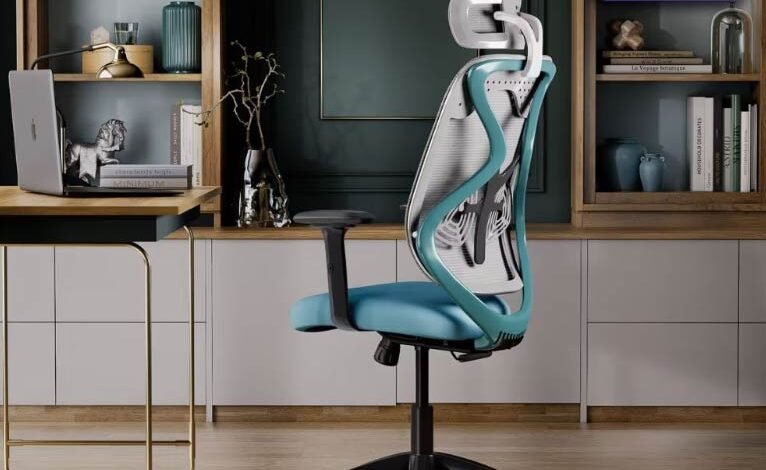
Adjustable lumbar support means the mechanism moves – up, down, forward, back – to meet your specific spinal geometry. A well-built ergonomic chair like the Gravita is designed around this principle: the support comes to you, not the other way around. That one feature is the difference between a chair that actually helps and one that merely looks ergonomic on a product page.
Is your backrest tall enough to support your full spine?
Most mid-range chairs end at the mid-back. That is precisely where the thoracic spine begins to round when left unsupported. After two hours, you’re leaning into your screen. After six, your mid-back, shoulders, and neck have been carrying load they were never built for.
A high backrest provides full spine coverage – lumbar through thoracic. For anyone sitting past the six-hour mark, this is a structural requirement, not a comfort upgrade. Purpose-built ergonomic chairs often take this further with a 2D-adjustable headrest, which becomes relevant once neck tension starts showing up as a pattern.
Does your chair trap heat, or let your back breathe through a long session?
Heat is a posture problem that doesn’t get discussed enough. When your back is warm, you shift. When you shift, your lumbar support stops making contact. When it stops making contact, the support system fails. Foam and leather trap heat. Mesh doesn’t.
A breathable mesh back keeps the body cool enough to hold the correct position across a full session – not just for the first twenty minutes. It is not a comfort feature. It is a stability feature that most people only notice when it’s absent.
Does your chair actually fit your body, or does your body fit the chair?
Here’s what most people never check: whether the chair actually fits their body. Seat height should place your feet flat on the floor with knees at roughly 90 degrees. If your feet are dangling even slightly, or your knees are higher than your hips, the misalignment travels up the spine and you’ll feel it in the lower back within the first hour.
Seat depth matters just as much. A seat that’s too deep pushes you away from the backrest – which means you’re never actually in contact with the lumbar support, regardless of how well-designed it is. The seat should allow you to sit back fully with a few centimetres of clearance between the front edge and the back of your knees. Both adjustments are straightforward. Most standard office chairs don’t offer them. This is where most mid-range chairs quietly fail.
Are your armrests set at the right height, or are they quietly loading your shoulders all day?
Your arms account for roughly 5% of your body weight each. If your armrests are positioned too high or too low, your shoulders carry that load continuously across the entire workday – not dramatically, not painfully at first, just constantly. The result surfaces as tension at the base of the neck and across the upper trapezius by evening, and is almost always attributed to stress rather than the armrest that has been 2 inches off for three years.
Armrests should sit at elbow height when your shoulders are fully relaxed. At that position, they offload the weight of your arms completely, decompressing the shoulder joint and neck across hours. Adjustable armrests are standard on purpose-built ergonomic chairs. On most others, they’re decorative.
Does your chair move with you, or push back against you?
A rigid chair creates constant, low-level resistance. Every time you lean forward to type or recline to think, the chair either doesn’t move with you or forces you out of the supported position. Over a full day, this micro-friction compounds.
A synchro tilt mechanism means the seat and backrest move in a coordinated ratio as you shift – support follows you forward when you lean in, and holds you naturally when you lean back. The chair becomes an extension of how you actually work, not a fixed surface you’re adjusting around. This is the feature that separates a chair you can genuinely spend eight hours in from one you can sit in for two.
Is the base of your chair stable enough to keep your posture from drifting?
The least discussed feature on this list – and the one that causes the most unconscious tension. An unstable base creates a low-level sense of physical insecurity that manifests as muscular gripping. Casters that catch or drag make you lift and place your weight rather than roll freely, adding micro-strain with every movement.
A five-star base with quality casters keeps movement frictionless and posture stable. It is the foundation everything else sits on, literally. It is also the feature most quietly compromised when manufacturers cut costs at a certain price point.
How does an ergonomic office chair compare to a standard chair across all seven features?
Most chairs check one or two boxes on this list. A purpose-built ergonomic office chair is designed to clear all seven. Here is how they stack up:
| Feature | Standard Office Chair | Ergonomic Office Chair |
| Lumbar support | Fixed foam pad or absent | Adjustable height and depth |
| Backrest height | Mid-back only | Full spine – lumbar to thoracic |
| Back material | Foam or leather | Breathable mesh |
| Seat fit | Gas lift only | Seat height + depth adjustment |
| Armrests | Fixed or non-adjustable | Height-adjustable (2D to 4D) |
| Tilt mechanism | Basic recline | Syncro-tilt with resistance control |
| Base and casters | Variable quality | Five-star with quality casters |
If your current chair scores fewer than five on this list, it is not built for long hours – regardless of what the product page says.
Six hours in a chair is not unusual anymore – it is the baseline for most desk workers in India. The body adapts to whatever environment it’s placed in, and will adapt to a bad chair just as readily as a good one. The difference is what it costs over months and years: accumulated tension, afternoons lost to restlessness, back pain you’ve normalised as just how evenings feel.
The seven features above are not a premium wish list. They are the minimum specification for a chair that earns the hours you spend in it. If you’re looking for office chairs built to this standard, the options are there.
7 Features Your Office Chair Must Have If You Sit More Than 6 Hours a Day
Around 3 PM, something shifts. Not pain – not exactly. A restlessness. You adjust your position. Then again, a few minutes later. You stand up, stretch, sit back down. By the time the last call ends, your lower back has been quietly protesting for hours and you’ve been too busy to register it as anything other than a long day.
Most people have spent years in this loop. They blame screen time, stress, the drive home, getting older. The chair – the object they’ve been in physical contact with for a third of their waking life – never crosses their mind.
It should. Because the difference between a back that recovers overnight and one that doesn’t is less about age or posture and almost entirely about what you’re sitting on. Here are the seven features that separate a chair built for six-hour sessions from one that only looks the part.
Does your office chair actually support your lower back, or just look like it does?
This is the most important feature on this list – and the most commonly misunderstood. Most chairs have a fixed foam curve built into the lower back. It fits some spines. Most, it doesn’t. Within an hour of sitting, your pelvis tilts backward to compensate, your lower spine loses its natural inward curve, and the muscles holding everything upright begin to fatigue. By the time you feel it, they’ve been compensating for four hours.
Adjustable lumbar support means the mechanism moves – up, down, forward, back – to meet your specific spinal geometry. A well-built ergonomic chair like the Gravita is designed around this principle: the support comes to you, not the other way around. That one feature is the difference between a chair that actually helps and one that merely looks ergonomic on a product page.
Is your backrest tall enough to support your full spine?
Most mid-range chairs end at the mid-back. That is precisely where the thoracic spine begins to round when left unsupported. After two hours, you’re leaning into your screen. After six, your mid-back, shoulders, and neck have been carrying load they were never built for.
A high backrest provides full spine coverage – lumbar through thoracic. For anyone sitting past the six-hour mark, this is a structural requirement, not a comfort upgrade. Purpose-built ergonomic chairs often take this further with a 2D-adjustable headrest, which becomes relevant once neck tension starts showing up as a pattern.
Does your chair trap heat, or let your back breathe through a long session?
Heat is a posture problem that doesn’t get discussed enough. When your back is warm, you shift. When you shift, your lumbar support stops making contact. When it stops making contact, the support system fails. Foam and leather trap heat. Mesh doesn’t.
A breathable mesh back keeps the body cool enough to hold the correct position across a full session – not just for the first twenty minutes. It is not a comfort feature. It is a stability feature that most people only notice when it’s absent.
Does your chair actually fit your body, or does your body fit the chair?
Here’s what most people never check: whether the chair actually fits their body. Seat height should place your feet flat on the floor with knees at roughly 90 degrees. If your feet are dangling even slightly, or your knees are higher than your hips, the misalignment travels up the spine and you’ll feel it in the lower back within the first hour.
Seat depth matters just as much. A seat that’s too deep pushes you away from the backrest – which means you’re never actually in contact with the lumbar support, regardless of how well-designed it is. The seat should allow you to sit back fully with a few centimetres of clearance between the front edge and the back of your knees. Both adjustments are straightforward. Most standard office chairs don’t offer them. This is where most mid-range chairs quietly fail.
Are your armrests set at the right height, or are they quietly loading your shoulders all day?
Your arms account for roughly 5% of your body weight each. If your armrests are positioned too high or too low, your shoulders carry that load continuously across the entire workday – not dramatically, not painfully at first, just constantly. The result surfaces as tension at the base of the neck and across the upper trapezius by evening, and is almost always attributed to stress rather than the armrest that has been 2 inches off for three years.
Armrests should sit at elbow height when your shoulders are fully relaxed. At that position, they offload the weight of your arms completely, decompressing the shoulder joint and neck across hours. Adjustable armrests are standard on purpose-built ergonomic chairs. On most others, they’re decorative.
Does your chair move with you, or push back against you?
A rigid chair creates constant, low-level resistance. Every time you lean forward to type or recline to think, the chair either doesn’t move with you or forces you out of the supported position. Over a full day, this micro-friction compounds.
A synchro tilt mechanism means the seat and backrest move in a coordinated ratio as you shift – support follows you forward when you lean in, and holds you naturally when you lean back. The chair becomes an extension of how you actually work, not a fixed surface you’re adjusting around. This is the feature that separates a chair you can genuinely spend eight hours in from one you can sit in for two.
Is the base of your chair stable enough to keep your posture from drifting?
The least discussed feature on this list – and the one that causes the most unconscious tension. An unstable base creates a low-level sense of physical insecurity that manifests as muscular gripping. Casters that catch or drag make you lift and place your weight rather than roll freely, adding micro-strain with every movement.
A five-star base with quality casters keeps movement frictionless and posture stable. It is the foundation everything else sits on, literally. It is also the feature most quietly compromised when manufacturers cut costs at a certain price point.
How does an ergonomic office chair compare to a standard chair across all seven features?
Most chairs check one or two boxes on this list. A purpose-built ergonomic office chair is designed to clear all seven. Here is how they stack up:
| Feature | Standard Office Chair | Ergonomic Office Chair |
| Lumbar support | Fixed foam pad or absent | Adjustable height and depth |
| Backrest height | Mid-back only | Full spine – lumbar to thoracic |
| Back material | Foam or leather | Breathable mesh |
| Seat fit | Gas lift only | Seat height + depth adjustment |
| Armrests | Fixed or non-adjustable | Height-adjustable (2D to 4D) |
| Tilt mechanism | Basic recline | Syncro-tilt with resistance control |
| Base and casters | Variable quality | Five-star with quality casters |
If your current chair scores fewer than five on this list, it is not built for long hours – regardless of what the product page says.
Six hours in a chair is not unusual anymore – it is the baseline for most desk workers in India. The body adapts to whatever environment it’s placed in, and will adapt to a bad chair just as readily as a good one. The difference is what it costs over months and years: accumulated tension, afternoons lost to restlessness, back pain you’ve normalised as just how evenings feel.
The seven features above are not a premium wish list. They are the minimum specification for a chair that earns the hours you spend in it. If you’re looking for office chairs built to this standard, the options are there.