Walk into any conversation about botanical wellness and, sooner or later, kratom comes up. Once a niche interest among a handful of enthusiasts, the leaf has become a familiar name in health-food shops, online marketplaces and lifestyle forums across the UK and beyond. Yet for all the chatter, the terminology remains genuinely confusing. What is the difference between “white” and “red”? Why does one product boast about being “Maeng Da” as though that settled everything? And how is a curious newcomer meant to tell a carefully made product from a dubious one? This guide unpicks the jargon so you can read a label with a more informed eye.
What kratom is — and why capsules caught on
Kratom comes from the leaves of Mitragyna speciosa, a tropical evergreen tree in the coffee family that grows in Southeast Asia, particularly Thailand, Indonesia, Malaysia and Myanmar. For generations, labourers in the region chewed the fresh leaves or brewed them into a tea. In its modern commercial form, the dried leaf is milled into a fine green powder, and that powder is what ends up in the products sold today.
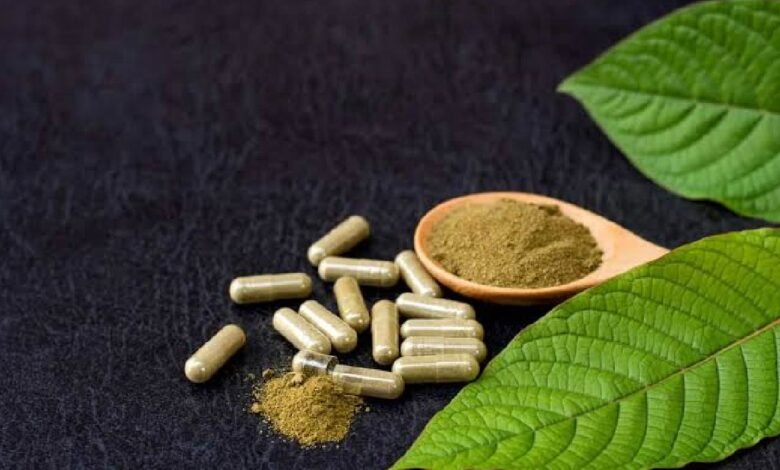
Loose powder has an earthy, notably bitter taste that many people find hard to get past, which is a large part of why capsules have become so popular. A capsule is simply a measured amount of that same milled leaf encased in a gelatin or vegetarian shell. The appeal is largely practical: capsules remove the taste, offer a consistent, pre-portioned quantity and travel neatly without spoons, scales or mess. They do tend to cost a little more per gram than loose powder, since you are paying for the encapsulation, and the shell takes some time to break down. For anyone who values convenience and predictability over the lowest possible price, though, the trade-off is often worthwhile.
Decoding the vein colours
The single most important label term to understand is vein colour. Kratom is usually sold as white, green or red, and the name refers to the colour of the central vein and stem of the leaf at the point of harvest. Rather than three different plants, these colours broadly reflect the maturity of the leaf and the way it is processed and dried after picking.
White-vein products come from younger leaves and are often dried with limited light exposure. Green-vein sits in the middle, harvested a little later. Red-vein comes from the most mature leaves and frequently undergoes longer drying, sometimes with sunlight or fermentation, which deepens the colour. Vendors and long-time users tend to describe the colours as having different characters, and many enthusiasts develop a firm preference. It is worth treating these descriptions as traditional folk categories and marketing shorthand rather than as guaranteed, standardised outcomes — the actual leaf chemistry varies from batch to batch and from one supplier to another. The colour tells you something about processing, but it is not a precise specification.
So what does “Maeng Da” actually mean?
Few kratom terms are thrown around as freely as “Maeng Da,” and few are as widely misunderstood. The phrase is Thai, and it translates loosely and rather colourfully as “pimp grade” — a piece of informal slang that grew into a marketing name suggesting a premium, high-quality product. Crucially, Maeng Da is not a distinct botanical variety or a separate species. It began as a branding term, and over time it came to be associated with particular processing and selection methods rather than a specific plantation or genetic strain.
In practice, you will see it attached to each of the vein colours: white Maeng Da, green Maeng Da and red Maeng Da all appear on the market. The name signals a vendor’s claim that the leaf has been selected and processed to a higher standard, but because there is no official body certifying what may be called “Maeng Da,” the term is only ever as trustworthy as the company using it. Treat it as a starting point for questions, not as a stamp of proven quality. The meaningful information lies in what the seller can actually document about the product.
How to judge product quality
This is where an informed shopper separates the serious vendors from the rest, and it has very little to do with the name on the front of the pouch. The most useful signal is independent laboratory testing. Reputable sellers commission third-party labs to screen each batch and publish the results, often called a Certificate of Analysis, or COA. A good COA covers two things: contamination and content. On the contamination side, look for screening for heavy metals such as lead and cadmium, and for microbial nasties including salmonella, E. coli and yeast and mould — a genuine concern for any dried botanical grown and processed abroad. On the content side, the report shows the alkaloid profile, principally the levels of mitragynine.
Beyond the lab sheet, a few practical checks help. Look for clear batch or lot numbers that tie a product back to a specific test. Note whether the company is transparent about where its leaf is sourced and how it is stored. Sensible, unexaggerated language is another good sign; a vendor making dramatic promises about what the product will do for you is a reason to be cautious, not reassured. Packaging should be sealed and opaque, since light and air degrade the powder over time. When you want to see how this looks in practice, established specialists such as Kingdom Kratom publish batch-level lab results alongside individual strain products, which makes it far easier to compare like with like rather than relying on the label’s adjectives.
Price can also be quietly informative. Kratom that is dramatically cheaper than everything else on the market may reflect corners cut in testing, storage or sourcing. You are not necessarily better off paying the highest price, but a rock-bottom one is worth questioning.
A word on safety and the law
Kratom is not risk-free, and it is not a medicine. It should not be treated as a treatment for any condition, and this article makes no health claims for it. Effects can vary from person to person, it can interact with other substances and medicines, and combining it with alcohol or other drugs is unwise. Anyone who is pregnant, breastfeeding, taking prescription medication or managing a health condition should speak to a qualified healthcare professional before considering it. Start conservatively, and never treat anecdote as medical advice.
The legal picture is genuinely varied and changes over time, so it deserves care. In the United Kingdom, kratom is not currently a controlled drug and is legal to possess, though its sale for human consumption is restricted under psychoactive-substances and food rules, which is why it is generally marketed here as botanical material rather than a supplement. Elsewhere the position varies widely — banned in some countries, restricted in certain US states, and freely sold in others. Rules can shift, so always check the current regulations in your own jurisdiction before buying or travelling with it rather than relying on a general summary like this one.
The bottom line
Once you strip away the exotic-sounding vocabulary, choosing a kratom product becomes far less mysterious. Vein colour tells you roughly how the leaf was matured and processed; “Maeng Da” is a marketing term for a supposedly premium grade rather than a guarantee; and capsules are simply a tidy, taste-free way to take a measured amount. The one thing that consistently distinguishes a trustworthy product is transparency — published lab results, honest sourcing and measured language. Learn to read those signals, keep the safety and legal caveats firmly in mind, and you will navigate the shelf, real or virtual, with a good deal more confidence than the marketing alone would give you.