Smart Equipment Procurement: Why a Used Spray Dryer Could Be Your Best Industrial Investment

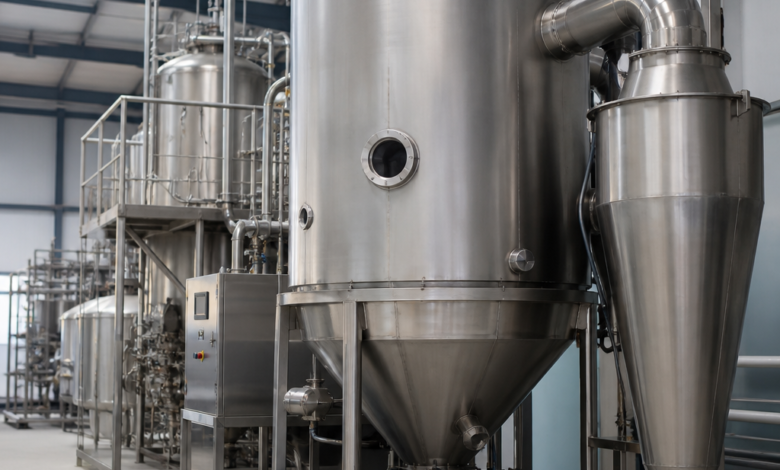
In the world of industrial processing, capital expenditure decisions carry enormous weight. Whether you are scaling up a food manufacturing operation, expanding a pharmaceutical production line, or entering the specialty chemicals market, the equipment you choose defines your output quality, operational efficiency, and long-term profitability. Among the most critical pieces of process equipment is the spray dryer — a machine that transforms liquid feed into dry powder through a precise and controlled atomization process. For many businesses, purchasing a used spray dryer represents a strategically sound path to acquiring high-performance machinery without the steep price tag of new units.
Understanding the Role of Spray Dryers in Modern Industry
Spray dryers are workhorses across a surprisingly wide range of industries. In food processing, they are used to produce powdered milk, instant coffee, and flavoring agents. In pharmaceuticals, they enable the creation of dry powder inhalants and encapsulated drug compounds. Chemical manufacturers rely on them for producing detergents, pigments, and ceramic powders. The fundamental principle remains consistent: a liquid or slurry is atomized into fine droplets, which are then exposed to a hot drying medium — typically air — causing rapid moisture evaporation and leaving behind a fine, free-flowing powder.
The precision required in this process means that spray dryers are engineered to exacting standards. Inlet temperatures, atomizer speed, feed pump rates, and chamber geometry all interact to determine the final particle size and moisture content of the product. This complexity is precisely why the equipment commands significant investment — and why sourcing a well-maintained used unit can offer exceptional value.
The Financial Case for Buying Used Process Equipment
New spray dryers from leading manufacturers can cost hundreds of thousands of dollars, placing them out of reach for startups, mid-sized processors, or companies running pilot programs. A used unit, by contrast, can deliver the same core functionality at a fraction of the cost — often 40 to 70 percent less than the equivalent new machine. This cost differential can be redirected toward facility upgrades, workforce training, or additional processing equipment that rounds out a production line.
Beyond the purchase price, used equipment often comes with a known operational history. Reputable dealers provide detailed service records, inspection reports, and sometimes even performance data from previous installations. This transparency allows buyers to make informed decisions and negotiate with confidence. The key is working with established suppliers who specialize in process equipment and can verify the condition and provenance of each unit they offer.
What to Inspect Before Purchasing a Used Spray Dryer
Due diligence is non-negotiable when acquiring used industrial equipment. Prospective buyers should begin with a thorough inspection of the drying chamber for signs of corrosion, pitting, or weld repairs that could compromise structural integrity or product purity. The atomizer — whether rotary disc or two-fluid nozzle type — should be examined for wear, as this component directly influences droplet size distribution and, consequently, powder quality.
The heating system, cyclone separators, bag filters, and control panels all warrant careful evaluation. Modern spray dryers often feature programmable logic controllers (PLCs) and automated monitoring systems; verifying that these are functional and compatible with your facility’s existing infrastructure is essential. Requesting a test run or witnessing a live demonstration, where possible, provides the most reliable indication of operational readiness.
Sourcing Reliable Used Spray Dryers: Where to Look
If you are actively sourcing process equipment, International Process Plants offers an extensive inventory of industrial machinery, including a wide selection of used spray dryer units from globally recognized manufacturers. Their equipment undergoes thorough inspection and is available across multiple capacities and configurations, making it possible to match a unit precisely to your production requirements — whether you are running a small-batch pilot facility or a large-scale continuous operation.
Evaluating Supplier Credibility and After-Sale Support
Not all used equipment dealers operate with the same level of rigor. When evaluating suppliers, consider their industry tenure, the breadth of their inventory, and whether they offer value-added services such as equipment refurbishment, spare parts sourcing, and installation support. A supplier with deep expertise in process equipment will be able to advise on compatibility issues, regulatory compliance considerations, and integration challenges that a general reseller simply cannot address.
It is also worth investigating whether the supplier maintains relationships with original equipment manufacturers (OEMs). Access to OEM documentation, including original operating manuals and engineering drawings, can significantly simplify maintenance and troubleshooting down the line.
Integrating Spray Dryer Procurement into a Broader Facility Strategy
Acquiring a spray dryer is rarely an isolated decision. It typically occurs within the context of a broader facility buildout or upgrade, which may involve changes to utilities, ventilation systems, and ancillary equipment. Just as homeowners undertaking renovations must carefully evaluate their energy infrastructure — for instance, choosing between electric and gas boilers during a home heating upgrade requires balancing upfront costs, long-term efficiency, and compatibility with existing systems — industrial operators must approach spray dryer integration with the same holistic mindset.
Consider the utility demands of your chosen unit: inlet air heating requirements, compressed air supply for nozzle atomizers, electrical load for the control system and motors, and exhaust air handling. Each of these factors must be reconciled with your facility’s existing infrastructure before installation begins. Engaging a process engineer early in the procurement process can prevent costly surprises during commissioning.
Ancillary Equipment and System Compatibility
A spray dryer does not operate in isolation. Feed preparation systems, including mixing tanks and high-pressure pumps, must be capable of delivering a consistent, homogeneous feed to the atomizer. Downstream, powder collection systems — cyclones, bag filters, or electrostatic precipitators — must be sized appropriately to handle the production volume and particle characteristics of your specific product. Overlooking these interdependencies is one of the most common and costly mistakes in used equipment procurement.
Vacuum Pumps and Supporting Process Equipment
In many processing environments, spray dryers work alongside other critical equipment, including vacuum pumps used in upstream concentration or downstream packaging steps. Understanding how to evaluate and select supporting equipment is just as important as choosing the right dryer. For those navigating the complexities of vacuum pump selection, this independent guide to purchasing a vacuum pump from Lab Manager offers a thorough and practical framework that applies equally well to industrial and laboratory settings.
Conclusion: Making a Confident, Informed Purchase
The decision to invest in a used spray dryer is one that rewards careful preparation. When approached with the right level of technical scrutiny, supplier vetting, and facility planning, it can deliver outstanding returns — enabling businesses to achieve production goals at a fraction of the cost of new equipment. The used process equipment market has matured considerably, and reputable suppliers now offer levels of transparency, documentation, and support that make secondhand procurement a genuinely compelling option for processors at every scale. By combining thorough due diligence with a clear understanding of your operational requirements, you can source a spray dryer that performs reliably, integrates seamlessly, and contributes meaningfully to your bottom line for years to come.