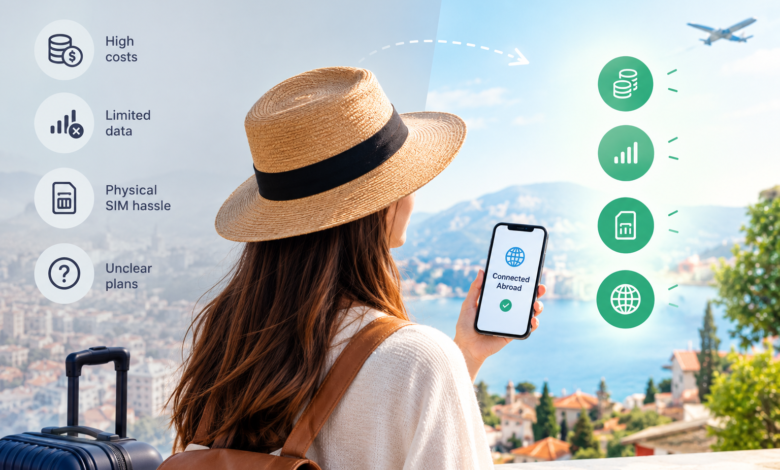
Travelling abroad brings new experiences, but staying connected can sometimes be more complicated than expected. International roaming charges, limited data allowances, and the hassle of finding a local SIM card can make mobile connectivity an unnecessary concern. As people increasingly rely on their smartphones for navigation, communication, and work, finding a convenient way to access mobile data overseas has become more important.
eSIM technology offers an alternative to traditional roaming arrangements. By allowing users to install a mobile service digitally on a compatible device, it provides another way to access mobile data without physically replacing an existing SIM card. Services such as eSIM io are helping travellers explore more flexible options for staying connected across international destinations.
The Hidden Challenges of International Roaming
International roaming allows mobile users to connect to networks outside their home country through agreements between mobile operators. Although this makes travelling with a phone relatively straightforward, the experience can vary considerably depending on the provider and subscription.
One of the biggest concerns is cost. Some domestic mobile plans include international data, while others charge separately for roaming or require customers to purchase an additional package. Without checking these conditions in advance, travellers may face unexpected expenses.
Data limits can create another problem. A package that appears sufficient for occasional browsing may not cover heavier usage, particularly when someone relies on navigation applications, video calls, cloud services, and social media throughout the day.
Other difficulties can include:
- Unclear pricing: Roaming rates and included allowances can differ by destination and provider.
- Limited data allowances: Some international packages provide less data than users expect.
- Unexpected usage: Background app updates, photo backups, and automatic syncing can consume data without much notice.
- Network differences: Connection quality and available speeds depend on the local network, coverage, and roaming agreement.
- Complicated packages: Travellers may need to activate a separate add-on or check whether their destination is included.
- Bill uncertainty: Depending on the plan, exceeding an allowance or using an excluded service can lead to additional charges.
These issues do not mean roaming is always unsuitable. For travellers with a good international package, it may remain a convenient option. However, anyone travelling without clear information about their plan could benefit from comparing alternatives before departure.
Why Finding a Local SIM Is Not Always Convenient
Buying a local SIM card is a familiar alternative for people who want to avoid their home operator’s roaming rates. It can provide access to a local mobile service, but it also introduces practical challenges.
After arriving in another country, travellers may need to locate a mobile shop, compare available packages, complete any required registration, and install the new SIM. This can be inconvenient after a long flight or when immediate internet access is needed to arrange transport or contact accommodation.
Physical SIM cards also need to be handled carefully. Removing the original card means storing it somewhere safe, and travellers visiting multiple countries may need to repeat the process at each destination.
Keeping a regular phone number available can require additional planning, too. Some devices support multiple SIMs, but the available configurations depend on the model.
For people who value convenience, these extra steps can make the traditional local-SIM approach less appealing.
How eSIM Technology Changes the Experience
An eSIM is a digital SIM profile that can be installed on a compatible smartphone. Rather than inserting a physical card, users activate an additional mobile service digitally, following the provider’s instructions.
This makes it possible to arrange a travel-data connection without searching for a physical SIM retailer after arrival. Depending on the device and service, users can also keep their regular SIM in place while selecting the eSIM for mobile data.
The benefits extend beyond convenience. Digital SIM technology gives travellers another way to compare connectivity options, select a suitable data arrangement, and manage their mobile usage.
For example, someone travelling for a week might choose a data package suited to their expected consumption, while a frequent traveller may prefer a service designed for use across multiple destinations.
An eSIM does not automatically guarantee cheaper data or better network performance. Pricing, supported countries, device compatibility, and local network conditions still matter. Its main advantage is providing another way to arrange connectivity.
Key Benefits of Using an eSIM Abroad
1. Greater Control Over Mobile Data Costs
A separate travel-data service allows users to compare available pricing with their existing roaming package before travelling.
Rather than automatically relying on their home carrier, travellers can review data allowances, rates, and plan validity to decide which option fits their budget.
Pay-as-you-go services may suit people with changing usage, while a prepaid data plan can be useful when requirements are more predictable. The potential savings depend on the actual rates and terms, so checking the details remains essential.
2. No Physical SIM Card to Replace
One of the most practical advantages of an eSIM is that there is no additional plastic card to carry or install. Users can add a supported mobile profile digitally, reducing the inconvenience of handling SIM cards during a journey.
This is especially useful for people who travel regularly or prefer to arrange their mobile services before leaving home.
3. Keep Your Existing SIM Available
On a compatible phone, an eSIM can work alongside an existing SIM, allowing users to configure separate lines for different purposes.
For example, a traveller may keep their regular number available for calls and verification messages while using the eSIM as their preferred mobile-data connection.
The exact setup depends on the device and carrier. Users should also check their primary SIM’s roaming settings because calls, texts, or accidental data usage may still incur charges.
4. Easier Preparation for International Trips
Arranging mobile connectivity in advance can make the first few hours of a journey easier.
Travellers often need internet access to check maps, contact their hotel, confirm bookings, or organise transport. A digitally installed service can reduce the need to find a local SIM shop immediately after landing.
Activation requirements differ between providers, so users should follow the relevant instructions and check when their plan becomes active.
5. More Flexibility for Different Travel Needs
A person taking a short holiday may need only enough data for messaging and navigation. Someone working remotely may require a larger allowance for email, online meetings, and cloud applications.
An eSIM service offering different ways to access data allows users to select an arrangement according to their needs rather than assuming every traveller uses mobile internet in the same way.
How eSIM io Helps Travellers Stay Connected
eSIM io offers a digital connectivity option through its OneSIM service, which is designed for use across more than 200 destinations. The service gives travellers an alternative to repeatedly purchasing physical SIM cards and provides options for managing mobile data according to their requirements.
OneSIM supports a digital-installation approach, while eSIM io offers pay-as-you-go access and data plans. Its app also allows users to manage their balance and monitor usage.
These features can be useful for travellers with different connectivity habits. Someone who only needs occasional internet access may prefer to manage their spending as they go. A business traveller may prefer to plan their data usage in advance. Someone visiting several countries may appreciate having a digital service designed to work across a broad range of destinations.
Coverage, applicable rates, device compatibility, and plan conditions should always be checked before travelling.
Pay-As-You-Go or a Data Plan: Which Should You Consider?
The right option depends on how much data you expect to use and how you prefer to manage your spending.
Pay-as-you-go may be appropriate for users whose data requirements vary from day to day. It offers a way to use available credit according to actual consumption, subject to the provider’s rates and conditions.
A data plan may suit travellers who can estimate their internet requirements for a particular trip. Choosing an allowance in advance can make it easier to understand how much data is available for the plan’s validity period.
Neither option is automatically more economical. Someone who uses very little data may have different priorities from a person who regularly streams videos or attends online meetings.
Before selecting a service, compare the total cost, data allowance, supported destinations, and any restrictions that could affect your trip.
Who Can Benefit From Switching to an eSIM?
Holiday Travellers
People taking occasional international trips can arrange their data connection before departure and reduce the need to purchase a physical SIM after arrival.
Frequent Flyers
Travellers who regularly cross borders may appreciate a digital connectivity service that can be managed without repeatedly changing physical SIM cards.
Remote Workers
Professionals who need mobile internet for communication, navigation, and work applications can consider an eSIM as another way to access data while abroad.
Multi-Country Visitors
People visiting several destinations may prefer a service designed to cover multiple countries. eSIM io’s OneSIM service is designed for use across more than 200 destinations, although travellers should confirm coverage for every country on their itinerary.
Travellers Who Want Simpler Phone Management
Some people prefer keeping their everyday SIM installed while managing a separate data connection. For compatible devices, an eSIM can make this arrangement possible without carrying an additional physical card.
A Bonus for New eSIM io Users
New users can explore eSIM io with the promotional code 50BONUS.
Under the offer’s stated terms, eligible users receive a 50% bonus in credit when applying the code to a qualifying top-up. For example, a £20 top-up would provide an additional £10 in bonus credit.
This can provide extra credit for users trying the service for the first time. Before making a top-up, check the current promotion’s eligibility requirements and any restrictions on bonus-credit usage.
How to Prepare Your eSIM Before Travelling
Choosing an eSIM is only part of preparing for reliable international connectivity. A few checks can help avoid problems once you reach your destination.
- Confirm compatibility: Make sure your smartphone supports eSIM and is eligible for the selected service.
- Check coverage: Verify that the countries on your itinerary are supported.
- Review the charges: Understand the applicable data rates, plan allowances, and validity periods.
- Follow installation instructions: Install the profile as directed by the provider.
- Select the correct data line: Check your phone’s settings before using mobile internet abroad.
- Avoid unwanted roaming charges: Review your home SIM’s data-roaming and call settings.
- Monitor usage: Keep an eye on your balance or remaining data allowance.
- Prepare offline resources: Save maps, tickets, and essential travel information before leaving.
These steps can make managing your mobile connection more straightforward and help reduce the risk of avoidable charges.
Is an eSIM Always Better Than Roaming?
Not necessarily. Traditional roaming remains useful for travellers whose existing mobile plans include affordable international data and suitable destination coverage. It can also be convenient for people who want to use a single mobile subscription without configuring another connection.
An eSIM is an alternative rather than a universal replacement. It may be worth considering when roaming prices are high, the available allowance is limited, or a traveller wants to manage international data separately from their usual mobile service.
It is also important to distinguish between the technology and the service being purchased. An eSIM is simply a digital way to store a mobile profile; the price and quality of the connection depend on the provider, its network partners, and the relevant plan.
Comparing both options before travelling is the best way to determine which suits a particular journey.
The Future of Mobile Connectivity for Travellers
The way people use smartphones continues to evolve. Mobile internet is now important for finding places, communicating across time zones, managing bookings, and completing work from almost anywhere. As a result, travellers increasingly need connectivity arrangements that are convenient, understandable, and suited to their individual requirements.
eSIM technology supports this shift by making it possible to add mobile services digitally. It reduces the need to handle physical SIM cards and gives users another option when comparing international data arrangements. With OneSIM, broad destination coverage, pay-as-you-go access, data plans, and app-based account management, eSIM io provides one approach to managing mobile connectivity while travelling.
Traditional roaming and local SIM cards still have their uses, but travellers no longer need to treat them as their only choices. Ultimately, the main benefit of an eSIM is flexibility. By comparing available services, understanding the costs, and choosing an appropriate setup, travellers can make more informed decisions about staying connected abroad without relying entirely on their home network’s roaming arrangements.