Gabi Goslar was a Holocaust survivor whose childhood was deeply connected to Anne Frank’s story through her older sister, Hannah Pick-Goslar, Anne’s close friend. Born in 1940, Gabi suffered immense tragedy at a very young age, losing both her parents during the war and enduring life in the Bergen-Belsen concentration camp before surviving the horrific “Lost Train” in 1945. After the war, she rebuilt her life in Israel, where she grew up, married, and later wrote her memoir I Have to Tell Someone, sharing her experiences as a child survivor.
Her story is important today because it helps preserve the memory of the Holocaust, giving a voice to the many children who did not survive and reminding the world why remembering this history matters.
Quick Bio: Gabi Goslar
| Detail | Information |
|---|---|
| Full Name | Rachel Gabriele Ida Goslar |
| Known As | Gabi Goslar |
| Date of Birth | October 25, 1940 |
| Place of Birth | Amsterdam, Netherlands |
| Nationality | Dutch-born; later Israeli |
| Religion | Jewish |
| Father | Hans Yitzkhak Goslar |
| Mother | Ruth Judith Klee |
| Sibling | Hannah Elisabeth Pick-Goslar |
| Holocaust Experience | Survivor of Westerbork, Bergen-Belsen, and the “Lost Train” |
| Age During Liberation | 5 years old |
| Memoir | I Have to Tell Someone (2010) |
| Husband | Mr. Mozes |
| Children | Names private |
| Life After War | Lived in the Netherlands, Switzerland, and later Israel |
| Residence in Israel | Petach Tikvah |
| Death | 2017, Israel |
| Age at Death | 77 years |
Early Life and Family Background Of Gabi Goslar
Gabi Goslar was born in Amsterdam in 1940 to German-Jewish refugee parents who had fled Nazi rule, hoping to rebuild their lives in safety. Her father, Hans Yitzkhak Goslar, had once been the deputy minister for domestic affairs in Berlin, trusted for his intelligence and leadership, but growing danger forced him to leave Germany with his wife, Ruth Judith Klee, and their young daughter Hannah. In the Netherlands, the family tried to find peace and stability, and Ruth focused her time on creating a warm home for her children, guiding them with care and affection despite the hardship of displacement.
Jewish refugees in Amsterdam lived with constant fear in the early 1940s as Nazi persecution grew stronger, and the Goslar family felt this pressure deeply. Their world changed forever in 1942 when Ruth died during childbirth after being denied proper medical help, leaving Hans alone with his daughters and marking the start of the emotional and practical struggles that would shape Gabi’s earliest memories.
Childhood During War and Nazi Occupation
Gabi’s early childhood unfolded under the shadow of the Nazi occupation of the Netherlands, which brought immediate and harsh restrictions on Jewish families. As a toddler, she lived through curfews, food shortages, and the fear of sudden arrests that became part of daily life. Jewish people were removed from public spaces, stripped of rights, and forced to live with increasing isolation. For the very young, like Gabi, this meant growing up in an atmosphere where safety disappeared, and uncertainty became normal.
Even simple childhood needs—warmth, food, or affection—were often overshadowed by fear and separation. The stress of persecution reshaped family life, and although Gabi was too young to fully understand events, she felt the emotional weight through hunger, insecurity, and the sadness around her.
Parents And Siblings
Gabi Goslar Father: Hans Yitzkhak Goslar
Hans Yitzkhak Goslar was a respected German-Jewish civil servant who served as the deputy minister for domestic affairs in Berlin before fleeing to the Netherlands to escape rising Nazi danger. Known for his intelligence and strong sense of responsibility, he worked hard to protect his daughters after the death of his wife, even securing Paraguayan passports in an attempt to save them. Despite his efforts, he was deported with his children to Bergen-Belsen, where he died in February 1945, leaving Gabi and her sister Hannah orphaned at a very young age.
Gabi Goslar Mother: Ruth Judith Klee
Ruth Judith Klee was a devoted German-Jewish mother who dedicated her life to caring for her family after they fled to Amsterdam to escape Nazi persecution. She was known for her warmth and gentle nature, helping her daughters feel loved despite the growing fear around them. Her life ended tragically in 1942 during childbirth, when she was denied proper medical care under Nazi restrictions, leaving her daughters without a mother during the most difficult years of the war.
Sibling: Hannah Elisabeth Pick-Goslar
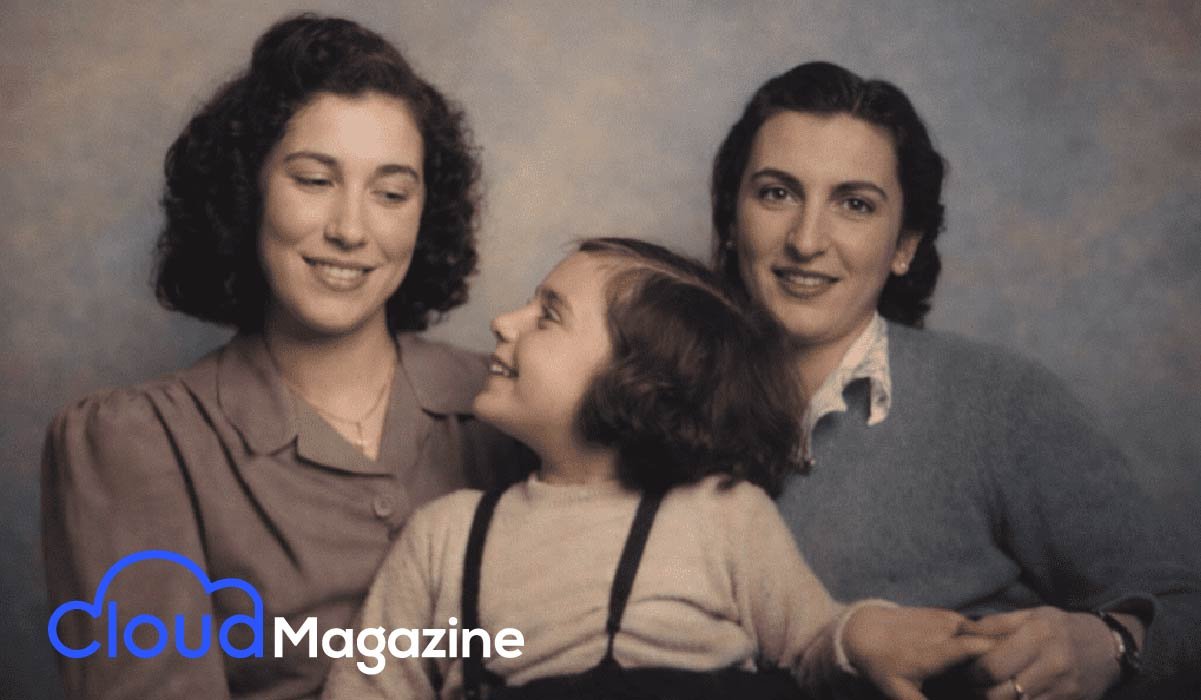
Hannah Elisabeth Pick-Goslar, born in 1928, was Gabi’s older sister and one of Anne Frank’s closest childhood friends in Amsterdam. Twelve years older than Gabi, Hannah became her main protector during the Holocaust, caring for her in Westerbork, Bergen-Belsen, and during the “Lost Train.” After the war, she rebuilt her life in Israel, became a nurse, married Dr. Walter Pinchas Pick, and raised three children while sharing her memories of Anne Frank and the Holocaust until her death in 2022 at the age of ninety-three.
Loss of Gabi Goslar Mother and Father
Ruth Judith Klee
Gabi’s mother, Ruth Judith Klee, died in 1942 during childbirth after the Nazis denied her proper medical care, leading to the loss of both her life and the baby’s. Her death strongly affected the family, leaving Hans to raise the children alone and leaving young Gabi without a mother’s love and comfort during the most fragile years of her life. This early loss created emotional wounds that stayed with the family throughout their time in hiding and imprisonment.
Hans Yitzkhak Goslar
Hans did everything he could to protect his daughters, even managing to obtain Paraguayan passports that he hoped would save them from deportation. Despite his efforts, the family was eventually taken and sent to the Bergen-Belsen concentration camp. Hans died there on February 25, 1945, only weeks before liberation, leaving Gabi and her sister completely orphaned. His death marked another devastating blow for the children and showed how even the strongest attempts to survive could be overtaken by the brutality of the Holocaust.
Arrest and Deportation: Westerbork and Bergen-Belsen
In 1943, the Goslar family was arrested by the Nazis and sent to the Westerbork transit camp, where fear, overcrowding, and uncertainty shaped daily life. Conditions were harsh, and families lived with constant worry about deportation to even worse camps in the east. In 1944, the Goslars were deported to the Bergen-Belsen concentration camp, a place where disease, starvation, and exhaustion were widespread.
As a small child, Gabi suffered from ear infections, hunger, and weakness, surviving only through the care of her older sister Hannah and the kindness of women such as Mrs. Abrahams, who helped look after her when Hannah was too ill. Life in Bergen-Belsen tested the limits of human endurance, and for children like Gabi, it meant fighting daily to stay alive in conditions where so many others perished.
Connection to Anne Frank Through Her Sister Hannah
Gabi’s sister, Hannah Elisabeth Pick-Goslar, had been a close childhood friend of Anne Frank before the war, sharing school days, playtime, and warm memories in Amsterdam. Their friendship later became part of Holocaust history when Hannah and Anne briefly met again in Bergen-Belsen, separated by a barbed-wire fence. Anne was weak and ill at the time, but their short exchange has been remembered as one of the most emotional moments in Anne Frank’s final months. Because of Hannah’s connection to Anne, the Goslar family’s story became intertwined with one of the most widely known personal histories of the Holocaust, shaping the way people remember both sisters and their efforts to survive.
The “Lost Train” and Liberation
In April 1945, as the Nazis tried to evacuate Bergen-Belsen, Gabi and Hannah were placed on what later became known as the “Lost Train,” a transport meant to move prisoners away from advancing Allied forces. The journey was chaotic and terrifying, with extreme hunger, freezing temperatures, disease, and no clear destination. Many prisoners died during the trip, but Gabi, only five years old, survived alongside her sister. The train was eventually discovered and liberated by Soviet troops near Tröbitz, Germany, bringing an end to their ordeal. After liberation, the girls were taken to a children’s home in Laren, where they received medical care and began to heal from months of suffering and neglect.
Life After Liberation
After the war, Gabi and Hannah spent time recovering in the Netherlands and Switzerland. During this period, Otto Frank—Anne Frank’s father and a survivor himself—acted as a compassionate figure in their lives, offering emotional support to the two orphaned sisters. Eventually, they went to live with their uncle in Geneva, where they slowly adjusted to life outside the camps. The process of emotional healing was long and difficult, as both girls carried the trauma of losing their parents and surviving the horrors of the Holocaust. Yet through each other’s support, they found strength and began to rebuild their futures.
Immigration to Israel and New Beginnings
In 1949, at the age of nine, Gabi moved to Israel, a new nation where many Holocaust survivors sought to start fresh lives. Adjusting to a new language, culture, and society was challenging, but Israel offered community and hope after years of suffering. Gabi attended school, made friends, and grew into adulthood as part of a society shaped by shared memories of trauma and resilience. Her bond with Hannah grew stronger, and together they preserved their past while also building new identities far removed from the terror of wartime Europe.
Marriage, Family Life, and Privacy
As an adult, Gabi married a man named Mozes and settled in Petach Tikvah, choosing a quiet and private life centered around family. She focused on raising her children and later enjoyed being a grandmother, creating a home filled with the stability and warmth she had missed during her early years. Her decision to stay out of the public eye reflected her desire for peace, healing, and normalcy after surviving such traumatic experiences. Her family became a symbol of hope and continuity, showing that life could grow again even after great loss.
Memoir: I Have to Tell Someone (2010)
Later in life, Gabi decided to share her story in her memoir, I Have to Tell Someone. She wrote the book to make sure that the experiences of children in the Holocaust were not forgotten. In her memoir, she described the trauma of losing her parents, the hunger and illness she faced in Bergen-Belsen, and the small acts of kindness that helped her survive. The book explored themes such as loss, memory, childhood innocence, and the lasting effects of trauma. By telling her story, she contributed to Holocaust education and ensured that future generations could learn from her experiences.
Return to Germany and the Stolpersteine Memorial
Years later, Gabi returned to Germany for the installation of Stolpersteine, or “stumbling stones,” placed outside the former homes of her parents to honor their memory. This visit was emotionally powerful, allowing her to publicly acknowledge the lives lost and to reclaim a part of her family history. Stolpersteine serve as a modern reminder of the individuals affected by the Holocaust, and Gabi’s participation showed her commitment to remembrance and the importance of confronting history with honesty and dignity.
Later Years and Death
In her later years, Gabi lived quietly in Israel, surrounded by her children and grandchildren and enjoying a peaceful family life very different from her early experiences. She passed away in 2017 at the age of 77. Her death was met with sadness but also deep respect for the strength she had shown throughout her life. Communities who knew her story remembered her as a survivor who turned suffering into purpose and who honored those who did not live to tell their own stories.
Lasting Legacy
Gabi Goslar’s life stands as a powerful symbol of resilience, carrying the weight of suffering while also proving that hope can survive even the darkest times. Her story enriches Holocaust remembrance by adding a child survivor’s perspective, and her connection to Anne Frank through her sister Hannah keeps both families’ memories alive. Her memoir helped preserve the voices of children who did not survive, offering insight into the human cost of hatred and violence. Today, her life reminds the world of the importance of personal testimony in educating future generations about the Holocaust and the need to protect human dignity.
Gabi Goslar Net Worth and Financial Life
There is no public information about Gabi Goslar’s net worth, as she was not a celebrity or public figure focused on wealth. Her life was centered on survival, family, remembrance, and education. Her true legacy is not financial but historical and emotional, carried through her memoir, her family, and the lessons her story continues to teach.
Conclusion
Gabi Goslar’s life journey moved from deep suffering to survival and rebuilding, showing remarkable strength in the face of loss and trauma. Her story remains important because it highlights the experiences of children in the Holocaust, the power of family bonds, and the hope that can follow even the worst tragedies. By sharing her memories and honoring those who were lost, she helped ensure that the horrors of the Holocaust will never be forgotten. Her life stands as a reminder of resilience, compassion, and the vital need to remember history so future generations can choose understanding and humanity over hatred.
(FAQs) Frequently Asked Questions
1. Who was Gabi Goslar?
Gabi Goslar was a Holocaust survivor born in Amsterdam in 1940 and the younger sister of Hannah Pick-Goslar, Anne Frank’s close friend.
She survived Westerbork, Bergen-Belsen, and the “Lost Train” as a small child.
Her life later became a symbol of resilience, remembrance, and the strength of Jewish families after the war.
2. What happened to Gabi Goslar during the Holocaust?
As a toddler, Gabi was deported with her family to Westerbork and later to Bergen-Belsen, where she faced hunger, illness, and extreme hardship.
She lost both parents during the war, becoming an orphan at age four.
Despite the terrible conditions, she survived with the help of her older sister Hannah and other caring prisoners.
3. How is Gabi Goslar connected to Anne Frank?
Gabi’s sister, Hannah Pick-Goslar, was one of Anne Frank’s closest friends before the war.
Through Hannah’s memories and their meeting with Anne in Bergen-Belsen, the Goslar family became linked to Anne’s history.
This connection helped preserve the personal stories behind Anne Frank’s diary.
4. What was the “Lost Train” and how did Gabi Goslar survive it?
The “Lost Train” was a chaotic Nazi evacuation transport carrying Bergen-Belsen prisoners in April 1945.
It traveled for days without food, water, or medical care, and many died along the way.
Gabi, only five years old, survived until Soviet forces liberated the train near Tröbitz, Germany.
5. What was Gabi Goslar’s life like after liberation?
After being freed, Gabi and Hannah received medical care in the Netherlands and later lived with relatives in Switzerland.
Otto Frank provided emotional support during their recovery as orphaned children.
The sisters eventually moved to Israel, where they built new lives after years of trauma.
6. Did Gabi Goslar write a book about her experiences?
Yes, Gabi wrote a memoir titled I Have to Tell Someone in 2010.
The book shares her memories as a child survivor, focusing on loss, fear, and moments of kindness in the camps.
Her writing helps preserve the voices of children who did not survive the Holocaust.
7. What was her life like in Israel?
Gabi moved to Israel in 1949, adjusted to a new culture, and grew up in a community shaped by other survivors.
She married Mr. Mozes and raised a family in Petach Tikvah, choosing to live quietly.
Her peaceful life represented healing and continuity after the destruction of the war.
8. When did Gabi Goslar pass away, and how is she remembered?
Gabi Goslar died in 2017 at the age of 77.
She is remembered for her courage, her memoir, and her role in preserving Holocaust memory.
Her legacy continues through her family, her storytelling, and her connection to Anne Frank’s history.