By 2027, over 70% of home improvement brands are expected to rely on mobile apps for customer engagement and project management.
The world market of home improvement is experiencing fast digitalization, which is encouraged by smartphones and connected technologies. The changing of the expectations places businesses on the path of using mobile solutions to enhance experiences, streamline operations, and unlock revenues.
Here, the dynamic trends in home improvement app development would indicate the direction of innovation so that mobile app development experts can provide high-impact solutions. Renovation planning and execution are also being redefined by apps, starting with the intuitive interfaces and augmented reality.
Moreover, apps are becoming the ministries at the center of connected home improvement systems with the help of data analytics, cloud computing, and machine learning.
1. Augmented Reality for Virtual Renovations
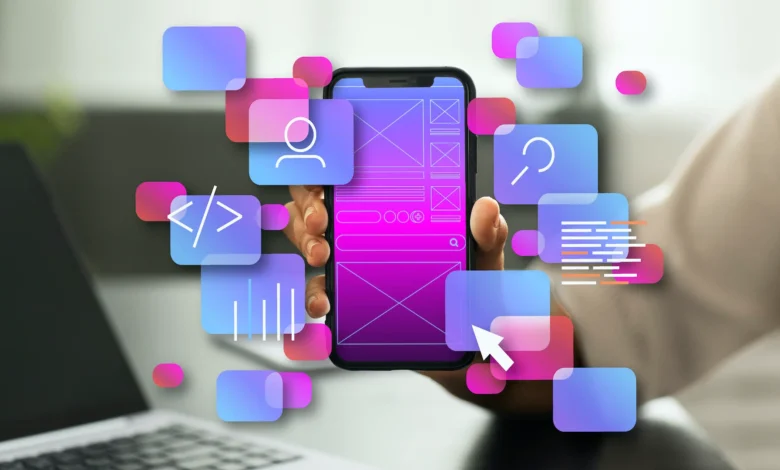
The use of Augmented Reality (AR) can be considered one of the most radical trends in home improvement app development. AR empowers the user to see the possible changes in the real-time situation by placing the digital objects in the real-life environment using their smartphone camera.
As an example, AR-enabled apps will allow homeowners to visualize paint on the walls, try out a layout of a cabinet, or even place furniture virtually and then buy it. This is based on the enhanced high-spatial mapping algorithms and real-time rendering, providing accuracy and realism that has never been witnessed before in professional design software.
Consequently, AR is not an innovation but rather a practical resource that decreases guesses and enhances customer trust. Thus, to remain relevant, the digital product teams working in the sphere of home renovation solutions should give priority to the AR frameworks, namely the ARKit on iOS and ARCore on Android.
2. Integration of IoT and Smart Home Management
The other trend is the integration of home improvement applications with the Internet of Things (IoT). Implementation of interconnected appliances, such as smart thermostats, automatic lighting systems, etc., has transformed the way homeowners engage with their homes. The following generation of applications is therefore centralized dashboarding for monitoring and controlling these devices.
With this convergence, users are able to maximize energy efficiency, set maintenance warnings, and get predictive analytics of the system’s performance. Being the capabilities that demand the advanced backend infrastructure and the data synchronization in real-time, the most advanced iOS app development tools are now more equipped with powerful APIs and secure protocols of communication to ensure successful smart home integration is done.
3. AI-Driven Recommendations and Personalization
It is not just artificial intelligence (AI) that is no longer limited to the domain of high-tech applications; it has become one of the primary drivers of the trends in app development in the sphere of home improvement.
AI algorithms can be used to provide apps with customized suggestions, including customized renovation ideas on the basis of user behavior or forecasts of project budgets. With machine learning trained over large datasets, it is possible to detect trends and propose the best design options.
In addition, customer service can be automated with the help of AI-enhanced platforms such as intelligent chatbots, which would significantly enhance the user experience and engagement. In the case of mobile product-based teams, AI can help make decisions more intelligently in serving the users, as well as increasing the retention and satisfaction levels.
The global smart home market is projected to surpass $300 billion by 2030, driving demand for integrated home improvement applications.
4. Cloud-Based Collaboration Tools
Successful work on home improvement is incomplete without effective project management; that is why cloud-based collaboration features are a standard of the most popular applications. The tools also ensure the smooth flow of communication between homeowners, contractors, designers, and vendors. All the documents, real-time updates, cost estimates, and timelines can be shared by the team members in the same digital environment.
This tendency represents a transition to distributed workflows; real-time collaboration is vital in this case. Cloud integration also minimizes friction since data storage is centralized, and it has cross-platform accessibility. In the case of businesses, having scalable cloud architectures, performance resiliency is ensured, and supports feature expansion in the future.
5. Enhanced Visualization Through 3D Modeling
Intimately connected with AR, 3D modeling is changing the way the concept of renovation is imagined. Advanced rendering tools enable users to build complex 3D models of rooms with precise measurements, textures, and effects of light. These models aid in bridging the unrealistic drawings and the actual outcomes.
2D and 3D engines, which are part of making apps, need skills in graphics programming, optimization, and renderers accelerated by the GPUs. Therefore, when high-fidelity visualization tools have been implemented by teams, it is one of the factors that sets them apart on a competitive level because of the immersive and interactive user experiences that they provide.
6. Voice and Gesture-Based Interfaces for Accessibility
The other growing trend in home improvement app development is the use of alternative ways of input, like voice recognition and gesture control. These interfaces are easy to access and deliver intuitive interaction models, especially to the users involved in practical renovation works.
An example is that homeowners can operate voice assistants to navigate the functionality of apps, access project-related updates, or manage connected tools without using their hands. This movement toward multimodal input is an indication that the industry is being more user-centered and inclusive in its broadest sense.
“Artificial intelligence and platforms will redefine industries by personalizing services, predicting needs, and enabling smarter decisions everywhere for global consumers.” – Sundar Pichai, CEO of Google.
Capitalizing on App Development Innovation
With the ever-changing digital environment, the trends in the development of home improvement apps are transforming the way users design, plan, and run renovation projects.
AR-based visualization is transforming into AI-powered personalization and IoT connections, but these are not just technological experiments; they are the new avenues to customer relationships, increased revenue, and efficiency.
In organizations that wish to be at the forefront in this space, it will be important to incorporate the services of mobile app development firms and use state-of-the-art iOS app development solutions. Digital experiences can be created by aligning strategic objectives and new technologies to create a compelling experience that reinvents the future of home improvement.