For a while, I lumped most AI video tools into the same category: interesting demos, occasionally impressive, but rarely dependable enough for real creative work. They were fine for experiments, not for anything I would actually want to build into a repeatable workflow.
That changed when I started thinking less about “AI magic” and more about production friction.
The real bottleneck in modern content work is not always coming up with ideas. It is getting from a rough idea to a usable draft quickly enough that the idea still feels fresh. That matters whether you are building social clips, product teasers, stylized brand visuals, or short creative concepts that need to be shown before a team is willing to approve anything bigger.
That is why I became more interested in tools like Wan 2.2. What caught my attention was not the promise of replacing creative judgment. It was the possibility of reducing the dead time between concept and preview.
That gap is expensive. It is where a lot of good ideas lose energy.
In a traditional workflow, I often find myself bouncing between references, moodboards, editing notes, rough cuts, and “close enough” placeholders that still do not communicate the feeling I want. Even when a project is small, that process can drag. By the time I have something presentable, I have already spent too much time proving that the concept deserves to exist.
What I want from an AI video model is simpler than most product pages suggest. I want better momentum.
I want to test visual direction without rebuilding everything from scratch. I want to see whether an idea has the right rhythm before I commit to polishing it. I want something that helps me get to a stronger first draft, not a tool that forces me to fake enthusiasm for weak output.
That distinction matters.
The most useful AI tools I have tested are the ones that fit into creative work the same way a good assistant editor fits into post-production. They do not make the final decision for me. They make it easier for me to reach the point where real decisions can happen.
That is why AI video models have started to feel more practical to me in the last year. Not because they are perfect, and definitely not because they can replace taste, but because they are getting better at removing the repetitive, low-value delays that pile up in content production.
I have also noticed a second shift that matters just as much: more creators are no longer starting from nothing. They already have raw clips, old footage, half-finished assets, or simple source material that can be restyled and repurposed. In other words, the question is often no longer “Can I generate something?” It is “Can I transform what I already have into something more distinctive?”
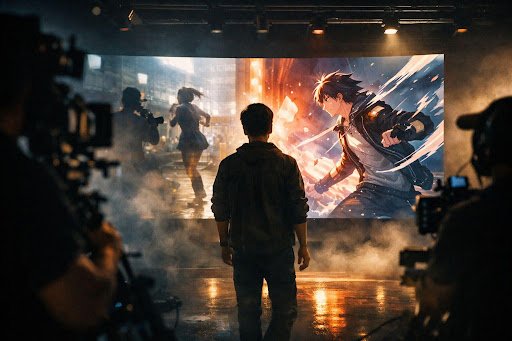
That is where a good video to anime converter becomes interesting.
I do not mean “interesting” in the novelty sense. I mean interesting as a creative shortcut with actual editorial value.
There are times when realistic footage is useful, and there are times when it is too literal. A stylized output can soften imperfections, unify a visual concept, or make a piece feel more intentional. It can also help a small project punch above its weight. A simple talking clip, a basic performance segment, or a rough visual test can feel much more deliberate once it has a cohesive stylized layer.
That does not automatically make the result better. Plenty of AI-assisted visuals still look thin, overprocessed, or visually noisy. The point is not to press a button and pretend the output is finished. The point is to give yourself another path to a stronger draft.
When I use tools like this well, I use them the same way I use references or temporary treatments: as part of a larger decision-making process.
I still look for the same signals I would look for in any early-stage visual piece. Does the motion feel readable? Does the style support the mood, or fight it? Does the result create a clearer identity, or just add surface-level flair? Could I actually publish this, or is it only impressive for three seconds?
Those questions keep the work honest.
I think that is the broader reason AI video tools are becoming more relevant to real creative workflows. The conversation is finally moving away from whether a machine can “make art” and toward whether a tool can help a person work faster without flattening their judgment.
That is a much better question.
For designers, small content teams, solo creators, and brand builders, speed alone is not enough. Fast output that creates more cleanup is not really a gain. What matters is speed that preserves direction. The more a tool helps me stay inside the original intention of a piece, the more useful it becomes.
I still do not trust any AI video workflow blindly. I review more than I publish. I cut more than I keep. I throw away outputs that look technically flashy but emotionally empty. That has not changed.
What has changed is that I no longer see AI video models as side-show software for people who enjoy flashy demos. Used carefully, they are starting to act more like creative acceleration layers. They help me test, reshape, and present ideas faster, which makes them far more relevant than they were when the whole category felt like a parade of one-off tricks.
That is the point where I started taking them seriously.
Not as a replacement for craft.
As a way to reach craft faster.