Pneumatic cigarette rolling machine for manufacturers – how to improve efficiency and production quality

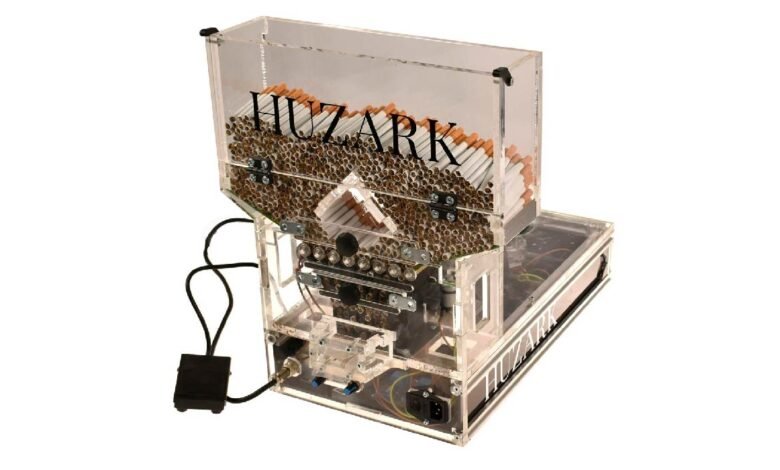
A manufacturing line doesn’t fail loudly at first. It fails quietly. Why can it happen? A little more dust, a few more rejects, a draw that feels “off” in the afternoon. Then the numbers catch up. This is why a pneumatic cigarette rolling machine isn’t just equipment – it’s a decision about control. When you move from manual or semi-manual processes to a pneumatic tobacco rolling machine powered by compressed air, you’re buying repeatability, speed, and the ability to prove quality, not only claim it.
Why pneumatic operation matters in real production
Pneumatic operation powered by compressed air gives you stable precision at speed. Instead of relying on operator consistency, a pneumatic platform holds paper tension, dosing rhythm, and rod geometry inside tight windows. That means fewer crushed ends, less variance in density, and a more predictable draw resistance – exactly what customers notice when they say a cigarette feels “right.” And once you can hold the spec, you can scale it.
The efficiency levers you actually feel on the floor
Manufacturers typically see the biggest gains in three areas:
- Less waste, less rework
Better dosing and closed-loop control reduce off-spec sticks and dust. That lowers scrap and keeps the line cleaner, which also reduces unplanned stops. - Faster changeovers
An automatic cigarette machine with recipe management lets teams switch formats or blends without “trial-and-error” resets. The line returns to stability faster, which is the difference between hitting the shift plan and chasing it. - Consistent quality you can document
Inline checks for mass and diameter, plus event logs and batch records, turn audits into exports. You don’t argue about quality – you show it.
Quality is not one number
Production quality is a system: moisture window, cut behavior, rod density, ventilation, filter integrity, pack appearance. A strong pneumatic cigarette rolling machine protects that system by controlling what it can and reacting quickly to what it can’t (raw material variability, ambient humidity, operator interventions). The result is a calmer process – fewer alarms, fewer surprises, fewer “why does it taste different today?” moments.
What to ask before you buy?
Don’t start with brochure speed. Start with stability:
• Can it hold draw and density over an hour with shifting humidity?
• How long is a real changeover, timed live?
• Where does dust go, and how easy is tool-less cleaning?
• What data do you get for traceability and compliance?
• What happens at 2 a.m. if something fails – service, spares, remote support?
Efficiency is a promise kept
The best manufacturers don’t chase speed. They chase repeatable output, because that’s what protects margin and brand trust. If you’re serious about scaling, a pneumatic tobacco rolling machine or full automatic cigarette machine is the foundation. Why? Less waste, faster recovery, and quality that holds up under pressure. With Huzark platforms anchoring combustible production – maker, injector, packer, and overwrapper engineered to run as one – manufacturers can turn pneumatic precision into measurable efficiency. These are stable rods, clean packs, and consistent quality shift after shift.