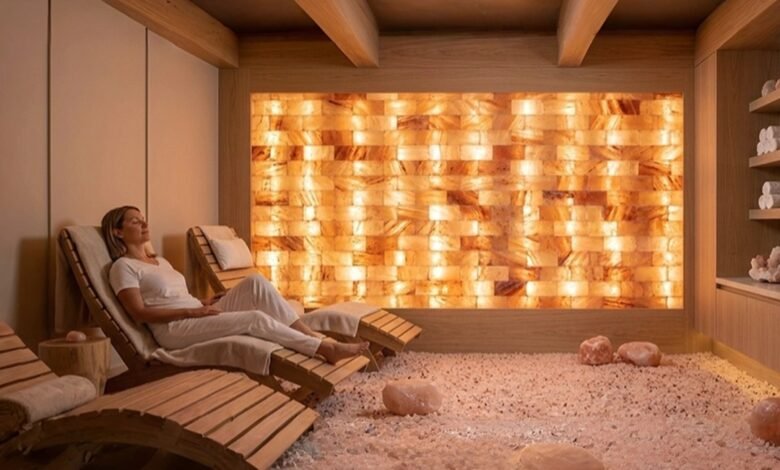
A salt wall works in salt therapy rooms by creating a calming salt-infused environment that enhances relaxation and wellness. Made from Himalayan salt, these walls are often paired with lighting and airflow systems to improve the therapy experience.
The wellness industry has rapidly expanded to include areas for meditation, salt therapy, and rest spaces; these spaces provide a visually calm and comfortable space, warm and clean, utilizing natural salt. Salt therapy works by sitting in an environment that has very small salt particles.
This article will focus on the uses, benefits, how salt walls are built, the scientific explanation, and the implementation of salt walls in the spa business, by interior designers, and even health enthusiasts.
What Is a Salt Wall in Salt Therapy Rooms?
A salt wall in salt therapy rooms is a specially designed wellness structure made using Himalayan salt bricks installed in spas and therapy environments. It enhances interior design, atmosphere, and wellness experiences for visitors in controlled therapy spaces.
Key features:
- Built using Himalayan salt bricks and panels
- Installed in spas, saunas, and wellness centers
- Designed for controlled relaxation environments
- Enhances lighting, mood, and interior design experience
Purpose in Salt Therapy Rooms
Salt walls serve multiple wellness and aesthetic purposes inside therapy rooms and luxury spa environments.
- Creates a salt-rich micro-atmosphere for relaxation
- Supports immersive spa therapy experiences
- Used widely in professional therapy centers globally
- Enhances customer sensory satisfaction and ambiance
Materials Used
Salt walls require durable, heat-safe, and moisture-resistant materials for long-term spa installation performance.
- Natural Himalayan salt bricks from mines
- LED backlighting systems for a glowing effect
- Moisture-resistant wooden or steel frames
- Professional salt-based adhesive systems for stability
Salt Wall Function in Salt Therapy Room
A salt wall in salt therapy works by interacting with controlled air, temperature, and humidity levels to create a salt-rich environment that supports relaxation-focused wellness experiences inside modern therapy rooms.
Heat & Air Interaction Mechanism
Salt walls react with warm, dry air circulation inside therapy rooms, influencing environmental perception and sensory experience.
- Salt reacts with warm ambient air conditions
- Releases microscopic salt-like particles into the environment
- Enhances the salt-infused wellness atmosphere significantly
- Improves overall spa sensory relaxation experience
Negative Ion & Air Quality Concept
When heated, salt surfaces are believed to contribute to a refreshing ion-rich environment perception in spa interiors.
- Supports a fresh and clean air perception in rooms
- Enhances a calming spa-like wellness atmosphere significantly
- Improves relaxation and emotional comfort experience
Passive vs Active Salt Therapy Systems
| System Type | Description |
| Passive System | Salt wall with natural airflow circulation inside the room |
| Active System | Halogenerator disperses crushed salt particles actively |
Salt Therapy Room Benefits
Salt therapy rooms provide multiple wellness, relaxation, and environmental experience benefits that improve spa and meditation environments globally.
Respiratory Comfort Experience
Salt therapy rooms are widely used in wellness spas to create a comfortable breathing environment for relaxation and wellness experiences.
- Encourages smoother and deeper breathing comfort
- Popular in global spa and wellness centers worldwide
- Enhances indoor air relaxation perception significantly
Stress Reduction & Relaxation
Salt walls contribute to stress relief by creating visually calming and emotionally soothing environments inside spa spaces.
- Soft amber lighting enhances the relaxation response
- Creates a peaceful and calming spa environment
- Reduces mental tension through sensory design
Skin Wellness Atmosphere
Salt environments are often associated with improved skin comfort and dry-air wellness sensations.
- Supports spa-style dry air wellness feeling
- Enhances skin relaxation experience naturally
- Improves sensory comfort in therapy rooms
Mental Wellness Impact
Salt rooms are widely used in mindfulness and mental wellness practices for relaxation-focused therapy experiences.
- Meditation-friendly, calming environment design
- Used in yoga and wellness studios globally
- Supports emotional relaxation and mental clarity
Salt Wall Design in Therapy Rooms
Salt wall design plays a crucial role in shaping the visual identity and wellness atmosphere of modern spa and therapy spaces.
Backlit Salt Wall Systems
Lighting design significantly enhances the beauty and therapeutic ambiance of salt wall installations in wellness rooms.
- LED amber lighting is placed behind salt bricks
- Creates a glowing luxury spa ambiance effect
- Enhances relaxation-focused interior aesthetics
Dry Stack vs Panel Installation
Different installation methods are used depending on spa size, budget, and design requirements in wellness architecture.
- Dry stack: natural salt brick arrangement system
- Panel system: prefabricated modular installation method
- Panels provide faster commercial spa installation efficiency
Commercial Spa Design Layouts
Salt walls are strategically integrated into spa layouts to enhance user experience and interior luxury appearance.
- Feature walls in wellness and spa rooms
- Full salt therapy room interior coverage
- Accent walls in meditation and relaxation zones
Includes salt therapy design optimization
Salt Room Construction Basics
Salt wall for room construction requires proper engineering, ventilation systems, and moisture control for long-lasting wellness installations.
Wall Structure Requirements
Proper structural design ensures the durability and long-term stability of salt wall installations with salt tiles in spa environments.
- Moisture-resistant structural framing system
- Proper air ventilation and humidity control
- Heat-resistant installation architecture design
Materials Used in Construction
Modern salt therapy room construction demands the use of materials that not only guarantee safety but also visual appeal.
- Premium Himalayan salt bricks
- Industrial-grade salt adhesive systems
- Energy-efficient LED lighting units
Installation Process Overview
Professional installation ensures accuracy, durability, and design precision for wellness spa environments.
- Planning and accurate measurement layout
- Frame setup and structural alignment process
- Salt brick placement and fixing system
- LED lighting installation integration work
- Final finishing, polishing, and inspection stage
Traditional Spa Walls vs Salt Wall
| Feature | Standard Spa Walls | Salt Wall in Therapy Rooms |
| Atmosphere | Neutral spa interior | Salt-infused calming glow environment |
| Design Appeal | Basic spa design structure | Luxury wellness aesthetic experience |
| Air Experience | No salt interaction | Salt-based environmental feel |
| Usage | General spa facilities | Salt therapy wellness rooms |
| Maintenance | Standard cleaning methods | Dry cleaning required regularly |
Who Uses Salt Therapy Rooms?
Salt therapy rooms are used by multiple wellness industries and personal users seeking relaxation-focused environments.
Wellness Spas & Resorts
Luxury spa resorts use salt rooms to enhance customer wellness experiences and premium service offerings.
Home Wellness Users
Homeowners install salt rooms for personal relaxation, meditation, and luxury wellness improvement.
Yoga & Meditation Studios
Yoga studios use salt environments for breathing exercises and deep meditation practices globally.
Wellness Centers
Wellness centers use salt rooms as complementary relaxation spaces in modern holistic environments.
Maintenance of Salt Walls
Proper maintenance ensures long-term performance, durability, and visual beauty of salt wall installations.
Moisture Control
Humidity management is critical for preserving salt wall structure and preventing damage over time.
- Avoid direct water exposure completely
- Maintain a proper ventilation system always
- Control humidity levels consistently
Cleaning Methods
Salt walls require gentle maintenance techniques to preserve structure and appearance.
- Use a dry cloth for cleaning only
- Avoid chemical cleaning solutions entirely
- Prevent moisture accumulation on the surface
Longevity Tips
Proper care extends lifespan and maintains the visual appeal of salt therapy installations.
- Protect LED lighting systems carefully
- Conduct regular structural inspection
- Maintain a stable humidity environment
Conclusion
Salt wall therapy rooms are the way to the future of wellness architecture as it uses nature, design, and comfort in an unbreakable element. These types of design elements are commonly found in modern salt therapy rooms due to their attractive appearance and beneficial characteristics.
Salt therapy rooms contribute to a more serene and luxurious environment in spas. Proper construction, installation, and upkeep are crucial for enduring utilization and efficacy for both commercial and home settings.
The wellness architecture is a trend on the rise around the world. Salt-based designs are becoming the next trend in spas, meditation rooms, and luxury wellness environments. Pink Salt Wall is offering premier quality salt bricks and installation.
FAQs
Q1: How does a salt wall work in salt therapy rooms?
It creates a salt-rich environment that enhances relaxation and spa atmosphere.
Q2: Are salt walls necessary for salt therapy?
Yes, because they significantly improve visual design and sensory wellness experience.
Q3: Do salt therapy rooms help breathing?
Yes, they may help breathing by creating a refreshing and calming salt-infused environment experience.
Q4: How long does a salt wall last?
With proper care, salt walls can last many years in controlled environments.
Q5: Are salt therapy rooms safe?
Yes, when properly installed with ventilation and humidity control systems.