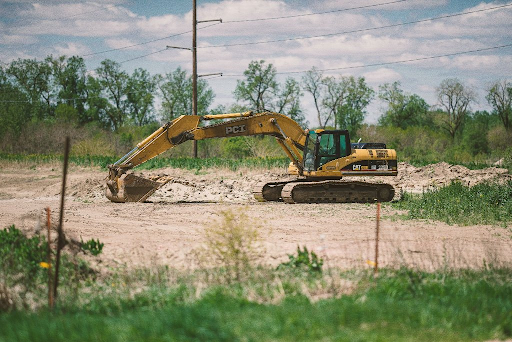
When people picture a building project, they picture the visible parts. The walls going up, the roof going on, the rooms taking shape, the finishes that make it look finished. What almost nobody pictures is the stage that comes before any of that, when the site is being cleared, dug, and levelled, and there’s nothing to show for it but a patch of prepared earth. It’s the least photogenic part of any build and the easiest to take for granted, which is exactly why it’s so often underestimated.
Yet this invisible stage decides more about the success of a project than almost anything that follows. A beautiful building put up on poorly prepared ground is a beautiful building with a problem waiting to surface, while a modest one built on properly prepared ground will sit sound and stable for decades. Everything you can see rests, quite literally, on the part you can’t. If you’re planning any kind of build, from a new home to an extension to a pool, understanding why the groundwork matters is worth your time, because it’s the stage where getting it right quietly determines whether everything else holds.
Why the Ground Is Never Just Ground
The first thing to understand is that a plot of land is rarely the blank, ready surface it appears to be. Ground that looks flat usually isn’t, not to the tolerances a build requires, and ground that looks solid may behave in ways you can’t see from the surface. Sites slope, sometimes obviously and sometimes subtly, and the soil beneath varies enormously in type, stability, and how it handles water and load.
This is why you can’t simply turn up to an empty plot and start laying foundations. What appears to be a straightforward space almost always needs real work to turn it into something you can build on safely, and that work depends entirely on what the particular site is actually like. Two plots side by side can require quite different preparation depending on their slope, their soil, and their drainage. The ground, in other words, is never just ground. It’s a variable that has to be understood and worked with, and the whole point of site preparation is to take whatever the land happens to be and turn it into a sound, level, stable base ready for what you intend to build. Skipping that understanding is where problems begin.
What Site Preparation Actually Involves
So what does getting the ground right actually mean in practice? It covers a series of steps that together turn raw land into a buildable site. It usually starts with clearing, removing vegetation, debris, and anything else in the way. Then comes the shaping of the land itself, which on a sloping site means cutting into the slope to create a level platform, and across the site means getting the levels right so everything sits as it should.
There’s excavation for the foundations themselves, digging to the required depth so the structure has something solid to bear on, and there’s the crucial matter of drainage, making sure water will move away from the site properly rather than pooling where it can cause damage. Done well, Sydney site cut and preparation or the equivalent wherever you’re building takes all these elements and delivers a base that’s level, stable, correctly drained, and ready for construction to begin with confidence. It’s methodical, it’s driven by what the specific site needs, and it’s the foundation in every sense for everything that comes after. When this stage is done properly, the rest of the build has something dependable to sit on, and much of the work is invisible precisely because it ends up buried beneath the thing it supports.
Why Getting It Wrong Is So Costly
The reason all this matters so much is that mistakes made in preparation don’t stay hidden. They surface later, often well after the build is complete, and by then they’re buried under everything that was constructed on top, which makes them expensive and disruptive to put right. Ground that wasn’t properly compacted or levelled can settle unevenly, and uneven settling is what causes cracks in walls, floors that aren’t level, and doors and windows that stop closing properly.
Drainage that wasn’t sorted at the preparation stage can lead to water pooling around or under the structure, which over time causes damp, erosion, and damage to foundations, none of it cheap to address once a building sits over the problem. Poor groundwork on a slope can lead to instability that undermines the whole structure. The common thread is that these are not minor snags but fundamental problems, and fixing a foundation issue after the fact can mean tearing up finished work to reach the cause. This is what makes preparation such a false place to economise. The saving made by rushing or skimping the groundwork is tiny compared to the cost of correcting what goes wrong when the ground wasn’t right, and unlike a cosmetic flaw, these problems tend to get worse rather than better with time.
Why It’s Not a DIY Stage
Given how much rides on it, site preparation is firmly a job for people who know what they’re doing, and it’s not a corner worth cutting to save money. Proper preparation begins with genuinely understanding the site, assessing the ground, the slope, the soil, and the drainage, and knowing what that particular land requires. That assessment takes experience, because the ground doesn’t announce its problems and reading them correctly is a skill.
Then there’s the practical side, which needs the right machinery to clear, cut, excavate, and level accurately, along with the means to deal with the spoil, the excavated material that has to go somewhere. Beyond the equipment, there’s judgement, the ability to handle what the ground throws up, adapt to conditions, and make sure the finished base genuinely meets what the build needs. All of this is why it makes sense to have professionals handle it rather than attempting to save by doing it yourself or hiring the cheapest option. An experienced operator gets the ground right the first time, which is precisely what protects you from the expensive problems that poor preparation causes down the line. It’s one of those stages where paying for it to be done properly is the economy, not the expense.
Building on a Sound Foundation
In the end, getting the ground right is the quiet, invisible work that everything visible depends on. Nobody admires a well-prepared site the way they admire a finished building, and yet the finished building only stands sound because the site beneath it was done properly. It’s the least glamorous stage of any project and arguably the most important, the one where corners cut come back to haunt you and care taken pays off silently for decades.
So if you’re planning a build, give the groundwork the attention it deserves rather than treating it as a preliminary to rush through on the way to the interesting parts. Make sure the site is properly assessed and prepared by people equipped to do it well, and resist the temptation to economise on the stage that determines whether everything else holds up. A sound foundation isn’t something you see or think about once the build is done, which is exactly the point. Get the ground right first, and everything you build on it stands a far better chance of standing the test of time, which is what you were really building for all along.