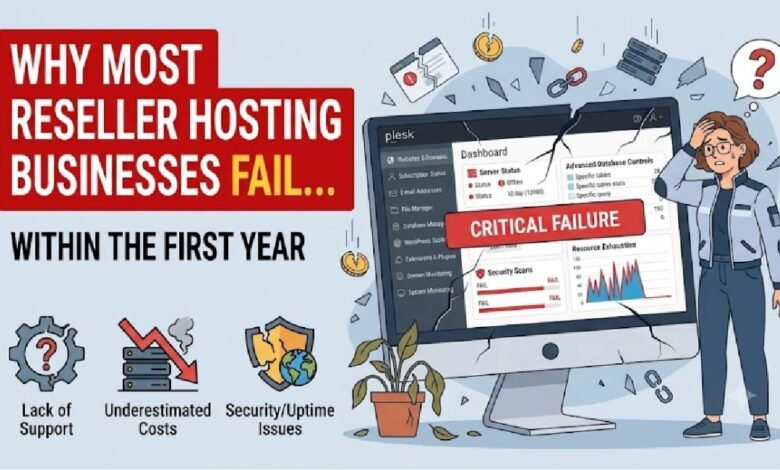
I have been in the hosting space for a while now, and if there is one thing I keep seeing over and over, it is people jumping into reseller hosting with a lot of excitement and almost no plan. They buy a plan, set up a few client accounts, maybe make a logo, and think the business will just run itself. Then six or seven months later, they are gone. No more updates on their website, support tickets stop getting replies, and the whole thing just fades away.
I have watched this happen to friends, to people in hosting groups I am part of, and honestly, I made a few of these mistakes myself when I was starting out. So I wanted to write this down properly, not as some generic guide you find everywhere, but as something closer to what I actually saw happen and why.
It usually starts with picking the wrong reseller hosting plan
This is the first mistake, and it is a big one. A lot of new resellers pick the cheapest plan they can find because they are trying to keep costs low while they figure things out. That makes sense on paper, but the problem is cheap reseller plans almost always come with very limited storage and bandwidth. So the moment you sign up even five or six clients, you are already running low on space.
Then what happens is you either have to upgrade in a rush, which eats into whatever profit you were making, or you try to squeeze your clients into tighter limits than they were promised. Neither of these is a good look for a new business. Your clients notice when their site starts running out of space or when uploads start failing.
I always tell people to think about where they will be in a year, not just where they are on day one. If you plan to get twenty clients, do not buy a plan built for five and hope you will upgrade later. Start with some breathing room.
Support turns out to be way harder than expected
This one surprises almost everyone. When you are reselling hosting, you are not just selling disk space, you are becoming the support person for everyone you sign up. That means emails at odd hours, people asking why their email is not working, people asking why their site is slow, people asking basic questions about WordPress that have nothing to do with hosting but they ask you anyway because you are the “hosting guy” to them.
New resellers usually do not plan for this. They think support means occasionally replying to a ticket. In reality it means being available, patient, and knowing enough about servers, email, DNS, and basic troubleshooting to actually help. If you take three days to reply, your clients will leave, and they will tell other people not to use you.
This is actually one of the biggest reasons I lean towards providers where the base infrastructure is solid and the panel is not a pain to use. I have used Bisup for some of my own client hosting because the DirectAdmin setup is simple enough that I am not spending half my day just figuring out where a setting is. That alone saves a lot of support time, because a clean panel means fewer confused clients.
They underestimate uptime and what it actually costs them
New resellers often do not check the actual track record of the company they are reselling from. They just look at the price and the storage numbers and sign up. But if the parent hosting company has bad uptime, guess who your clients blame? Not the big company behind the scenes. They blame you, because your name is on the invoice.
I learned this one the hard way early on. I was reselling from a provider that looked fine on paper but had server issues almost every month. I would get messages from clients asking why their site was down, and I had no good answer because I did not even know until they told me. That is a terrible position to be in as a business owner. You should know about downtime before your clients do, and you should be hosting with someone that is actually stable.
This is why doing a bit of homework before you commit to a reseller plan matters so much. Look at reviews, ask in hosting communities, actually test the support response time before you buy. I have seen a lot of honest discussions about this kind of thing on developer community forum, where people in the hosting space talk pretty openly about which providers are reliable and which ones are not worth the trouble. It is worth spending an evening reading through threads like that before you commit your business to a provider.
No real branding, so nobody trusts them
A lot of new reseller hosting businesses look exactly the same. Same template website, same generic plan names, same stock photos of servers glowing blue. There is nothing wrong with keeping things simple when you are starting out, but if there is zero effort put into looking like a real business, people notice, and they hesitate to hand over their money.
White labeling matters more than people think. If your client sees someone else’s branding in the panel, or your invoices look like they were made in five minutes, it makes the whole thing feel less trustworthy. You do not need a huge budget for this, even a simple logo and a website that clearly explains your plans goes a long way. People are not expecting perfection, they are just looking for signs that you are serious and not going to disappear next month.
Reseller hosting pricing that does not actually make sense
This is such a common trap. New resellers look at big hosting companies and try to match their prices, without realizing those companies are running thousands of servers with pricing that only works at scale. A small reseller matching those prices ends up making almost nothing per client, sometimes losing money once you count support time.
I always suggest doing actual math before setting your prices. Add up your reseller plan cost, your domain costs if you are including those, the time you expect to spend on support each month, and then decide what you need to charge to make it worth your time. It does not have to be the cheapest option out there. A lot of clients are happy to pay a bit more if they know they will get a fast reply and someone who actually knows what they are doing.
They give up on the technical side too early
Some new resellers try to avoid learning anything technical because they think they can just outsource it all or use one-click tools for everything. That works for a little while, but reseller hosting eventually requires you to understand at least the basics, things like DNS records, SSL setup, email configuration, and how to read basic server logs when something goes wrong.
When you do not know these things, every small issue turns into a crisis, because you have to ask someone else or search for hours to figure it out while your client waits. The resellers who make it past the first year are usually the ones who took time early on to actually learn their panel and how to troubleshoot common problems. It does not need to take months, a few focused weekends of learning can save a lot of stress later.
They stop marketing after the first few sign-ups
This one is sneaky because it does not feel like a mistake at the time. You get your first five or ten clients, maybe from friends or a local business group, and it feels like things are working. So you stop actively looking for new clients and just focus on managing what you have.
Then a few months pass, one or two clients leave, and suddenly your small base has shrunk with nothing coming in to replace it. Reseller hosting, like most small businesses, needs steady effort to bring in new clients. A simple blog, some local outreach, or staying active in relevant online communities can keep new people finding you.
The clients who leave rarely tell you why
There is one more thing I wish someone had told me early on. Most unhappy clients do not send an angry email explaining what went wrong. They just quietly do not renew. You will not always get a clear reason, you will just notice one day that a client you had for months is no longer active. This makes it easy to think everything is fine when it is actually not.
Because of this, I got into the habit of checking in with clients every few months, just a short message asking if everything is working fine and if they need anything changed. It takes maybe ten minutes for a small client base, and it has saved a few accounts that were quietly thinking about leaving. People notice when you check in without being asked.
What I would tell someone starting a reseller hosting business
If I had to boil this all down, I would say pick your base hosting provider carefully and do not go with the cheapest option just because it is cheap. Learn enough of the technical side that you are not lost when something breaks. Set your prices based on real numbers, not guesses. Put a little effort into looking like a real, trustworthy business. And keep some kind of marketing going even after you get your first clients, because that first batch will not stay with you forever.
I would also say, do not be afraid to start small. You do not need fifty clients in your first month to call it a success. A handful of happy clients who stick around for years is worth more than a big list of accounts that churn out within a few months.
Reseller hosting is not a bad business to get into at all. I have seen people build solid, steady income from it, some starting with just a handful of clients and growing from there. But it takes more planning and patience than most people expect going in. The ones who fail in the first year are usually not failing because reseller hosting does not work, they are failing because they treated it like something that runs on autopilot instead of an actual business that needs attention.
If you are thinking about starting, take your time picking a reliable reseller hosting provider, read what actual people are saying in hosting communities, and go in with realistic expectations about the support side of things. That alone will put you ahead of most people who try this and quit within a year. And if you are still deciding where to even begin, spending a bit of time reading through real experiences from other small hosting businesses is one of the best things you can do before spending a single rupee.