At A Glance
- Learning how to adjust UPVC door hinges is an essential DIY skill every homeowner should have
- Adjusting UPVC door hinges is relatively simple, but common mistakes can impact the results
- Common mistakes include overtightening hinges, misaligning hinge pins, and one-sided adjustment
- Get into the habit of adjusting hinges on both sides and making incremental adjustments
- If you damage your hinges, replace them ASAP – damaged hinges are not worth the risk
As a homeowner, it’s essential that you learn how to adjust UPVC door hinges. Having this skill is a great way to reduce your reliance on professional services. However, while adjusting UPVC door hinges is a relatively simple task, there are some common mistakes that you could make. Avoiding these mistakes can be the difference between fixing your UPVC hinges and damaging them further.
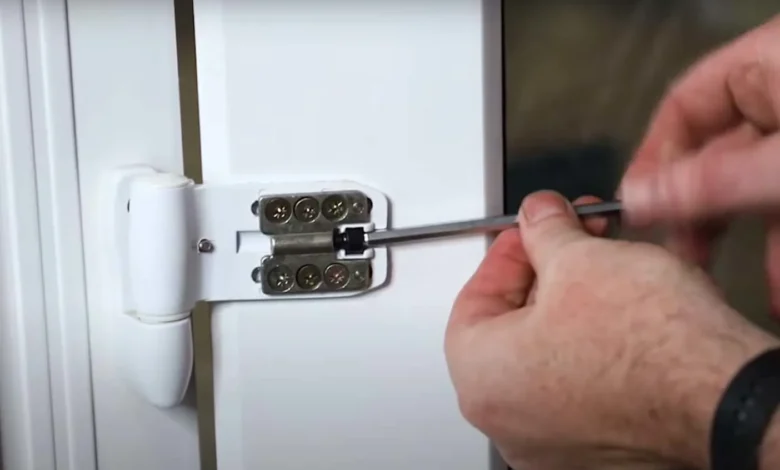
How do you adjust the hinges on a UPVC door? You need nothing more than a screwdriver or a hex key. To help you avoid the common mistakes many other homeowners have made, we asked for some insight from Multipointlocks on the topic. What did we learn from one of the UK’s leading providers of home security and door furniture?
Read on to find out some of the most common mistakes with UPVC door hinge adjustment so you can avoid making these same errors yourself!
Why UPVC Hinge Adjustment Can Be Tricky For DIY Beginners
The fact is that adjusting hinges on UPVC doors has been made very easy. Most manufacturers use hinges that can be adjusted using only a screwdriver and/or a hex key.
There is an awareness that any door needs to be adjusted from time to time. Doors can change their alignment due to wear and tear, or even the building subsiding or shifting a little. As such, hinges are made to be easily adjustable, even for people who are not full-time trade professionals.
That’s the good news. The bad news? It’s easy to make mistakes. Mistakes are easy to make due to the adjustment process. Often, it’s hard to see the error you have made without testing your work out thoroughly. If you are in a rush or are new to hinge adjustment, it’s easy to miss the signs.
We’ll break down some of the most common faults below so you know what to look out for. Generally, though, these mistakes are easy to make without even knowing it. Unfortunately, these mistakes can also be hard to notice until the damage is done!
As such, it’s imperative that UK homeowners who have UPVC doors understand the risks. Knowing what to look out for when you adjust UPVC door hinges helps you to adapt and avoid these issues.
Therefore, the results are more likely to be satisfactory, and you are less likely to damage your door. That’s what we want, right?
The Top Three Mistakes When Adjusting UPVC Door Hinges (And How To Avoid Them)
When you learn how to adjust UPVC door hinges – all you really do is adjust the pins and screws on the hinges – there are a few mistakes you might make. When adjusting UPVC door hinges, keep an eye out for the following rookie mistakes:
Overtightening The Hinge Screws
Most of the time, adjusting UPVC door hinges really is just a case of tightening a few screws. You may do this with a screwdriver or a Hex key, depending on the type of hinge you have.
To adjust, all you do is turn the hinge clockwise to tighten/raise the door, or counter-clockwise to loosen/lower the door. Depending on the issue you have, you will likely be doing one or the other.
The issue is that many UPVC door hinge adjustments are too severe. You should be turning screws by around one short rotation at a time. The best practice is to tighten slightly, close the door over and open it up again. Do this repeatedly. It adds time to the hinge adjustment process, but it’s essential to test. This helps you to see if you have overtightened the hinges so you can loosen them off.
You might even wish to take note of the original screw position so you can revert to the original starting point if needed.
Misalignment Of Hinge Pins
Similarly, certain hinge types – such as butt hinges – have a pin. These pins must be aligned. If you do not align the pins properly, you can find that your door becomes out of sync from top to bottom.
Make sure that your hinge pins are turned to the same position and tightness/height. Your pins might also have a flat cap on top, so pop these off with a screwdriver and, once you are finished, re-fit the hinge cap.
Again, make sure you align hinge pin positions. This can be a time-consuming process, but if any pins are not lined up identically, it can make the door overly tight/loose at the top or bottom.
Adjusting Only One Hinge
Similar to the above, you might find that adjusting just one hinge seems to fix your problem. If so, great – right? Well…
You see, hinges need to be adjusted equally. Just like we mentioned above, when you adjust one hinge, you need to adjust them all. Do not adjust only one of your door hinges. Adjusting both – or all, if your door has more than two hinges – is essential to keeping the door level and secure.
If you fail to adjust both hinges, you can put excess pressure on one or more of the hinges. That will eventually lead to the hinge breaking or bending, resulting in a replacement being required. So, when you adjust one hinge, make sure you adjust the others equally!
Remember: Slow & Steady Wins The Race
In our chat with Multipointlocks, one thing stood out: the need for graduality in your adjustments.
Making extensive rotations can make it tough to know what has worked. It could even give you the opposite issue from what you had, i.e. an overly loose hinge is now too tight.
So, make small, minor adjustments. Take it slow. Test, test, and test again. Never assume. Lastly, be sure to apply lubricant to your hinges every once in a while to keep them friction-free.
A combination of regular lubrication and minor adjustments is a winning one when it comes to learning how to adjust UPVC door hinges. Patience is key here; always take your time when adjusting UPVC door hinges. Otherwise, you might damage the hinges and need to replace them completely.
If you have damaged your hinges and need to replace them, it might be better to contact a locksmith. They can carry out the replacement for you, installing suitable hinges on your behalf. They can also show you how to adjust your new hinges so that, in the future, you can avoid these issues!