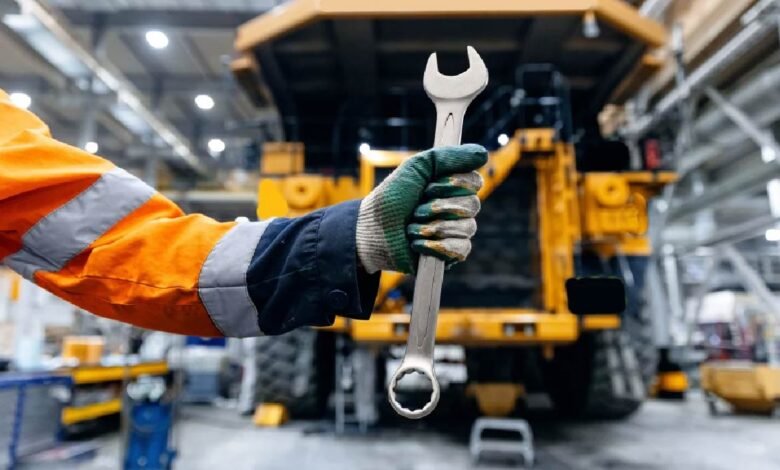
The mining and extraction sector relies entirely on raw power, precision, and endurance. Moving thousands of tons of earth to uncover valuable resources is a monumental task that requires highly specialized equipment. Without these massive machines, extracting minerals, metals, and fossil fuels would be virtually impossible.
Primary Types of Mining Machinery
Mining operations require a diverse fleet of equipment to handle the various stages of extraction and processing. Each machine serves a highly specific purpose.
Excavators
Excavators are the workhorses of any mining site, primarily used for digging and moving large volumes of earth. Hydraulic excavators use fluid power to operate the boom and bucket, providing immense lifting capacity and precision. They are highly mobile and versatile, making them suitable for both open-pit and underground operations.
Dragline excavators are much larger and are typically used in surface mining. They operate using a bucket suspended from a boom with wire ropes. The machine drags the bucket against the material to be excavated. Due to their massive size and reach, draglines are incredibly efficient for removing overburden in large-scale coal and tar-sand mining.
Loaders
Loaders scoop up loose material and transfer it into haul trucks or onto conveyors. Wheel loaders offer excellent mobility and speed, making them ideal for moving across flat, solid ground. Track loaders operate on continuous tracks, providing better traction and stability on uneven or muddy terrain.
Skid-steer loaders are smaller and more maneuverable. They are frequently used in tight spaces for clean-up tasks, grading, or moving smaller piles of material. Their compact size makes them indispensable for secondary support tasks on the site.
Haul Trucks
Moving excavated material out of the mine requires heavy-duty transport. Haul trucks are specifically engineered to carry enormous payloads over difficult terrain. Rigid dump trucks feature a single, solid frame and are built for high-capacity hauling on well-maintained haul roads. They are common in large open-pit mines.
Articulated dump trucks have a hinge between the cab and the dump box. This design allows them to navigate sharp turns, rough terrain, and steep inclines with greater ease. They generally carry lighter payloads than rigid trucks but offer superior versatility in challenging site conditions.
Drills
Before material can be excavated, it often needs to be loosened or broken apart. Drills create holes in the earth for placing explosives. Rotary drills use a rotating bit that applies downward pressure to crush the rock. They are effective for drilling large holes in relatively soft or medium-hard rock formations.
Percussion drills break rock by repeatedly striking it. Hammer drills combine rotary motion with a hammering action, making them highly effective for penetrating very hard rock. The choice of drill depends heavily on the mineral hardness and the desired blast pattern.
Crushers and Grinding Mills
Once the ore is extracted, it must be reduced in size for further processing. Crushers take large rocks and break them into manageable pieces. Jaw crushers use compressive force to break hard materials, while cone crushers are often used for secondary crushing to produce finer fragments.
Grinding mills take the crushed rock and reduce it to a fine powder. This process is necessary to separate the valuable minerals from the waste rock. Equipment like ball mills and rod mills tumble the ore with heavy grinding media to achieve the required consistency.
Alongside these large-scale processors, specific extraction methods require targeted tools. For example, operators targeting precious metals utilize specialized gold mining equipment to separate dense minerals from surrounding sediment. Tools such as dredges extract material directly from riverbeds, sluices use flowing water to capture heavy particles, and trommels rotate to wash and separate different sizes of gravel and rock.
Safety and Maintenance Considerations
Operating heavy machinery comes with significant risks. Protecting workers requires strict adherence to safety protocols and rigorous maintenance schedules. Operators must undergo comprehensive training to understand the capabilities and limitations of their equipment. Blind spots, rollover risks, and moving parts present constant hazards on a busy site.
Preventive maintenance is equally critical. Machines operating in harsh mining environments endure rapid wear and tear. Daily inspections help identify fluid leaks, tire damage, and worn structural components before they cause catastrophic failures. Implementing a predictive maintenance program, often supported by onboard sensors and diagnostic software, allows managers to schedule repairs during planned downtime, keeping the operation running smoothly and protecting the workforce.
Environmental Impact and Sustainability
The mining industry faces increasing pressure to minimize its environmental footprint. Heavy machinery traditionally relies on diesel fuel, contributing significantly to greenhouse gas emissions and local air pollution. Consequently, sustainability is becoming a core focus for modern operations.
Many companies are transitioning to electric and hybrid-powered machinery. Electric excavators and battery-powered haul trucks reduce both emissions and noise pollution. Additionally, advanced fleet management software helps optimize routing and minimize idle time, drastically cutting fuel consumption. Site reclamation is also prioritized, with machines repurposed at the end of a project to restore the landscape, reshape the terrain, and prepare the land for revegetation.
Conclusion
The machinery used in mining and extraction is evolving rapidly. Automation and remote-control technologies are allowing operators to control drills, loaders, and trucks from safe, off-site command centers. This not only improves safety by removing humans from hazardous areas but also increases operational efficiency.