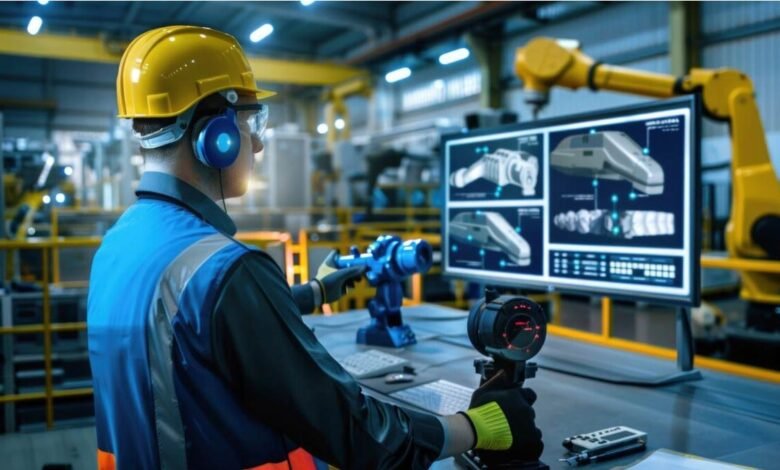
The industrial landscape is currently undergoing a quiet but profound transformation. For decades, the standard approach to machinery upkeep was reactive or, at best, scheduled. Technicians would either wait for a component to fail or replace parts based on a calendar, often discarding perfectly functional components in the process. Today, the rise of the Internet of Things and advanced sensor technology has birthed a new era of “self-diagnosing” tools. These intelligent systems allow equipment to monitor its own health in real time, shifting the burden of diagnostics from human intuition to data-driven certainty.
The Evolution of Predictive Analytics
The core of a self-diagnosing tool is the integration of sophisticated sensors that measure variables such as vibration, heat, sound, and pressure. While basic sensors have existed for years, the modern innovation lies in how this data is processed.
Real-Time Monitoring and Edge Computing
In the past, data had to be sent to a central server for analysis, creating a delay that could be fatal for high-speed machinery. Modern manufacturers now utilize edge computing, where the processing power is located directly on the tool itself. This allows a machine to detect a microscopic change in vibration patterns and instantly recognize it as a precursor to a bearing failure. By analyzing these nuances at the source, the equipment can alert operators before any physical damage occurs, effectively eliminating unscheduled downtime.
Pattern Recognition and Machine Learning
Self-diagnosing tools do not just look for thresholds; they look for patterns. Through machine learning, these systems compare current performance data against thousands of hours of historical operations. If a tool begins to consume slightly more energy to achieve the same output, the system identifies the specific inefficiency. This level of granularity ensures that maintenance is only performed when truly necessary, optimizing the lifecycle of every internal component.
Integration in Critical Fluid Systems
One of the most impactful applications of this technology is found in fluid management and pressure systems. These environments are often harsh and inaccessible, making manual inspections difficult and dangerous. To combat this, many engineers are prioritizing the installation of smart components that can communicate their status through a centralized digital twin.
In heavy-duty industrial settings, the reliability of the system depends on the quality of the original hardware. Selecting high-performance OEM pumps equipped with integrated diagnostic ports allows facilities to track flow rates and seal integrity without dismantling the entire line. Because these units are designed by the original manufacturer to interact seamlessly with modern digital interfaces, they provide more accurate data than third-party additions. When a pump can report its own cavitation levels or thermal fluctuations, the facility can transition from a defensive maintenance posture to an offensive strategy of total optimization.
Reducing Human Error and Operational Costs
The move toward self-diagnosing equipment is not just about technology; it is about mitigating the risks associated with human error. Even the most skilled technician can miss a hairline crack or a subtle change in a machine’s acoustic signature.
Automated Alerts and Guided Repair
When a tool diagnoses its own issue, it can provide the technician with a specific error code and a digital blueprint of the required fix. This reduces the time spent on troubleshooting and ensures that the correct parts are ordered before the machine is even taken offline. By streamlining the repair process, companies can maintain a smaller, more specialized workforce that focuses on high-level system improvements rather than basic fault-finding.
Extending Asset Longevity
Replacing a machine is a massive capital expenditure. Self-diagnosing tools help protect this investment by ensuring that the equipment always operates within its ideal parameters. By preventing the “domino effect” of a small part failure causing catastrophic damage to the entire unit, manufacturers can extend the operational life of their assets by years.
The Path Toward Fully Autonomous Factories
The ultimate goal of self-diagnosing technology is the creation of an autonomous maintenance loop. In this future scenario, a machine not only detects its own wear but also communicates with the supply chain to order its own replacement parts and schedules its own repair during a planned period of low production. We are currently seeing the first stages of this integration, as tools become increasingly communicative and interconnected.
Conclusion
The transition to self-diagnosing tools represents a fundamental shift in the relationship between humans and machines. By embedding intelligence directly into the fabric of industrial equipment, manufacturers are creating a workforce of tools that are self-aware and proactive. This evolution reduces waste, increases safety, and ensures that the global supply chain remains resilient in the face of increasing demand. As these technologies continue to mature, the concept of a “broken” machine may eventually become a relic of the industrial past.